How to Read a Leftover
Start with the brick before it becomes a wall. It has weight, edges, dust, colour, a useful dullness. In Mingze Zhang's A Wall and A Bag, one hundred bricks are placed on a pavement, arranged, dismantled, passed, recorded and drawn into the making of bags that do not behave as bags should. The brick is not romantic. It is ordinary enough to be overlooked. That is why it becomes a good teacher.
This article asks a practical question: how should we read a leftover? The first answer is to resist the urge to rescue it too quickly. A leftover is not automatically ethical because it has been reused, and it is not automatically worthless because its first function has ended. It is evidence. It tells us what has been extracted, shaped, sold, carried, worn, broken, stored, abandoned or reclassified. To read it well, we need to ask four questions: what was it, what changed it, what can it now do, and who must care for it next?
Zhang's work begins with that discipline of attention. Art & Materials Lab describes a daily practice of building and dismantling a brick wall, walking, and producing non-functional bags. A normal brick is valued for obedience. It stacks, aligns, bears load and disappears into construction. Zhang interrupts that agreement. The wall does not stabilise into architecture; the bag does not settle into utility. Usefulness becomes something performed, withdrawn and observed. The work does not make the brick symbolic by adding an external story. It lets repetition expose the social rules already attached to the object.
Material culture gives language to this movement. Arjun Appadurai and Igor Kopytoff argue that things have social lives and cultural biographies. An object may move between commodity, tool, keepsake, rubbish and artwork depending on how people classify and handle it. A Wall and A Bag works in precisely this unsettled zone. Its brick is not just fired clay. It is a unit of labour, a possible barrier, a temporary record, a thing made strange by misuse. The lesson is simple but demanding: look at the object's career, not only its shape.
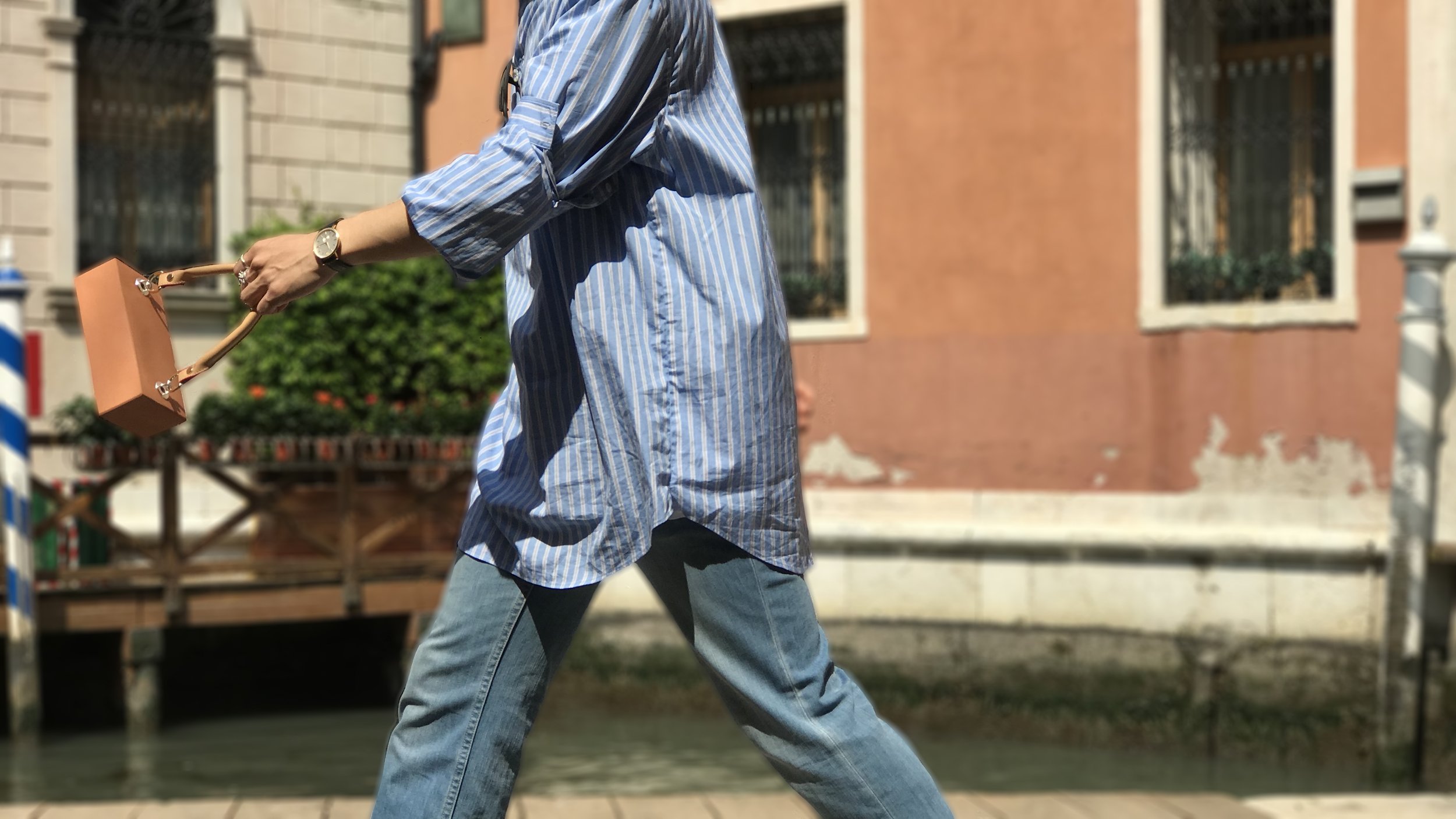
A Wall and A Bag by Mingze Zhang
FabBRICK asks the same question through cloth. Clarisse Merlet's studio compresses discarded textiles into brick-like modules for interiors, furniture and lighting. The move from garment to block is not merely a clever transformation. It changes how the body understands the material. Loose fabric folds, warms, stretches, absorbs and remembers skin. Compressed fabric becomes dense, modular and architectural. The eye still catches flecks of former clothing, but the hand is asked to imagine stacking rather than wearing.
This is where perception matters. Colour in FabBRICK is not a decorative coating placed after manufacture. It arrives from the waste stream itself. A block may carry fibres, tones and fragments that point back to clothes whose owners are absent. That visible archive is important because it prevents the material from looking newly innocent. The textile has not vanished into a clean green claim. It has been disciplined into another form, and that discipline involves sorting, pressure, binding, labour and testing.

FabBRICK by Clarisse Merlet
The Ellen MacArthur Foundation's report on textiles argues that clothing systems need to keep fibres circulating at higher value after use. FabBRICK belongs to that ambition, but it should be read carefully. A circular material still needs a technical biography. What binds it? How does it behave with moisture, fire, sound, abrasion and time? Where can it perform safely, and where can it only suggest an idea? The useful instruction here is not "waste can become design". It is: follow the process until the claim meets the material.
The Green Island by Estudio Cavernas moves from object to inhabited space. Built for Burmese migrants living at a municipal waste centre in Mae Sot, Thailand, the project is described as a multipurpose community space that uses reclaimed timber, sugarcane thatch, aluzinc layers, drainage, and local construction training. In this context, recovered material cannot remain an aesthetic gesture. It has to be shaded, drained, stand, ventilated, and repaired. It has to be known by the people who use it.
Albena Yaneva's architectural ethnography is useful here because it treats buildings as things made through negotiations, drawings, models, materials, tests and maintenance rather than as finished images. Read through that lens, The Green Island is not only a structure but also a chain of decisions. A raised floor responds to water. Thatch responds to heat. Aluzinc responds to weather. Reclaimed timber responds to availability but also raises questions about joints, lifespan, and repair. Training becomes part of the material system because it decides whether knowledge remains on site after construction.
This is also where sustainability language must be handled with care. Reuse is not a spell. A recovered plank can fail. A local material can be badly detailed. A low-cost solution can still become a burden if nobody can maintain it. The Green Island is compelling because its material choices are tied to social and climatic conditions rather than presented as texture alone. Its usefulness is tested by children gathering, rain falling, heat accumulating, repairs being made and a community deciding whether the space continues to serve.

The Green Island by Estudio Cavernas
Chitofoam takes the argument to the scale of polymer and shell. Charlotte Bohning and Mary Lempres propose a foam-like packaging material made from chitin drawn from mealworm exoskeletons, in relation to research on mealworms and polystyrene. Chitin is a major natural polymer found in arthropod exoskeletons and fungal cell walls. Marguerite Rinaudo's review of chitin and chitosan makes clear that these materials have significant technical properties, but technical promise is not the same as finished proof.
The project is strongest when treated as an invitation to inspect the hidden life of packaging. Foam is designed to disappear from attention. It protects the desired object, absorbs shock, fills a void, and then becomes waste. Chitofoam shifts perception by connecting protection to a biological residue: the shed armour of an organism. Jorge Otero-Pailos's writing on preservation helps here, because it treats residues as records of atmosphere, time and use rather than as matter to be cleaned away. Chitofoam similarly asks us to look at residue as archive and potential resource.
Research by Yang and colleagues on mealworms and polystyrene gives the project scientific context, but it should not be inflated into a universal solution. Their work concerns specific organisms, gut microorganisms, degradation conditions and chemical characterisation. A responsible materials column should maintain that specificity. The question is not whether insects will save packaging. The question is what new material pathway is being proposed, what evidence supports it, and what still needs testing before it can be trusted.

Chitofoam by Charlotte Böhning and Mary Lempres
Across these four works, leftover matter becomes useful only after it passes through scrutiny. Zhang teaches us to read repetition and refusal. FabBRICK teaches us to read compression, colour and performance claims. The Green Island teaches us to read shelter through maintenance, climate and social knowledge. Chitofoam teaches us to read residue through biology, protection and proof. Together, they offer an instructional method for material culture: begin with the surface, trace the process, test the claim, then ask who lives with the consequence.
The leftover, then, is not a minor thing. It is where value becomes visible because it has become uncertain. A brick lifted again after the wall has gone, a block of compressed clothing, timber raised above wet ground, a pale foam remembering an exoskeleton: each asks to be judged slowly. Usefulness is not a label placed on matter. It is a responsibility that must be demonstrated.
Bibliography
Appadurai, A. (ed.) (1986) The Social Life of Things: Commodities in Cultural Perspective. Cambridge: Cambridge University Press.
Art & Materials Lab (2019) 'A Wall and A Bag - Mingze Zhang'. Available at: https://www.artandmaterialslab.com/art/a-wall-and-a-bag-mingzezhang (Accessed: 20 June 2026).
Art & Materials Lab (2024) 'The Green Island - Estudio Cavernas'. Available at: https://www.artandmaterialslab.com/spatial/the-green-island-estudio-cavernas (Accessed: 21 June 2026).
Art & Materials Lab (2024) 'Chitofoam - Charlotte Bohning & Mary Lempres'. Available at: https://www.artandmaterialslab.com/materials/chitofoam-charlottebhning-marylempres (Accessed: 14 June 2026).
Art & Materials Lab (2025) 'FabBRICK - Clarisse Merlet'. Available at: https://www.artandmaterialslab.com/materials/fabbrick-clarissemerlet (Accessed: 04 June 2026).
Ellen MacArthur Foundation (2017) 'A new textiles economy: Redesigning fashion's future'. Available at: https://www.ellenmacarthurfoundation.org/a-new-textiles-economy (Accessed: 03 June 2026).
FabBRICK (2025) 'Design textile'. Available at: https://www.fab-brick.com/ (Accessed: 24 June 2026).
Kopytoff, I. (1986) 'The cultural biography of things: Commoditization as process', in Appadurai, A. (ed.) The Social Life of Things: Commodities in Cultural Perspective. Cambridge: Cambridge University Press, pp. 64-91.
Otero-Pailos, J. (2016) Experimental Preservation. Zurich: Lars Muller Publishers.
Rinaudo, M. (2006) 'Chitin and chitosan: Properties and applications', Progress in Polymer Science, 31(7), pp. 603-632. Available at: https://doi.org/10.1016/j.progpolymsci.2006.06.001 (Accessed: 24 June 2026).
Yaneva, A. (2009) Made by the Office for Metropolitan Architecture: An Ethnography of Design. Rotterdam: 010 Publishers.
Yang, Y., Yang, J., Wu, W.-M., Zhao, J., Song, Y., Gao, L., Yang, R. and Jiang, L. (2015) 'Biodegradation and mineralisation of polystyrene by plastic-eating mealworms: Part 1. Chemical and physical characterisation and isotopic tests, Environmental Science & Technology, 49(20), pp. 12080-12086. Available at: https://doi.org/10.1021/acs.est.5b02661 (Accessed: 14 June 2026).
Responsible Editor
Isabel Pavone