

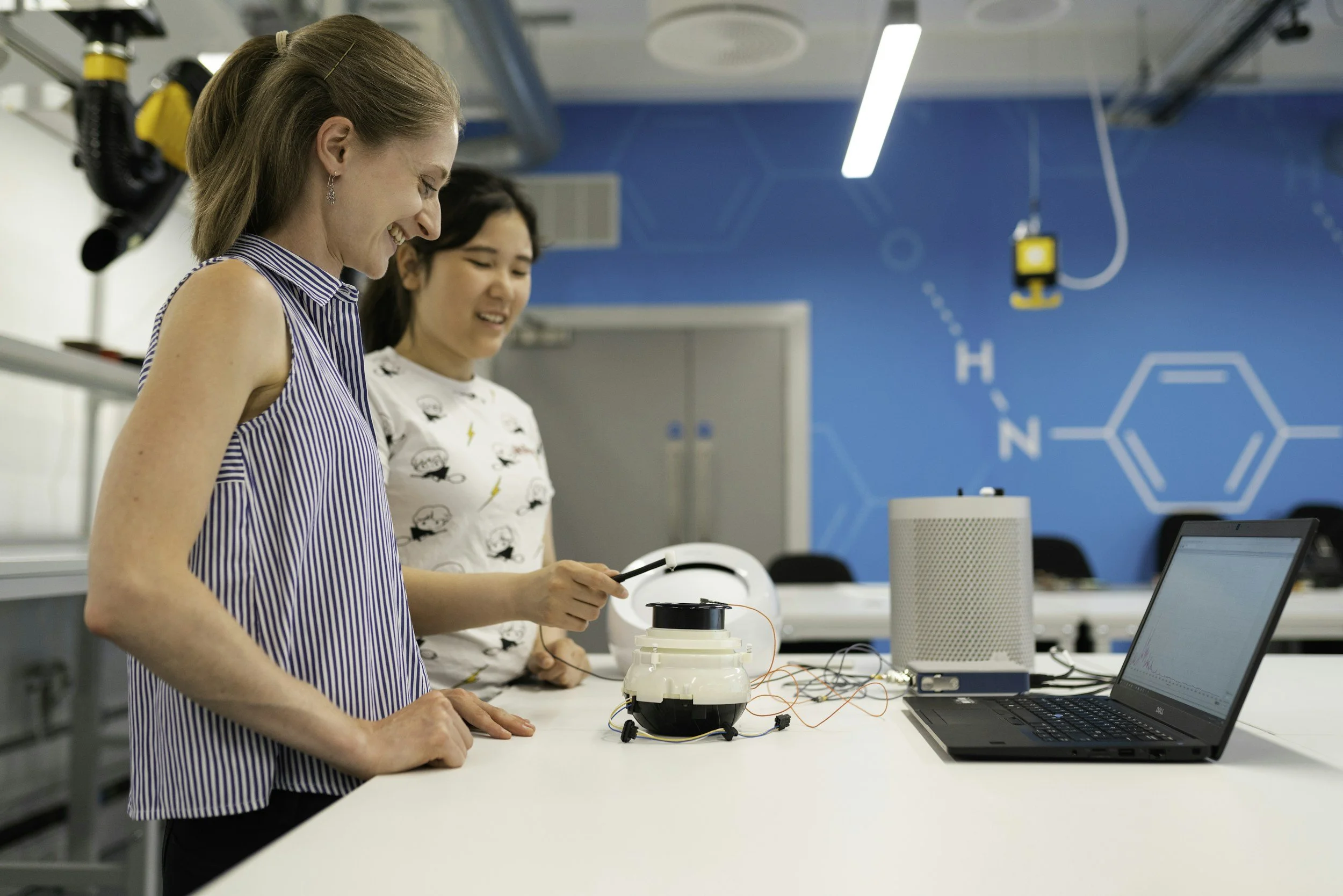
The Latest Feature
The Latest Feature
Slow reports on art, materials, and the systems behind them.
We publish monthly or bi-monthly long-form features and research notes.
We prioritise verification, context, and material evidence over speed.
Every story is built to be cited: sources, credits, and disclosures included.
What Transparency Leaves Unsaid
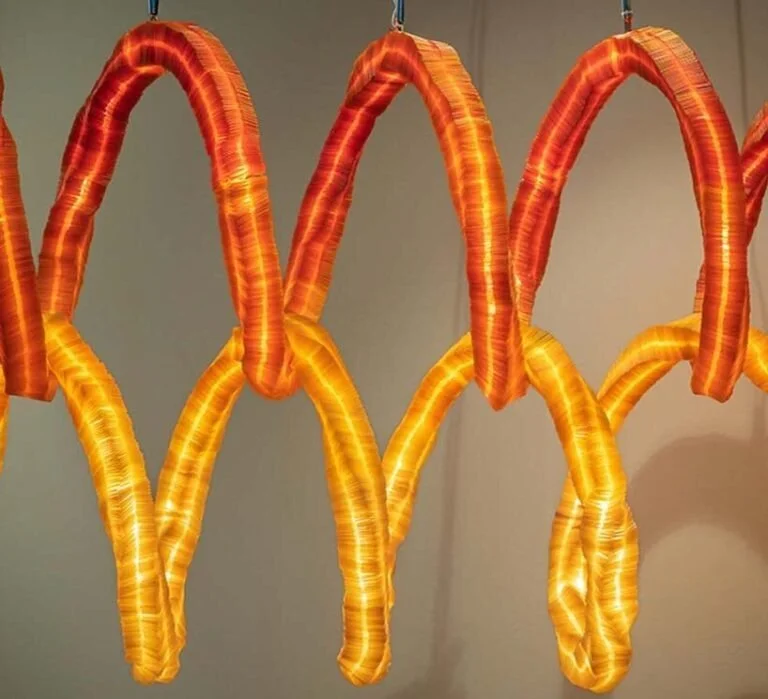
Clear acrylic promises access; a glowing agar membrane offers something softer and less certain. Placed together, The Speaker and Mixer Bag and Slow2 show that seeing through a material is not the same as understanding how an object works, ages or comes apart.
This paired essay stays close to screws, seams, wiring and transmitted light, asking what transparency reveals—and what it conveniently leaves outside the frame.
When Matter Learns to Move
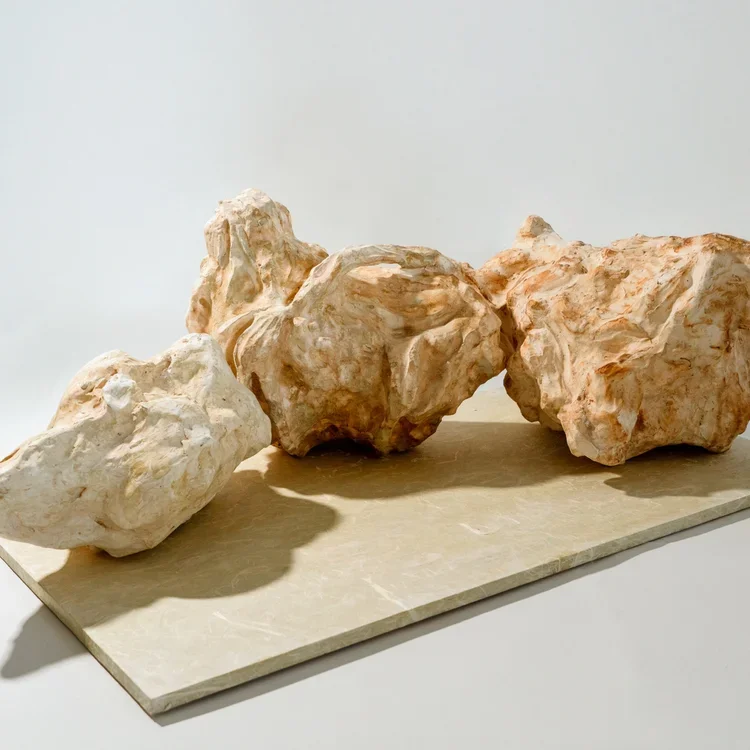
Movement is easy to miss once an object has become still. A tightened sculptural skin, a bamboo bridge, a chased metal surface, a rounded pebble held beside wood: each carries a record of force passing through matter. This September article reads motion not as spectacle but as material instruction.
Through Dohee Park, Mizzi Studio, Sitong Chen, and DESIGNO-Patagonia, it asks how air, water, walking, erosion, and handwork become legible in forms that appear fixed, and what those traces teach us about comfort, structure, wear, and care.
What Does a Material Remember?
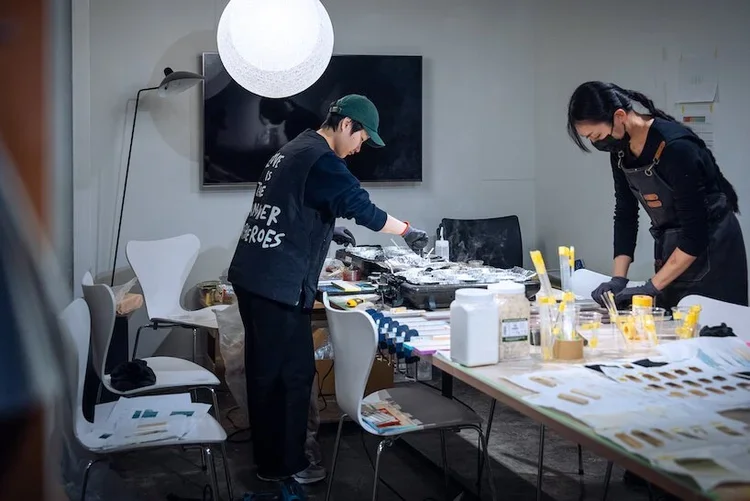
Memory is not only kept in images or written records. It can sit in a pigment grain, a charred stake, a strand of wire, a crochet loop, or an algae-derived colour that shifts our assumptions about dye. This August article reads material memory through Rino and Kaito Tokito, Mathieu Nouhen, we+, and Amy Hsu Tzu Chen.
Rather than treating memory as nostalgia, it asks how matter records pressure, heat, growth, collaboration and handling, and how those records change what an artwork or material can ask of the body.
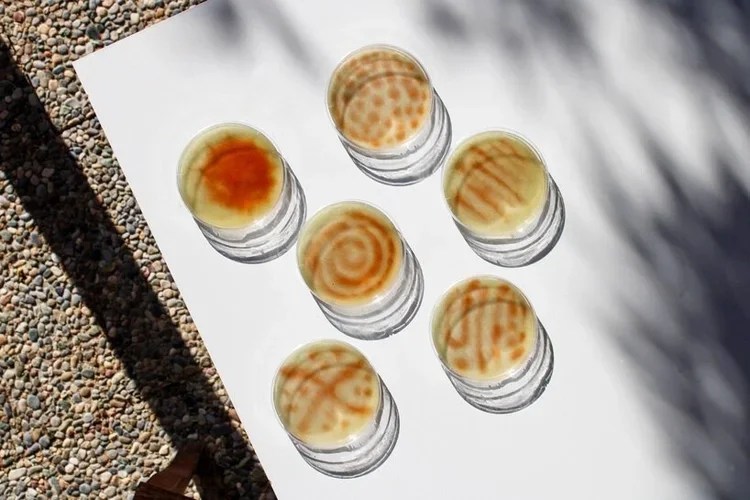
Surfaces That Teach the Hand
A polished ring asks to be read as a mirror. A bamboo stool appears fuzzy before it proves its strength. A ceramic glaze carries stone dust back into touch. A bio-wrap protects soap only long enough to loosen into water.
This July article looks at surface as instruction: the place where material, perception and use first meet. Through Airy Chen, Arashi Abe, Studio Peipei and Alara Ertenu, it asks how skins, coatings, fibres and membranes train the body to understand value, care, fragility and trust.