

The Latest Feature
The Latest Feature
Slow reports on art, materials, and the systems behind them.
We publish monthly or bi-monthly long-form features and research notes.
We prioritise verification, context, and material evidence over speed.
Every story is built to be cited: sources, credits, and disclosures included.
How to Read a Leftover
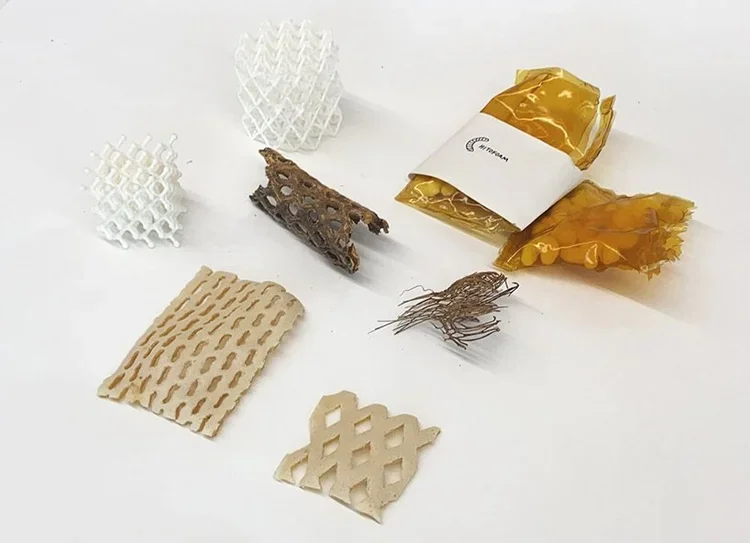
Begin with the thing that seems to have fallen out of use: a loose brick, a recovered plank, a discarded garment, an insect shell. None is neutral. Each carries a former purpose, a handling history and a question about what it can still be asked to do.
Through Mingze Zhang, Estudio Cavernas, Clarisse Merlet, and Charlotte Bohning with Mary Lempres, this article reads leftover matter as evidence. It asks how usefulness is made through perception, testing, maintenance and context, rather than through the optimistic language of reuse alone.
Fossils of the Future: When Materials Begin to Leave Humanity’s Last Words
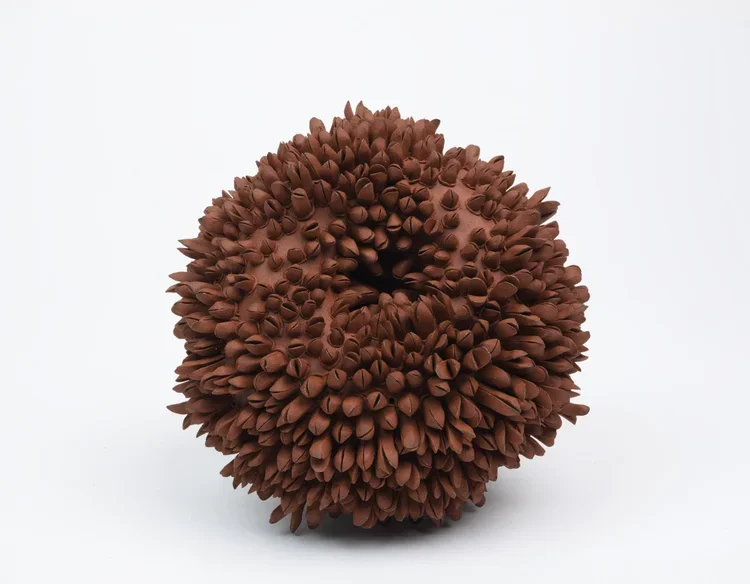
Materials, in these works, are not passive supports for artistic meaning; they are the very sites where meaning hardens, fractures, rings, glows, and is stitched back together. Diseased wood becomes a rehearsal for future archaeology. Brass turns social balance into a fragile acoustic event. Digitally rendered stone asks whether tomorrow’s ruins will be geological masses or luminous files. Fired clay imagines death not as disappearance, but as a residue that continues to grow. Suspended scissors and black thread expose civilisation’s contradiction: we cut the world open and then attempt, with inadequate tenderness, to mend it.
This is not about passive preservation or active forgetting, but about how temporal residue and human intervention mutually generate each other. The future may not read us first through language, but through weight, tension, surface, seam, and reflection: a faint line of light along brass, just after the wind has moved it, still faintly sounding.