

The Latest Feature
The Latest Feature
Slow reports on art, materials, and the systems behind them.
We publish monthly or bi-monthly long-form features and research notes.
We prioritise verification, context, and material evidence over speed.
Every story is built to be cited: sources, credits, and disclosures included.
The Right to Rot: How Biomaterials Disrupt the Myth of Eternal Art
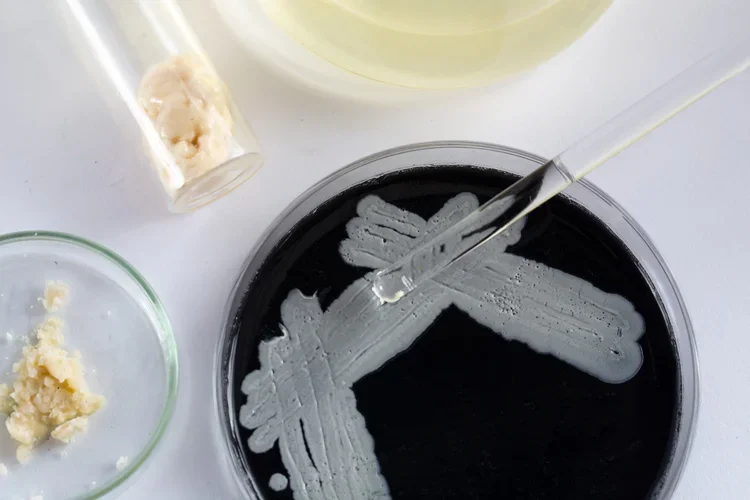
It All Begins HerUnder a bell jar in the corner of a gallery, an artwork quietly changes its mind. Mycelium blooms along an edge, bacterial cellulose catches light like skin, and an algae-based bioplastic form slumps near a radiator—as if refusing the museum’s oldest command: stay forever. Biomaterials don’t behave like inert substances; they act like collaborators with their own timelines, moods, and limits. And that behaviour is political.
It insists on a radical idea: the right to rot. Once we accept that an artwork may be designed to grow, soften, mould, and disappear, the myth of permanence begins to collapse. Value can no longer be measured by endurance alone. In a design culture addicted to green gestures, biomaterials also expose the uglier truth: sometimes “saving the planet” becomes just another aesthetic pose. What if the future of art isn’t preservation—but returne.
Synapses in the Weft: When Smart Textiles Start Sensing the World for Us
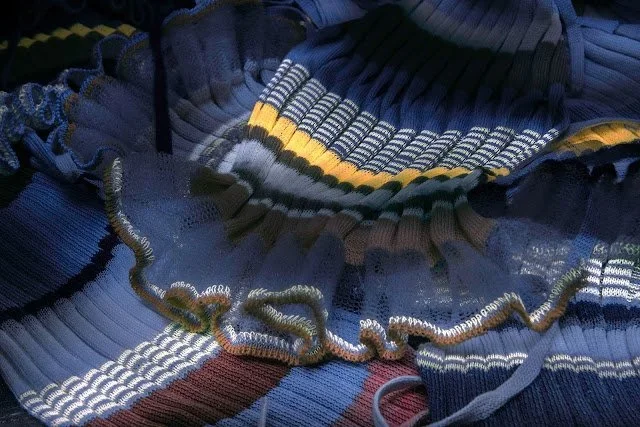
Shape-memory alloy doesn’t “animate” cloth; it gives it posture—muscle inside weave, a remembered stance. Conductive polymer fibres act less like decoration than nerves, translating touch into pulses that can be stored, compared, and interpreted.
And fibre-optic weaving turns illumination into a kind of gaze: light arriving from within, thickening when you approach, flickering as if attention had tempo. You come to look, and suddenly you’re unsure whether you’re the observer—or the measured. It All Begins Here
Material Breath: Locating Haptic Memories in Space
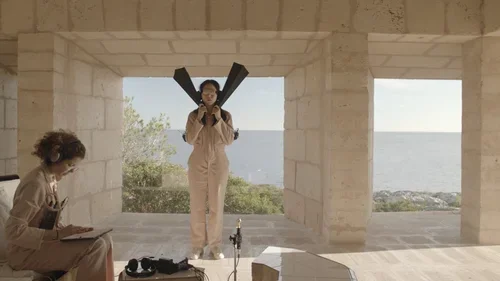
This article posits that contemporary space is not defined by static forms, but by an Ontological Confrontation between the viewer and "breathing" materials. I argue that we must move beyond the visual consumption of smooth surfaces to encounter the haptic weight of history and the metabolic rhythm of growth. By analysing Sukchulmok’s resistant rice straw and Mizzi Studio’s symbiotic mycelium, I trace how materials occupy space as active agents rather than passive fillers.
The discussion extends to the "modular organs" of Boyeon Kim and Jaehan Choi and the digital reciprocity of Jade Tang, revealing a trajectory in which the distinctions among biological bodies, physical structures, and digital data dissolve. This is not a rejection of the future, but rather its grounding. Ultimately, the essay advocates for an ethics of perception: finding the evidence of life—and the heavy, friction-filled memory of existence—within the texture of the world.