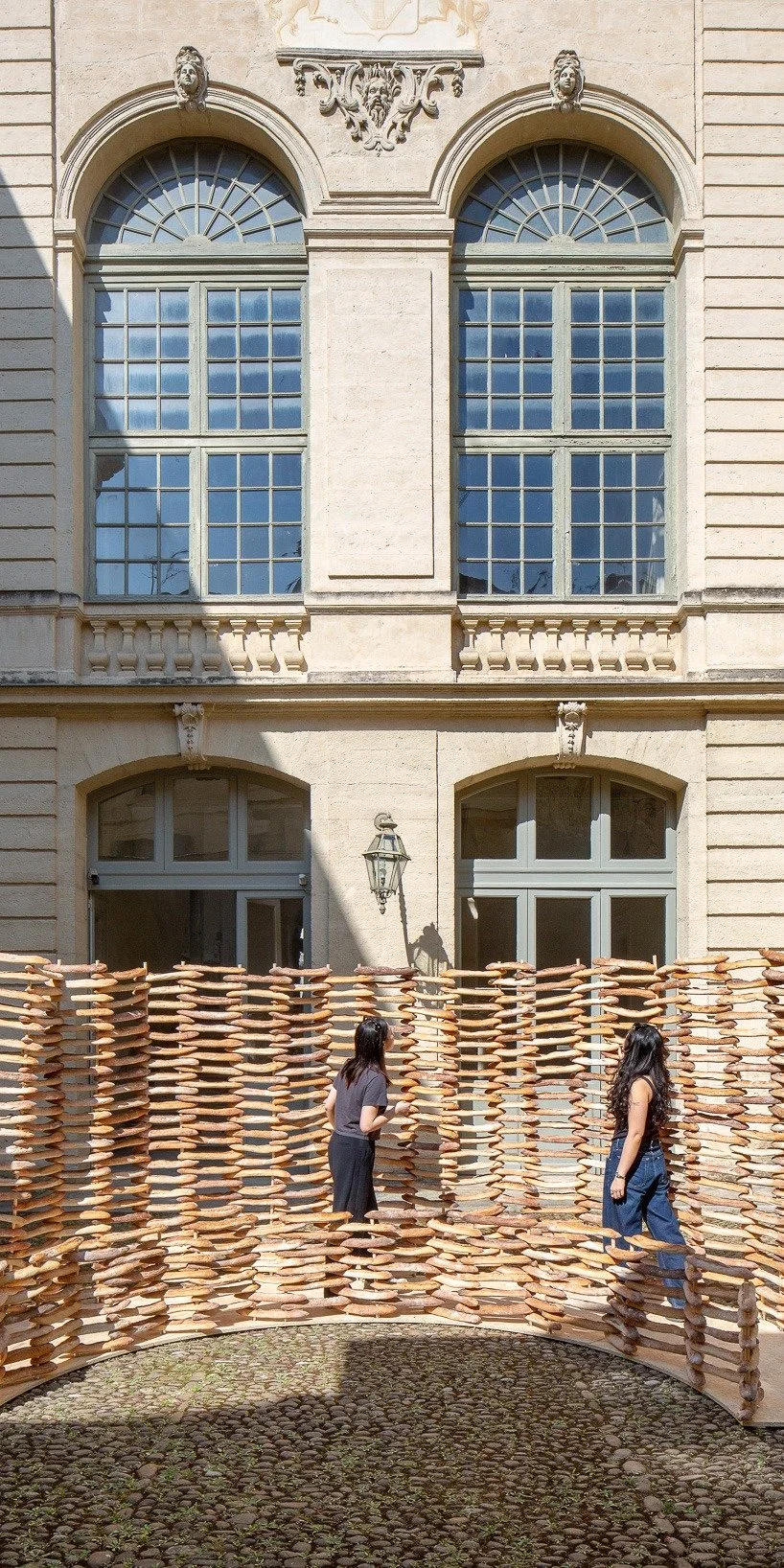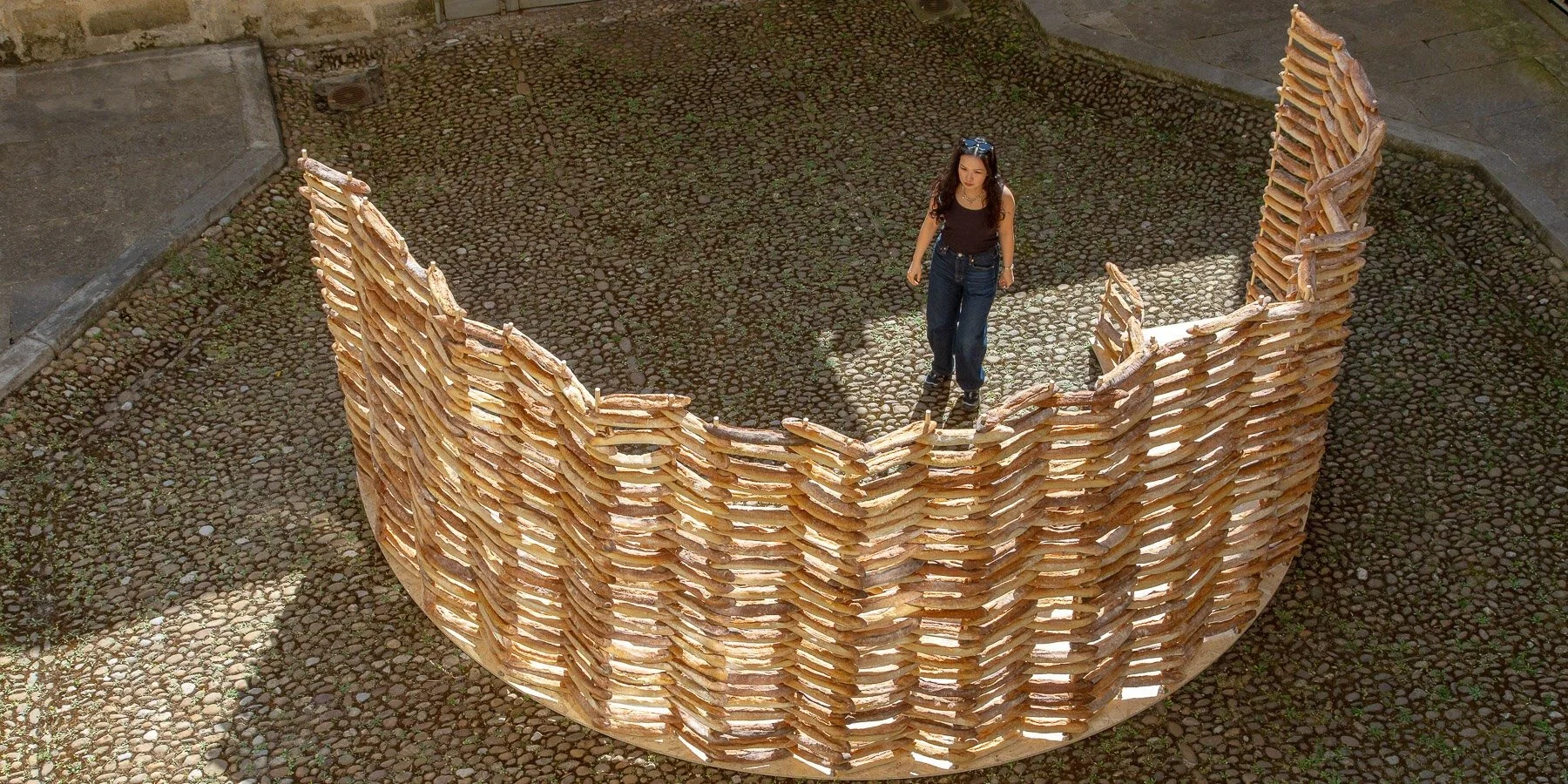
Paysage de Pain transforms 780 discarded baguettes into an immersive pavilion that makes food waste physically present. Through scent, texture, heat, and decay, MERO Studios frames bread as nourishment and refuse simultaneously, arguing that temporary architecture can turn surplus into public evidence, cultural reflection, and a prompt for circular action.
Paysage De Pain
“Discarded bread becomes architecture, exposing abundance, decay, and circular possibility”
May 04, 2026
Connetion : +321127
Shares : 34452
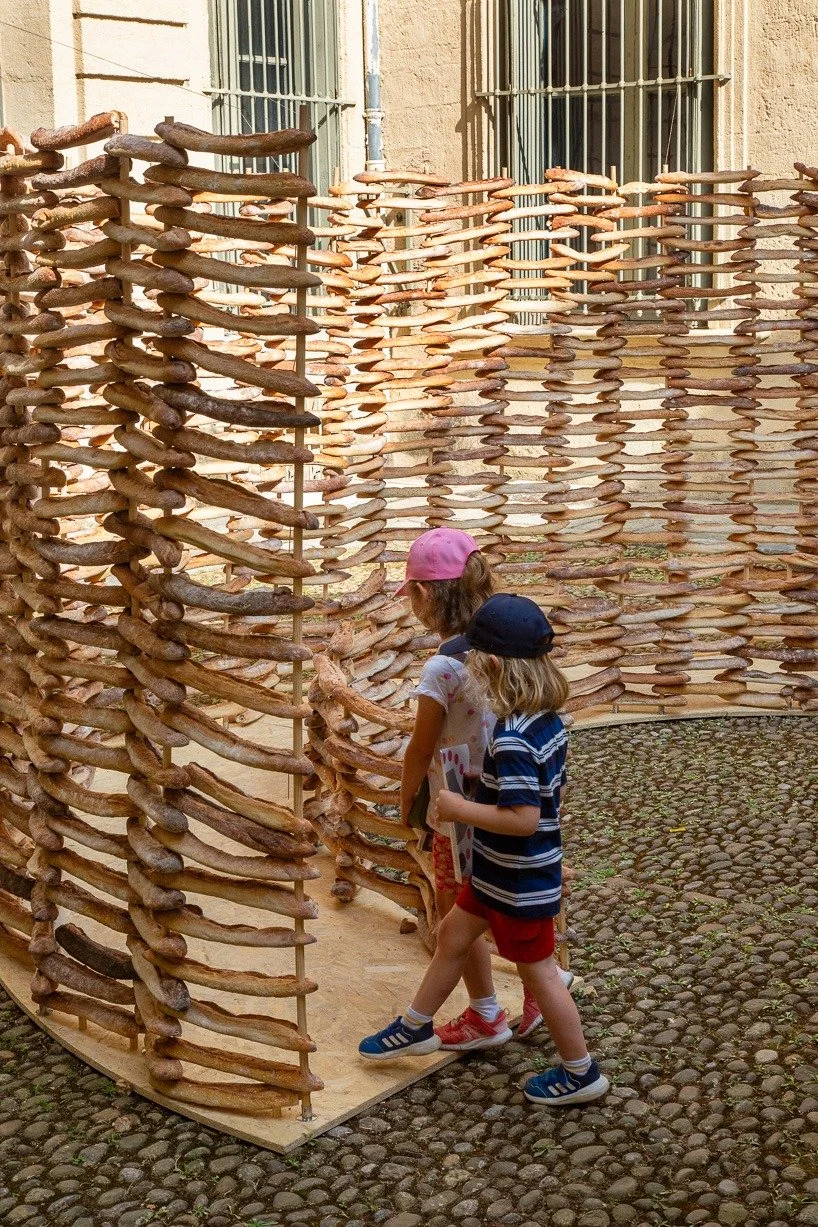
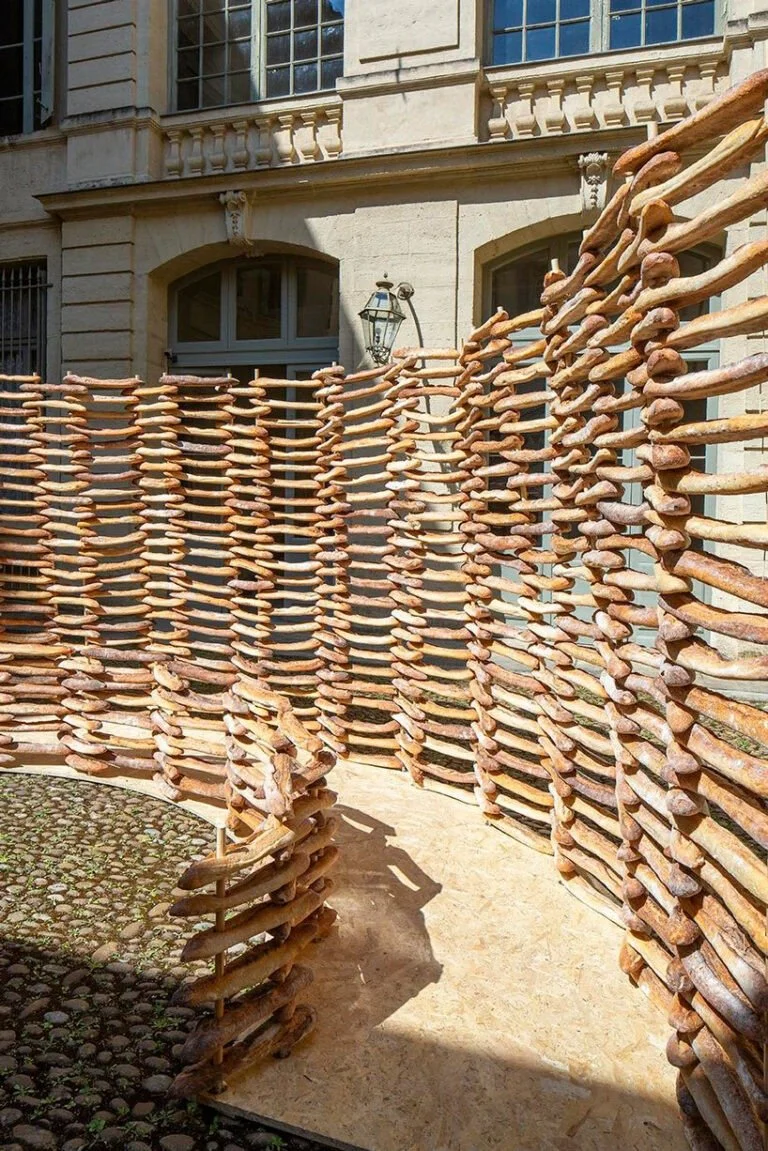
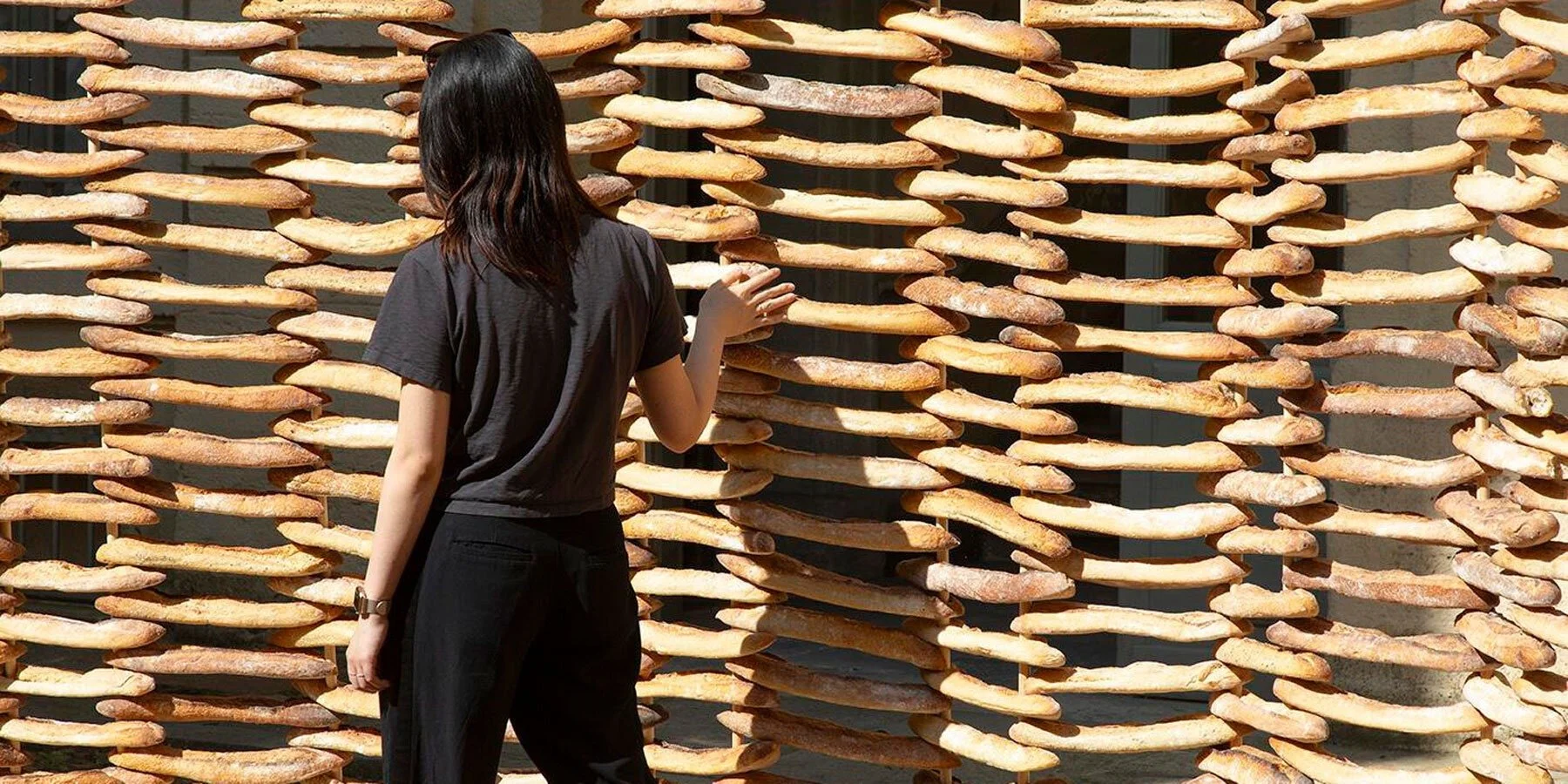
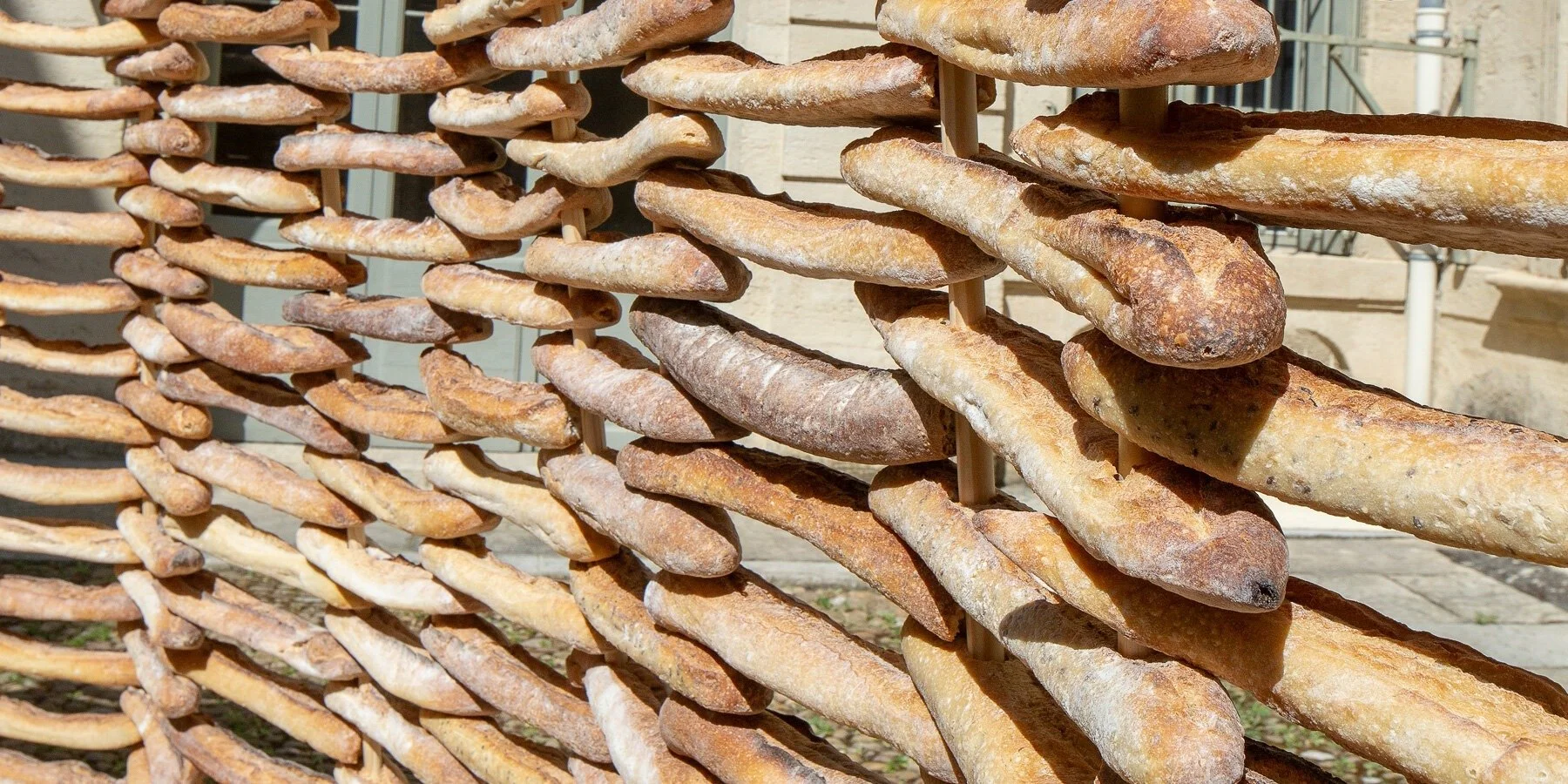
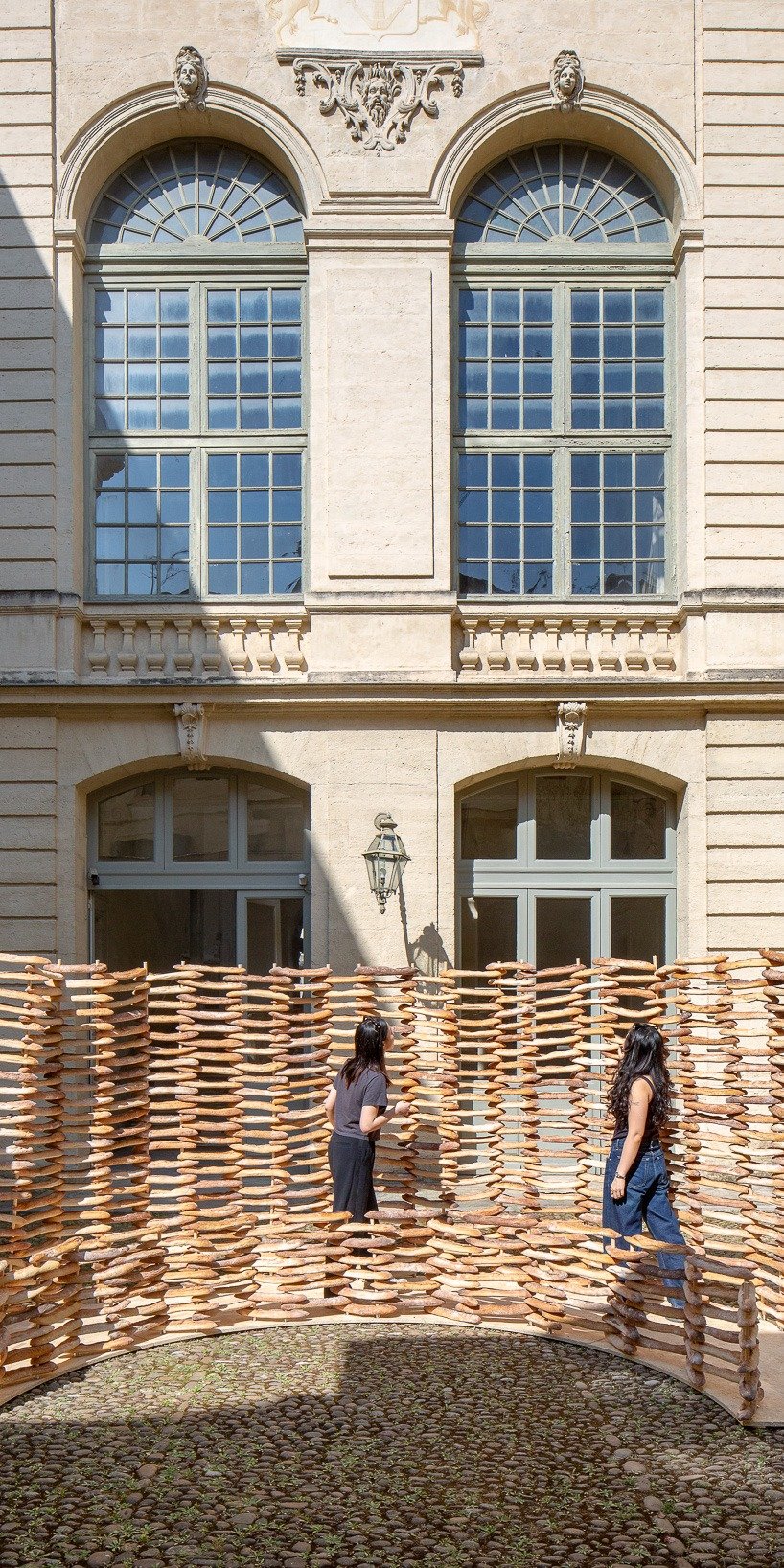
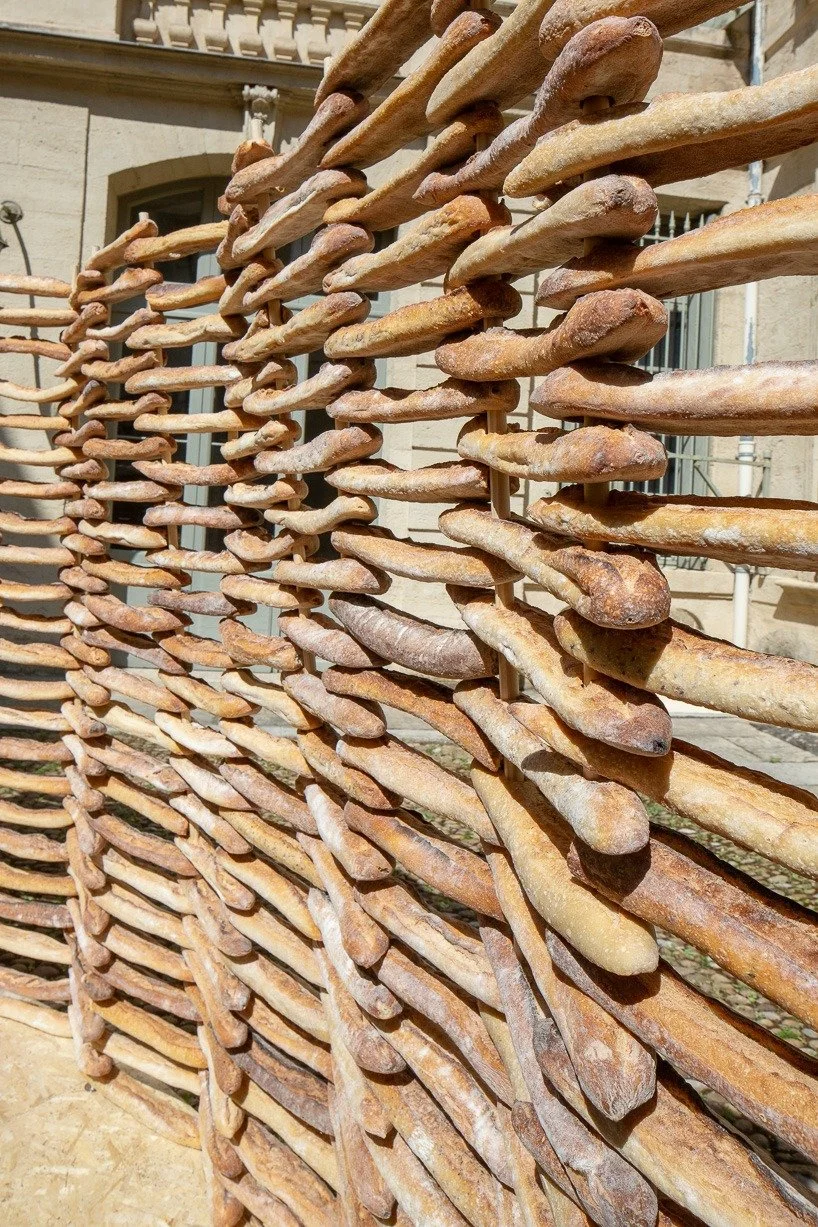
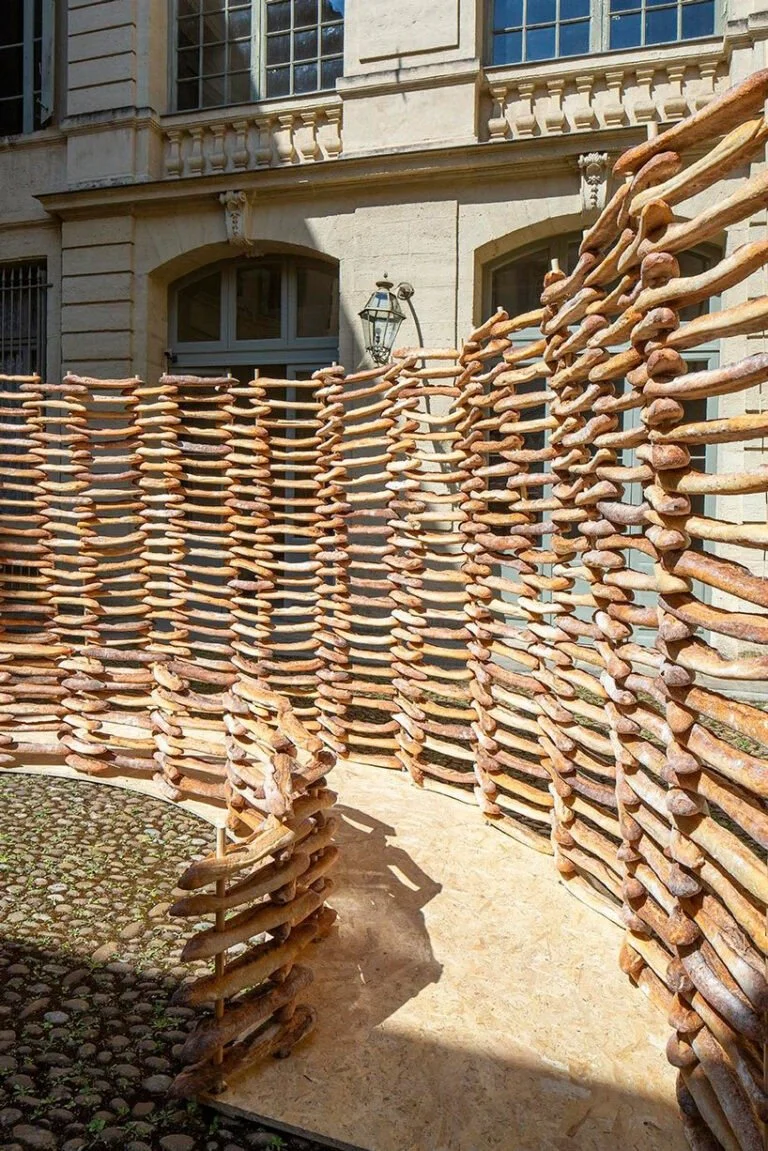
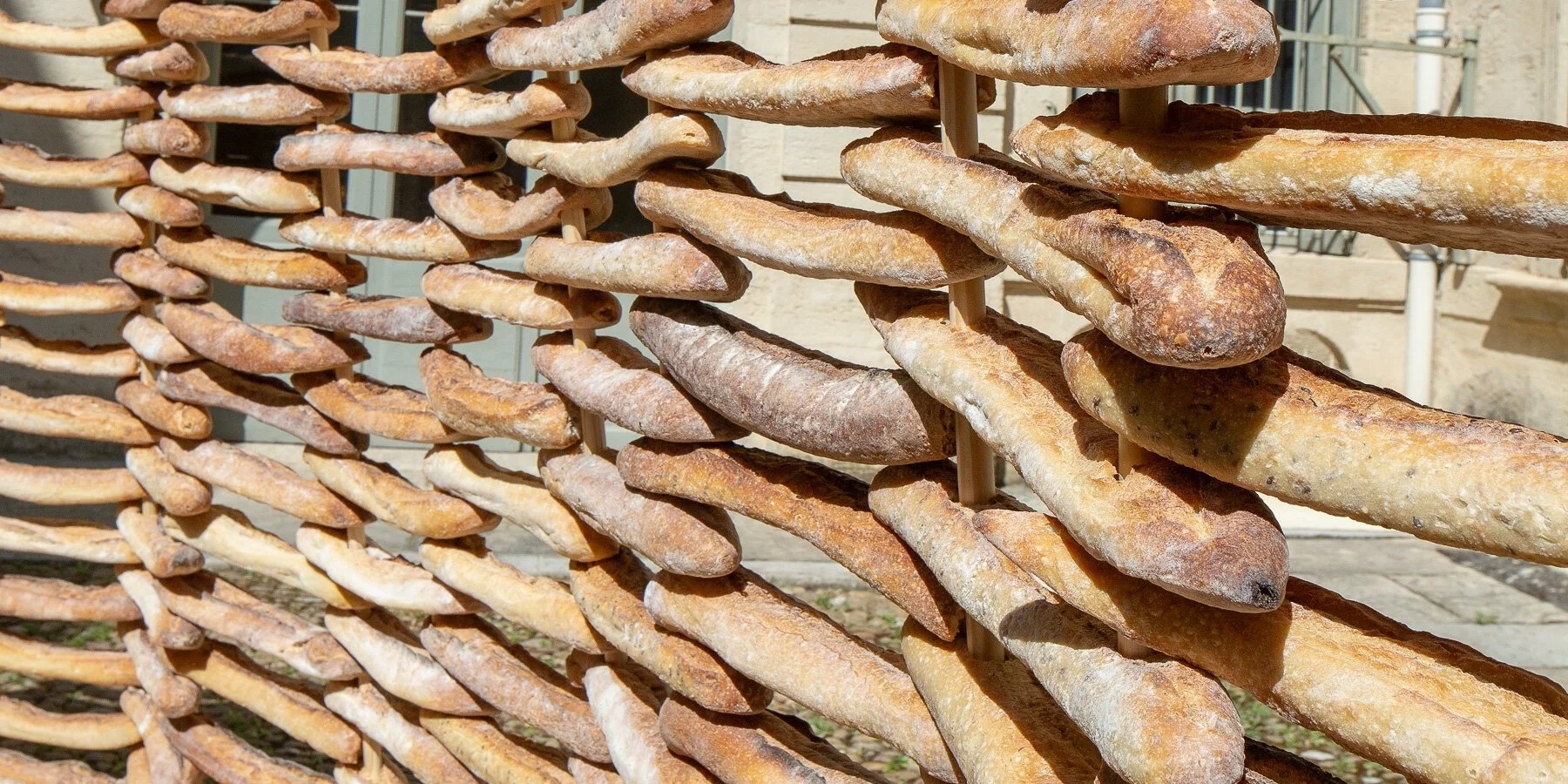
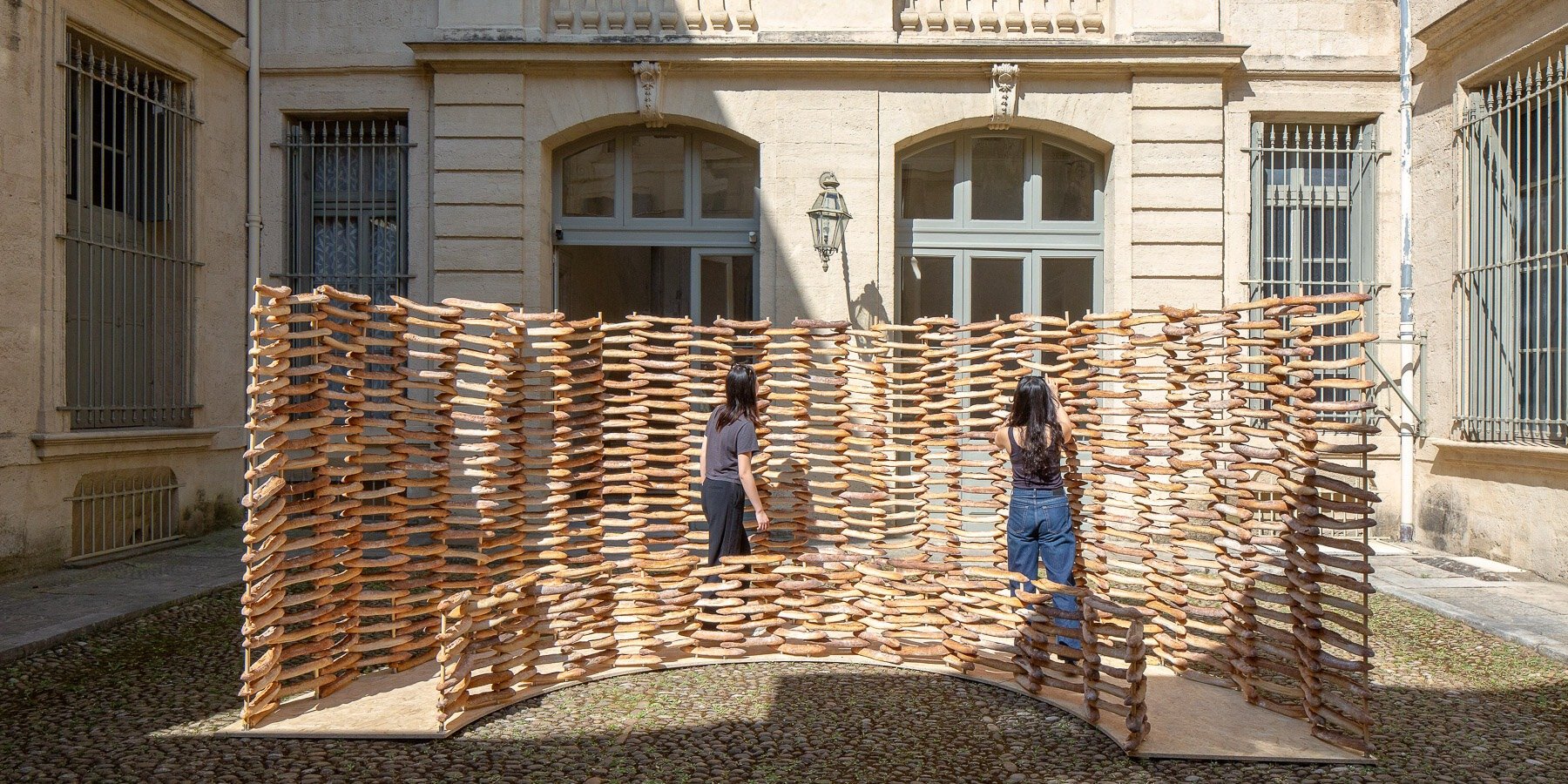
From across the courtyard, Paysage de Pain appears as a porous terrain suspended between wall and shelter. Sunlight catches the crusts; gaps between baguettes break the mass into flickering lines. Moving closer, the installation becomes bodily: bread can be smelled, its skin read, its fragility anticipated. This encounter establishes a confrontation between nourishment and refuse. This is not bread as food or bread as waste, but nourishment and waste mutually generating each other. MERO Studios frames the pavilion as evidence, arguing that abundance becomes ethically visible only when discarded matter occupies public space.
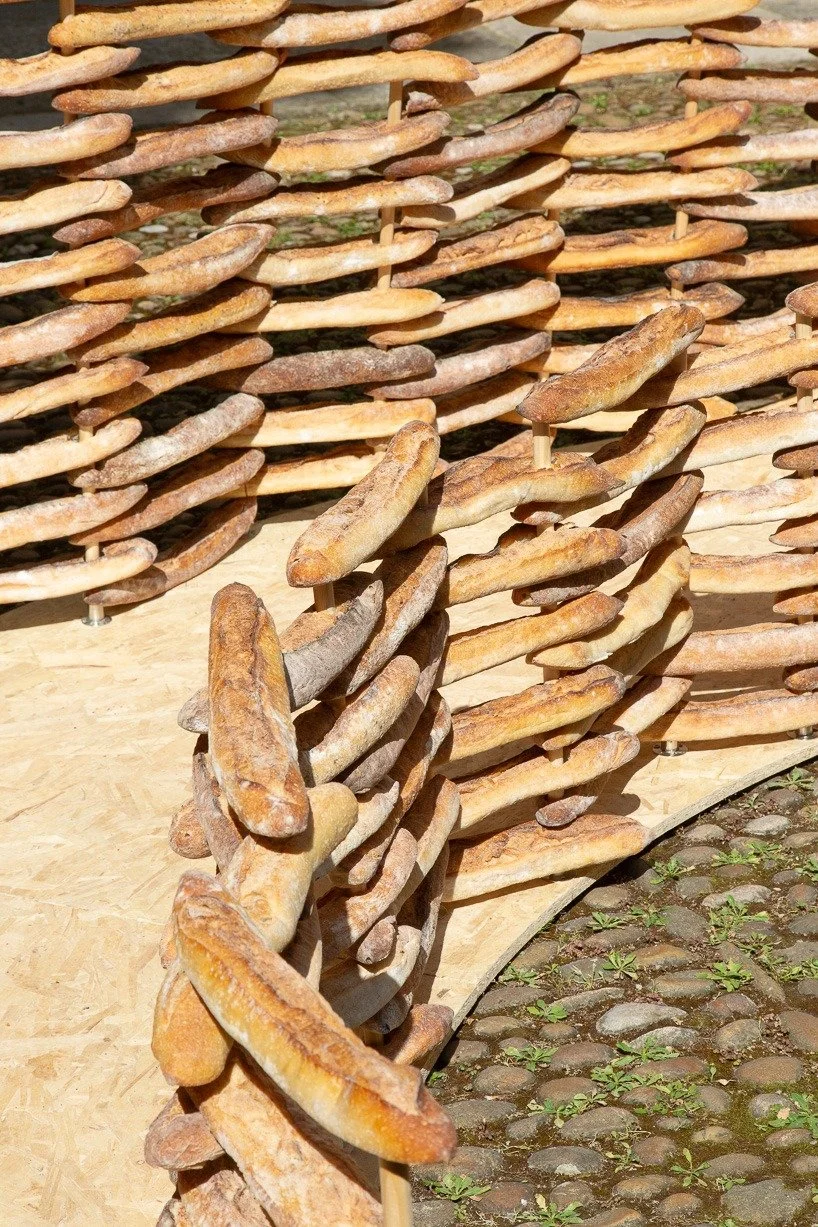
The installation uses 780 salvaged baguettes collected with Montpellier nonprofit Pain de L’Espoir. Rather than grinding or disguising them, the designers retain their form, assembling loaves into an architectural field. The method matters because recognition precedes abstraction: each unit remains legible before becoming construction. In space, the baguettes accumulate into a porous enclosure that filters light, interrupts sightlines, and directs movement through the Hôtel de Lunas courtyard. Visitors approach what looks like masonry, then discover a material too brittle, edible, and unstable to behave like structure. That correction returns the work to its central tension: the pavilion gains authority precisely because its substance cannot permanently hold it.
Heat, air, and time continue the construction after assembly. The sun dries the bread, fissures deepen, scent circulates, and surfaces shift from familiarity toward residue. The pavilion behaves less as a finished object than as a process of expiration. Viewers do not simply observe decay; they move within its atmosphere, measuring distance through smell and adjusting proximity around edges. Temporariness becomes a method rather than a weakness. By allowing deterioration to remain legible, MERO Studios turns the limits of bread into an argument about consumption.
The project places a staple inside the cultural frame of the Festival des Architectures Vives, whose 2025 theme was “La Gourmandise.” French bread carries habits of repetition, comfort, labour, and national identity, yet festival material notes that quantities of unsold bread are withdrawn and often destroyed. The installation uses that contradiction as a lever: familiarity intensifies the shock of surplus. It does not claim baguette construction as a scalable building system. Instead, it positions architecture as a testing ground where waste can be encountered before it is systematised. Returning to the courtyard, the decisive detail is neither monumentality nor novelty, but sunlight resting on a cracked crust at the edge of a porous wall.
MERO Studios
MERO Studios is a New York-based architecture and graphic design practice founded by Megan Dang and Rose Zhang. The designers met through Columbia University’s Graduate School of Architecture, Planning and Preservation, where both completed architectural studies. Their studio joins spatial design, visual identity, material research, and sustainability strategy, treating communication and construction as connected disciplines.
Dang brings a background in interiors shaped by experience in Copenhagen, New York City, and Ho Chi Minh City. She holds a BFA in Interior Design with a sustainability minor from Pratt Institute and a Master of Architecture from Columbia GSAPP. Her approach emphasises material integrity, precision, and spaces that support human and environmental health. Zhang works across graphic and architectural design, with experience spanning fashion, healthcare, public relations, and interactive environments. She also holds a Master of Architecture from Columbia GSAPP and is EDAC certified and a WELL Accredited Professional.
Together, they position MERO Studios around climate-conscious construction, healthy material selection, and circular design. The practice is interested in materials that have been discarded, overlooked, or poorly accounted for within existing systems. Their Columbia work investigated hemp waste as a low-carbon construction resource, while Paysage de Pain converted surplus baguettes into a temporary public environment.
This continuity gives the studio a stance: waste is not treated as an aesthetic category alone, but as evidence of economic and cultural habits. Through collaborative, story-led projects, MERO Studios makes those habits legible while testing healthier, more circular futures.
Design Studio: MERO Studios @mero_studios
Lead Designers: Megan Dang and Rose Zhang
Collaborating Organisation: Pain de L’Espoir
Location: Hôtel de Lunas, Montpellier, France
Festival: Festival des Architectures Vives 2025
Photographer: Paul Kozlowski
Image Courtesy: Paul Kozlowski @photoarchitecture.co
All images courtesy of MERO Studio