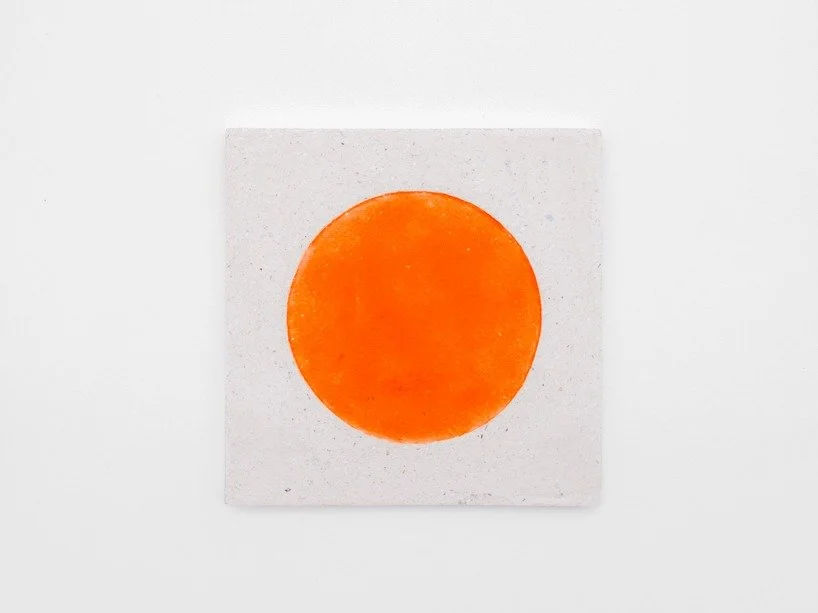
Fahrenheit 180º reworks Lisbon’s azulejo as a biodegradable ecological interface. Oyster shells, seaweed binders, and local pigments form tactile tiles across communal furniture, connecting food waste, estuarine repair, and cultural memory. The project treats architectural surfaces not as inert decoration, but as temporary infrastructure capable of returning to local nature.
From the Tagus to the Tile
“Biodegradable azulejos connect Lisbon’s cultural memory to living estuarine systems”
April 14, 2026
Connetion : +611233
Shares : 544512
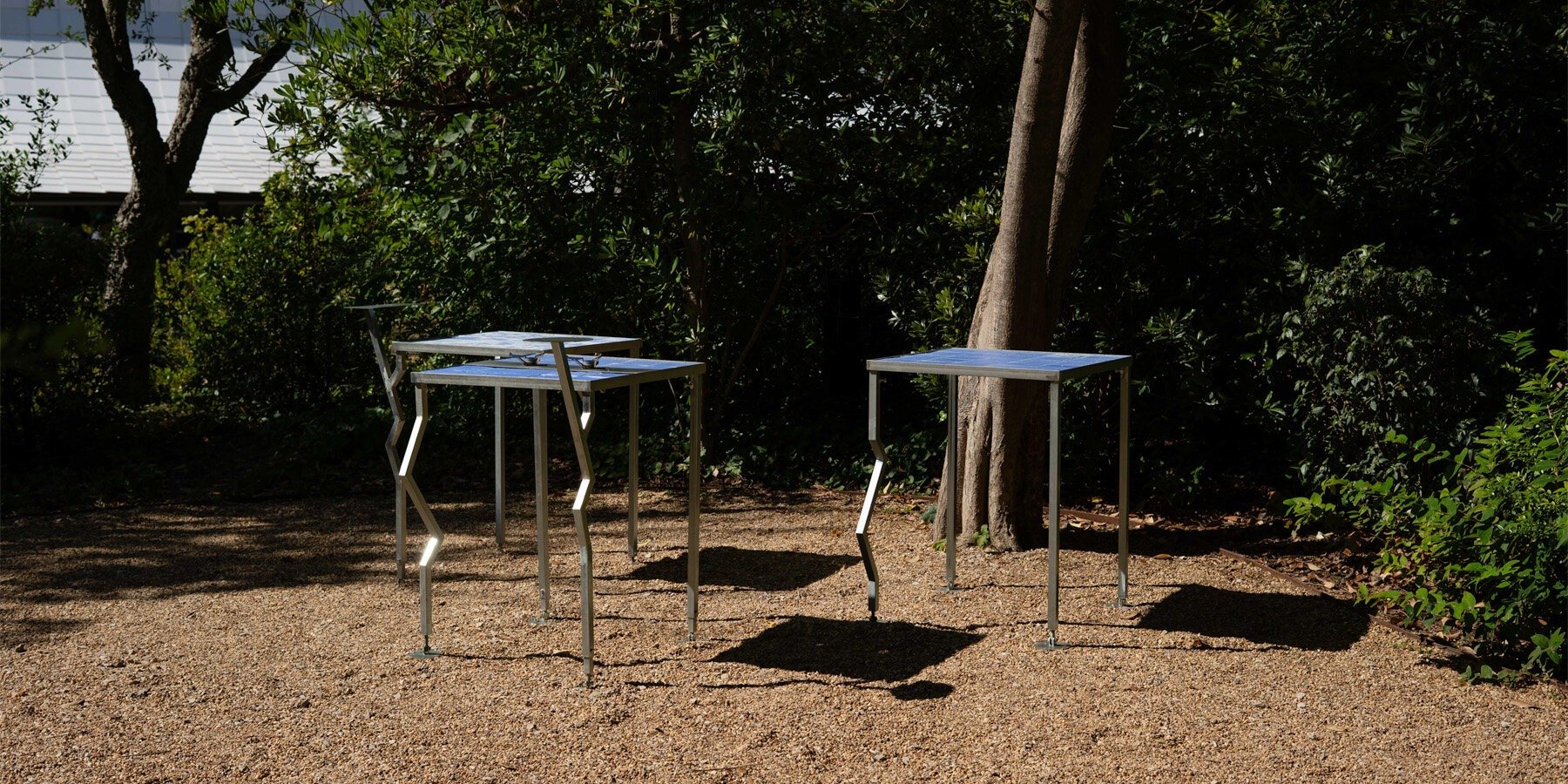
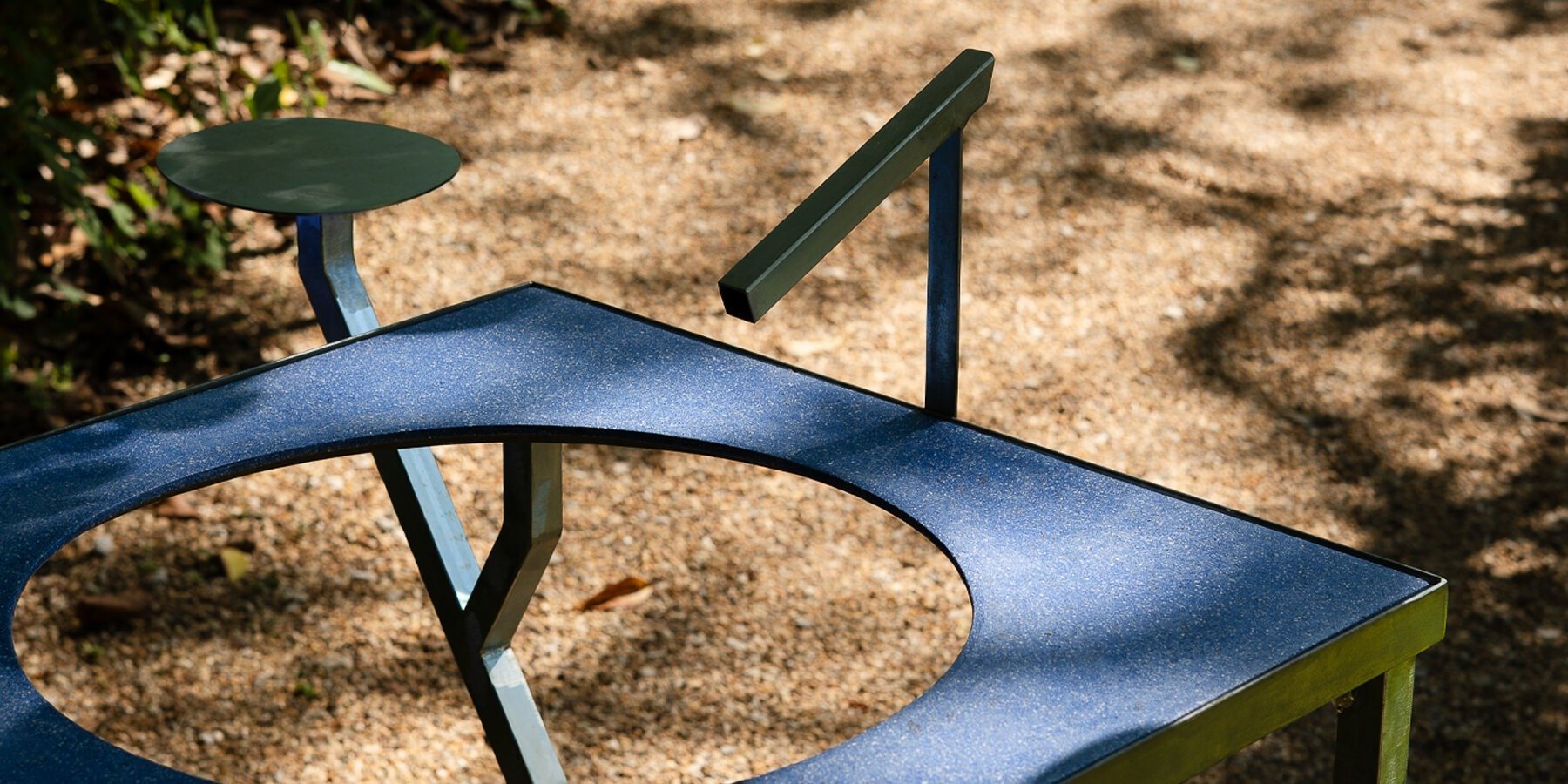
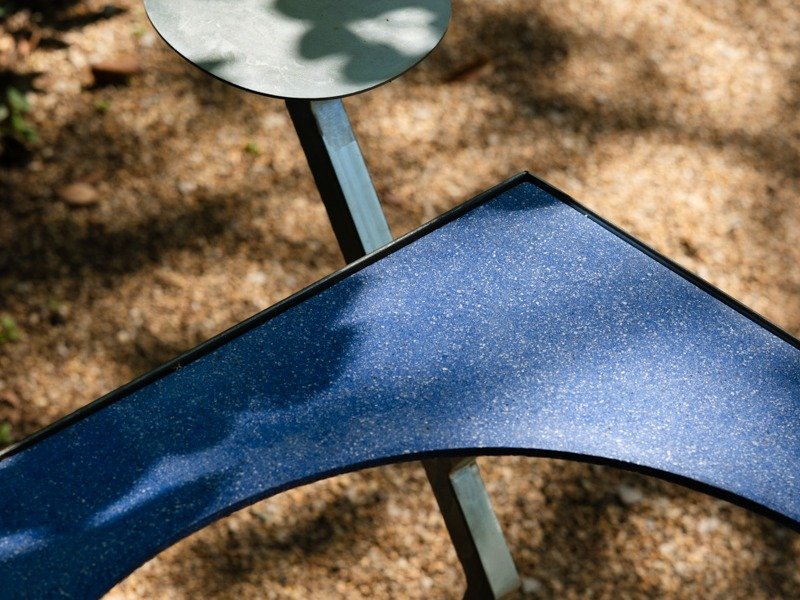
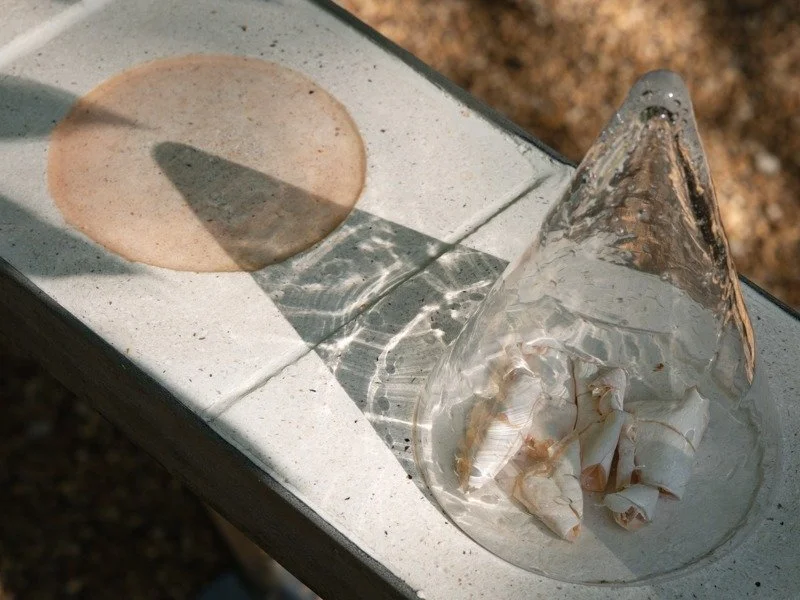
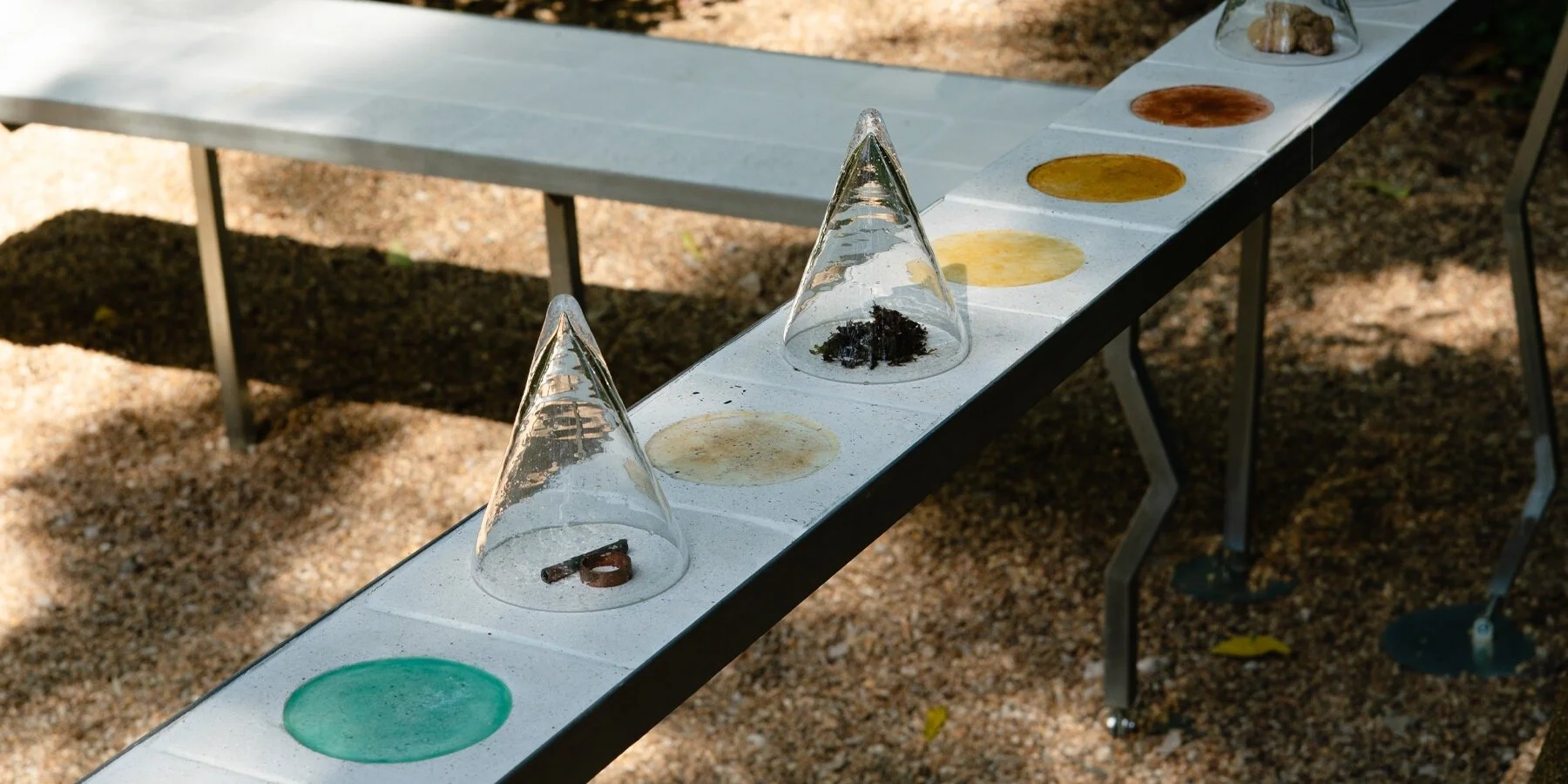
From afar, the installation appears as a small family of tiled objects resting among the Gulbenkian Garden’s foliage. Light catches pale, mottled surfaces; curved tables and angular legs seem part furniture, part stranded marine organism. Up close, shell fragments interrupt each plane with granular density, while softened edges expose a surface that feels grown rather than fired. This is not cultural preservation or ecological experimentation, but cultural preservation and ecological experimentation mutually generating each other. Fahrenheit 180º frames that encounter as a material confrontation between the durable image of the azulejo and the designed impermanence of a biodegradable skin; it argues that heritage can remain legible precisely by changing its substance.
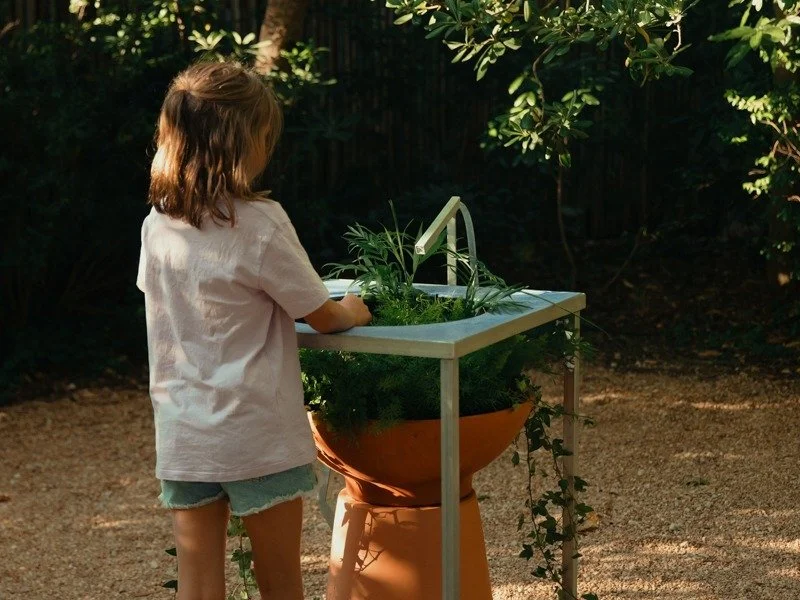
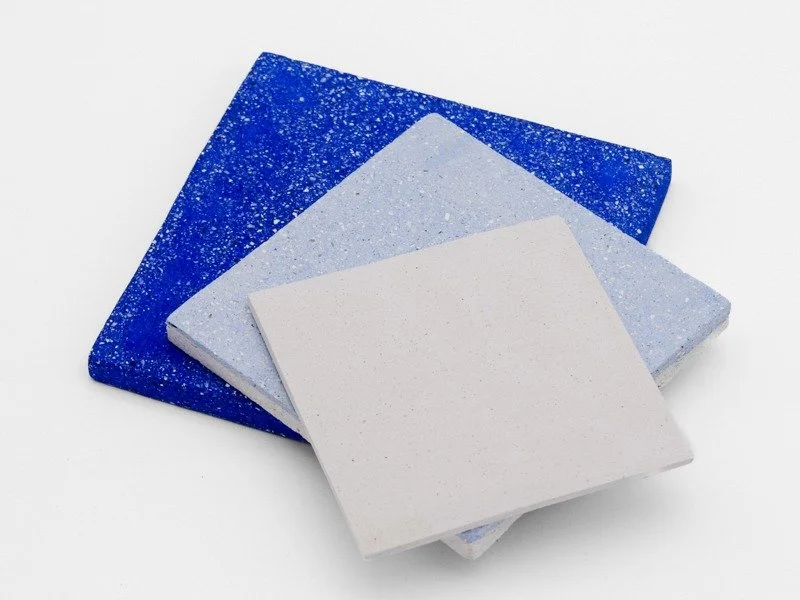
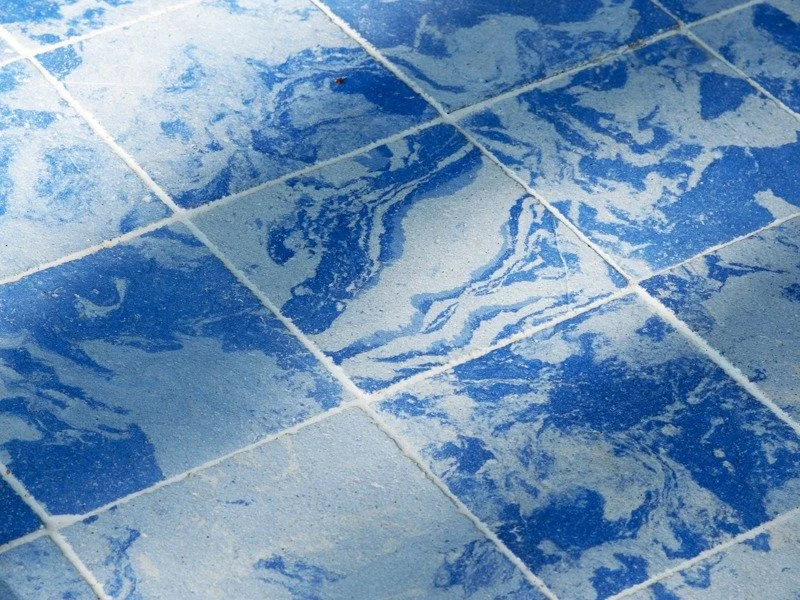
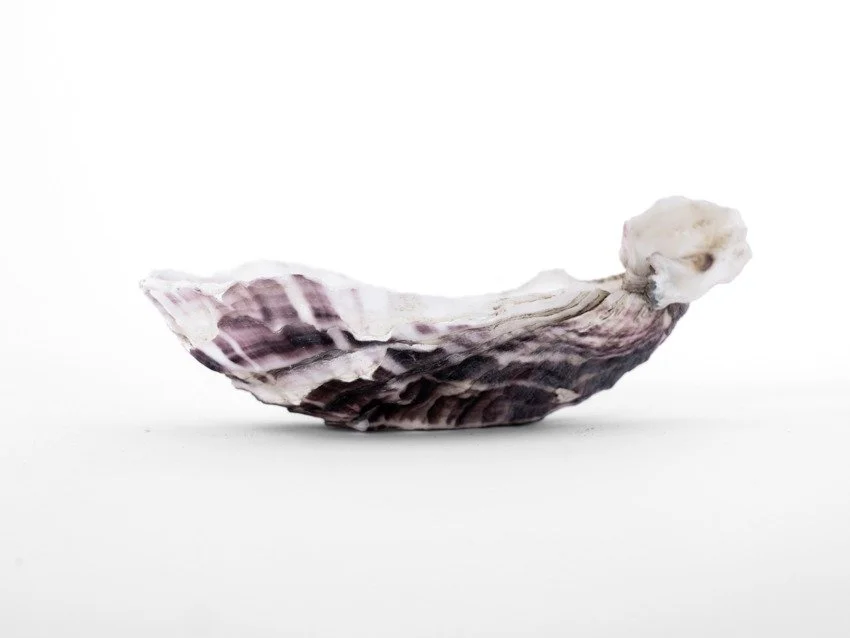
The tiles combine cleaned, crushed oyster shells with seaweed-derived binders and pigments associated with the Tagus landscape. Pressing replaces energy-intensive ceramic firing, and graded shell particles provide both aggregate and visual grain. Applied across a modular kitchen, bench, and linear table, the material does more than clad stable objects: it gathers food preparation, sitting, conversation, and display into one estuarine system. Visitors approach familiar tiled surfaces, then register their irregularity, porosity, and vulnerability. Recognition produces uncertainty. The azulejo remains present as a cultural pattern, yet its authority is loosened by a material designed to weather, fade, and eventually decompose.
That instability gives the installation its strongest spatial behaviour. Its six modules occupy the garden like “creepy crawlers,” with twisted supports and aquatic silhouettes resisting architectural neatness. Their forms draw bodies closer, asking visitors to touch, listen, sit, and eat rather than merely inspect a technical sample. The kitchen module makes the circular proposition explicit: oysters and seaweed move from coastal food systems into meals, waste streams, binders, pigments, and surfaces. Material research becomes a public ritual, while the garden supplies an active ecological frame rather than a neutral exhibition backdrop.
The project is most persuasive not as an immediate substitute for permanent ceramic façades, but as a proposition for temporary architecture, public furniture, festivals, and educational environments. Its limited durability is not simply a defect; it clarifies where regenerative materials can act responsibly without imitating petrochemical permanence. Fahrenheit 180º therefore positions decay as design evidence. As sunlight moves across the garden, the installation returns the azulejo to landscape, leaving cultural memory held within the rough weight of an oyster shell, where colour, surface, boundary, and borrowed permanence remain visibly unsettled beneath the garden’s shifting coastal light, water, and air.
Fahrenheit 180°
Fahrenheit 180º is a Portugal-based design collective founded by Jeremy Morris and Luca Carlisle, architects whose practices converge around regenerative construction, ecological literacy, and material experimentation. Rather than treating sustainability as a technical layer added after form-making, the studio begins with matter, biological cycles, and cultural systems through which materials acquire meaning.
Morris, born in Geneva in 1996, is a Swiss, English, and South African architect whose work has concentrated on earth construction. His honours thesis, recognised by the Federation of Swiss Architects, challenged concrete’s dominance by advancing soil as a structural and environmental alternative. Alongside architecture, his photography and filmmaking sharpen the collective’s attention to landscape, process, and public communication.
Carlisle, born in Geneva in 1997, is a Portuguese-Swiss architect whose background includes permaculture design and natural building. His work draws on ecological design, cybernetics, and relational worldviews, using architecture to reconsider how human activity participates in living systems rather than standing outside them.
Together, they developed From the Tagus to the Tile through the Radical Waters–Concrete Matters residency, part of the European Bauhaus of the Seas Sails initiative. Working with BioLAB Lisbon, researchers, food networks, and institutions, the collective transformed oyster-shell waste, seaweed binders, and pigments into biodegradable tiles. This collaborative method defines Fahrenheit 180º’s emerging identity: materials are researched not as isolated products, but as connectors between water, labour, cuisine, heritage, and public space. The studio’s work proposes that architecture can become less extractive by learning from the places, species, and waste streams already supporting it.
Design studio: Fahrenheit 180º
Lead designers: Jeremy Morris and Luca Carlisle
All image copyrights reserved by Fahrenheit 180º