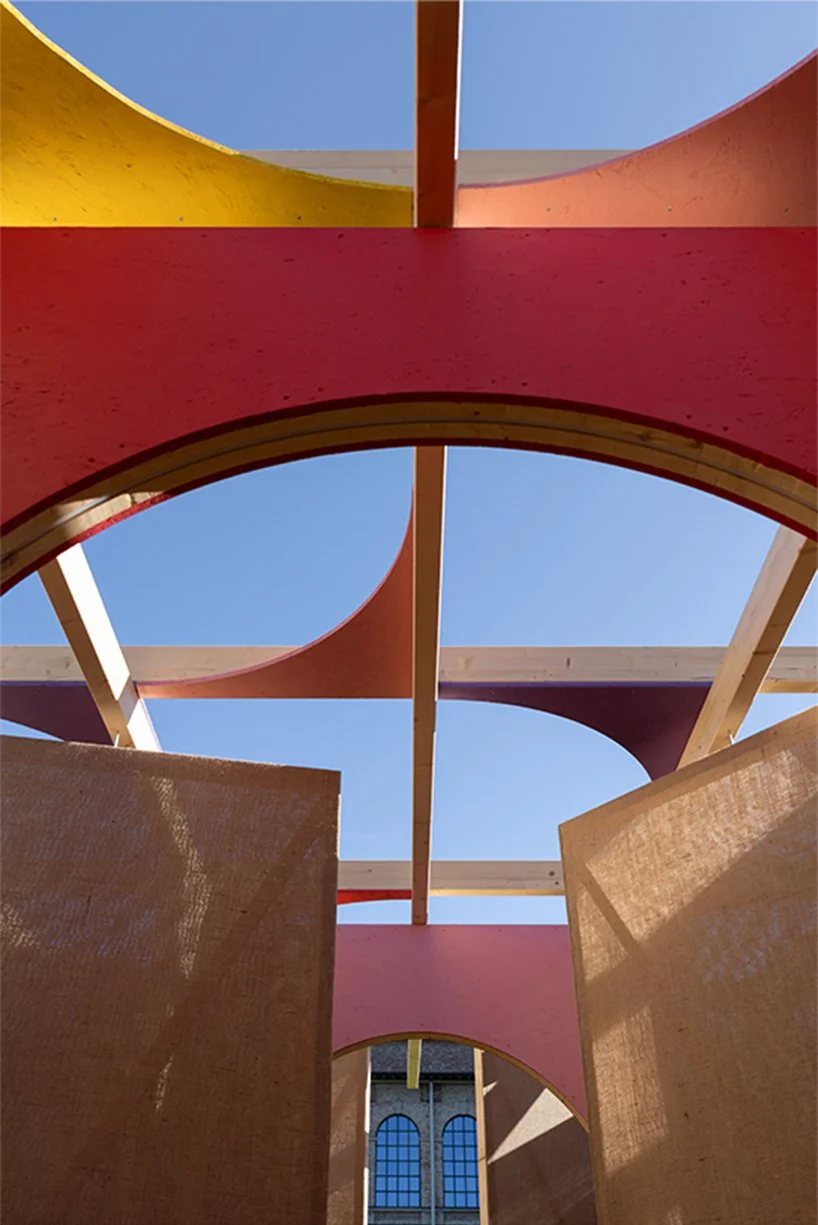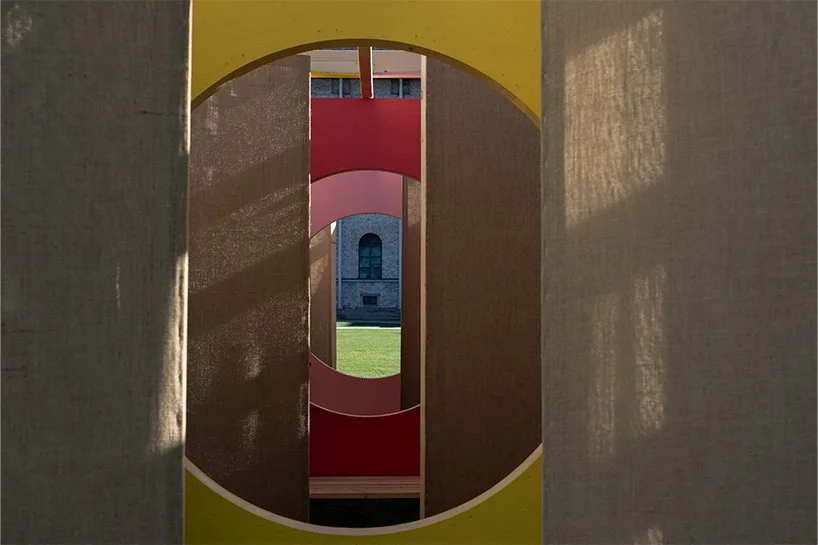
DELULU turns jute, movement, and uncertainty into an interactive architecture of collective orientation. Studio Carraldo’s shifting labyrinth replaces fixed circulation with touch, hesitation, and encounter, showing how a lightweight, reusable material can produce psychological weight while reframing disorientation as an active, shared, and potentially empowering spatial condition in public space.
DELULU
“A shifting jute labyrinth turns disorientation into collective spatial agency”
June 21, 2026
Connetion : +412147
Shares : 12452
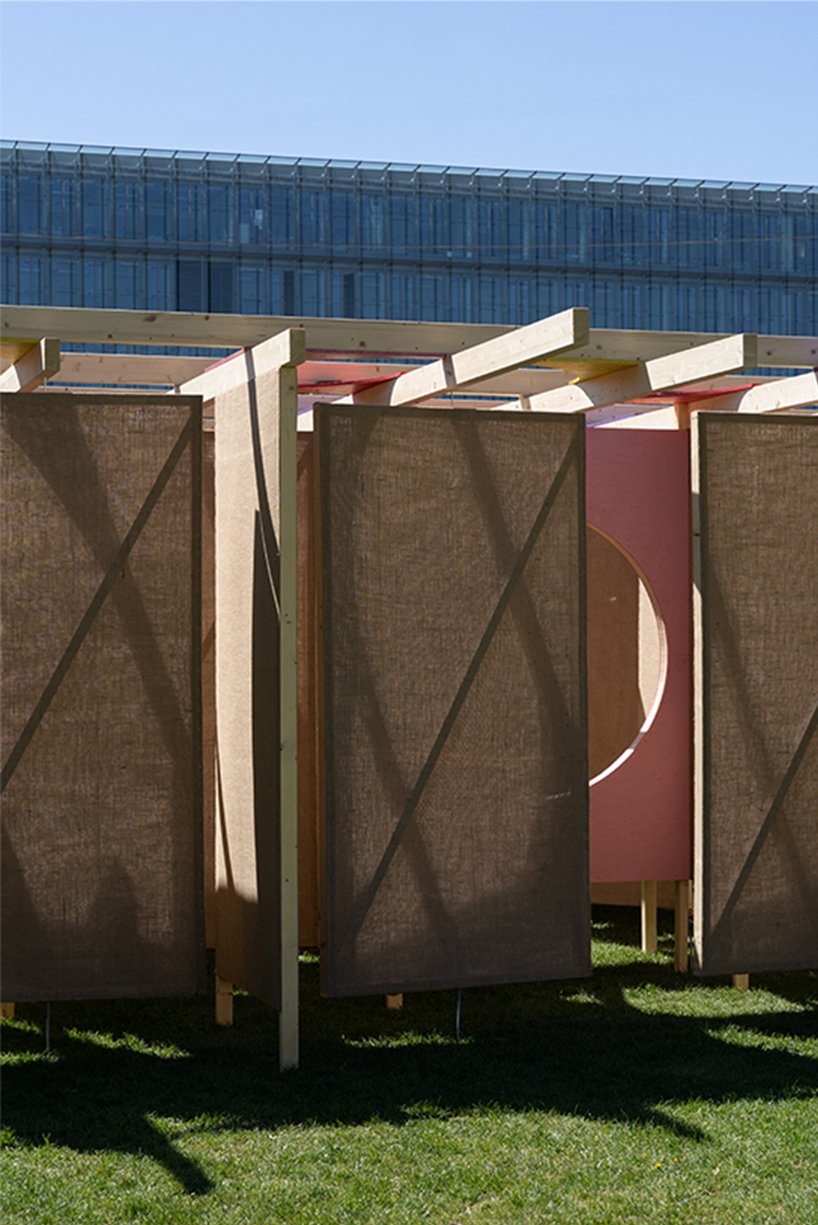
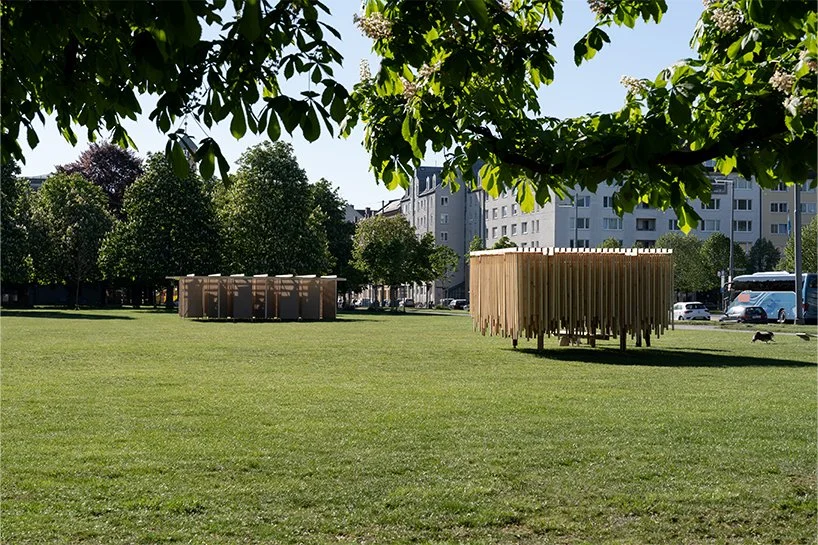
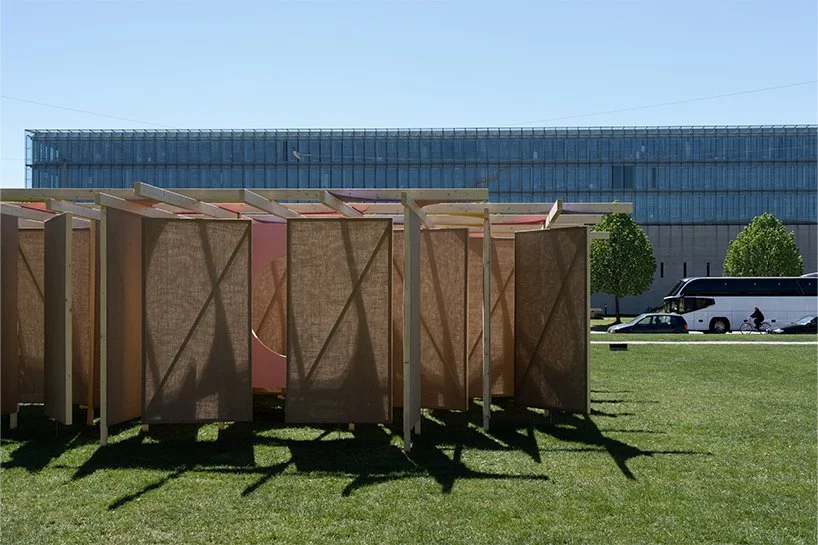
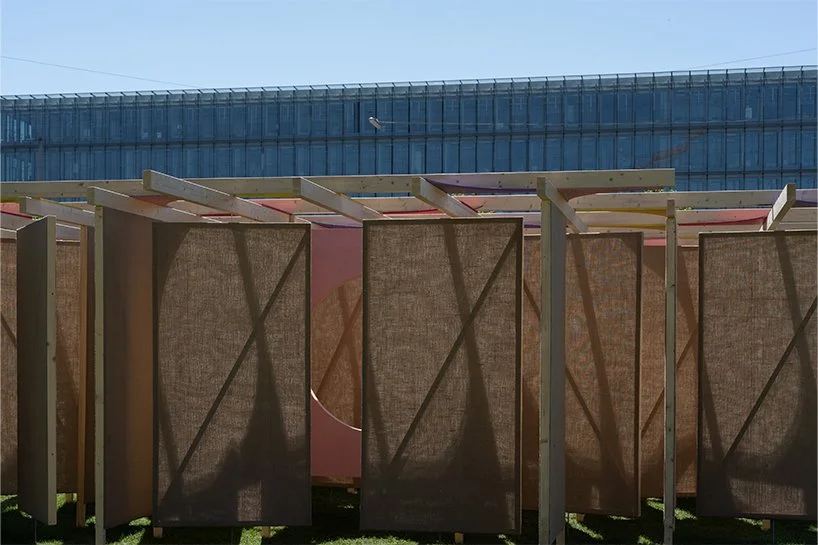
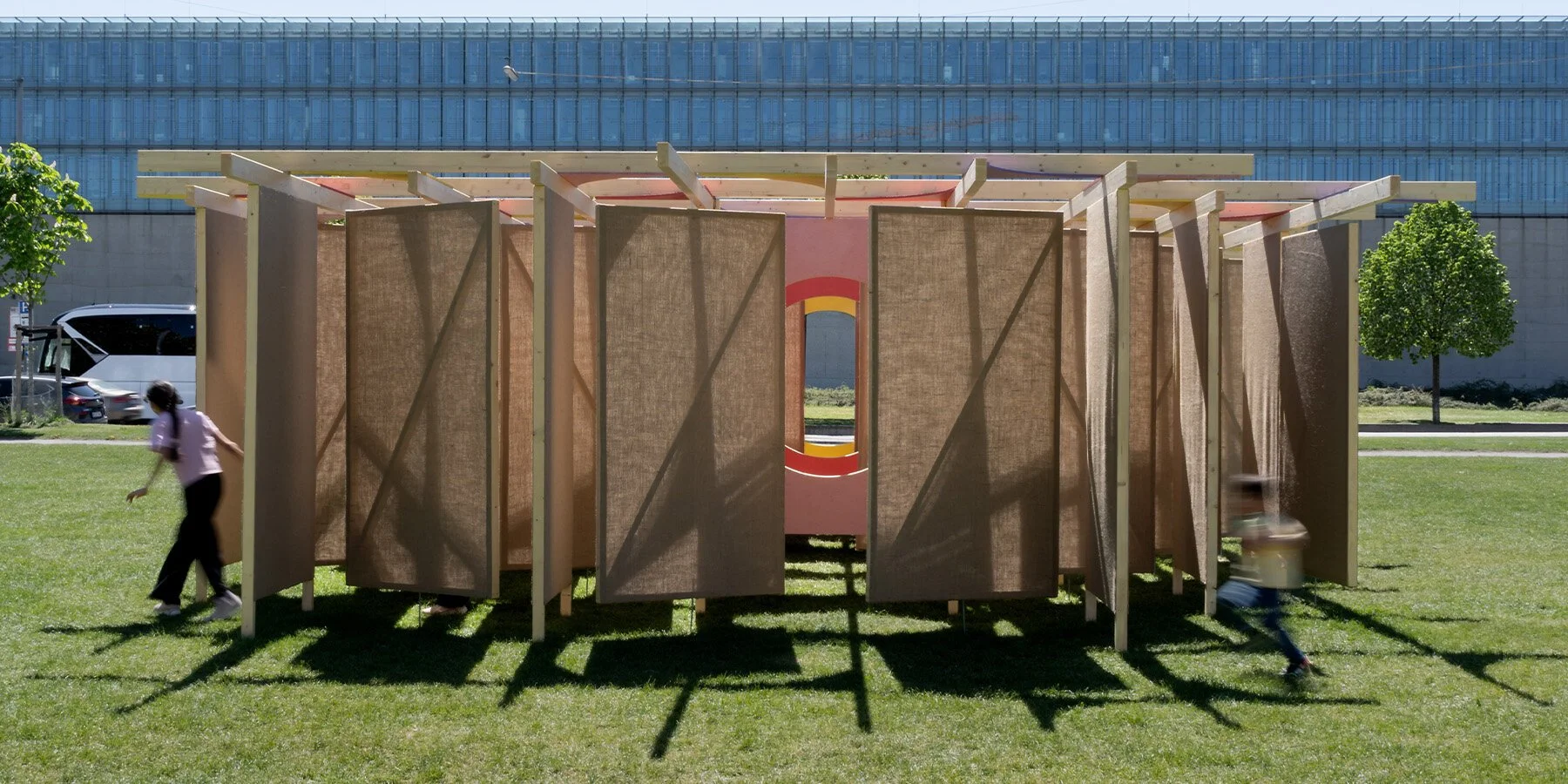
From afar, DELULU appears as a field of pale, fibrous walls. The jute surfaces catch daylight without becoming fully opaque, while openings offer partial views of bodies moving beyond them. Up close, the fabric reveals its coarse weave and susceptibility to touch. The installation is not softness or instability, but softness and instability mutually generating each other. Studio Carraldo frames this encounter as a spatial dialectic, and it argues that uncertainty can become a material and collective form of agency.
Developed for Munich Creative Business Week 2026, DELULU is constructed from movable partitions wrapped in natural jute and organised through a low-tech framework. Visitors can reposition sections of the labyrinth, altering routes, sightlines, and degrees of enclosure. Material becomes method: the lightweight textile permits movement; movement produces changing boundaries; changing boundaries deny the authority of a single correct path. The work behaves less like a static pavilion and more like a responsive social instrument. It occupies space while refusing to stabilise it, forcing each body to approach, retreat, turn, pause, and negotiate passage with others. Its softness does not remove friction; it relocates friction into perception and choice.
The title draws on “delulu,” a slang contraction of “delusional” associated with retreat into wishful thinking when reality feels unmanageable. Studio Carraldo does not illustrate digital culture through screens or technological effects. Instead, it converts overload into physical orientation. Enclosed passages isolate the visitor; sudden openings produce encounters; shifting walls make memory unreliable. The labyrinth offers no privileged overview and no mastery. Disorientation becomes evidence: the body recognises how quickly confidence depends on stable boundaries, legible routes, and uninterrupted vision. DELULU is not escape or confrontation, but escape and confrontation continually producing one another.
Its environmental proposition is behavioural. Jute supplies a tactile, lightweight surface in place of a sealed synthetic exhibition skin, while the movable system favours disassembly, adaptation, and reuse over permanent construction. Yet the project avoids presenting material substitution as an automatic solution. It focuses attention on how temporary architecture is assembled, handled, repaired, and socially activated. The visitor does not observe a lower-impact material; the visitor tests what that material allows a space to do.
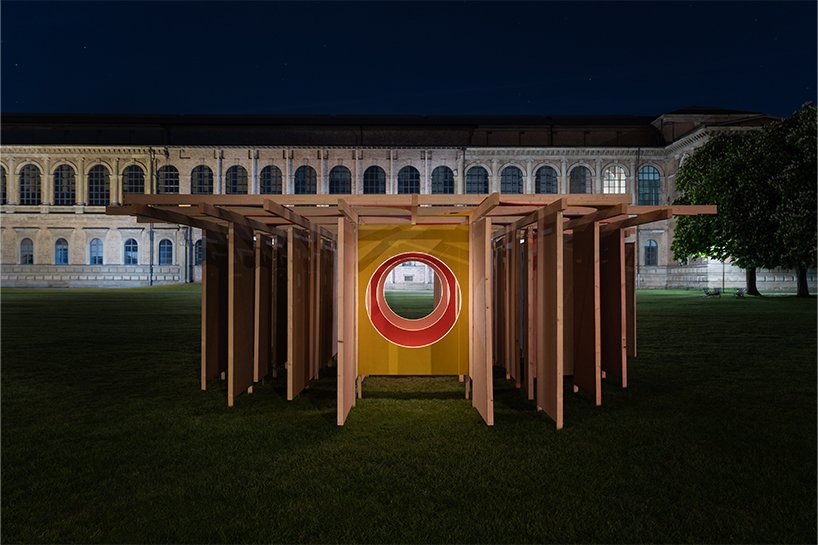
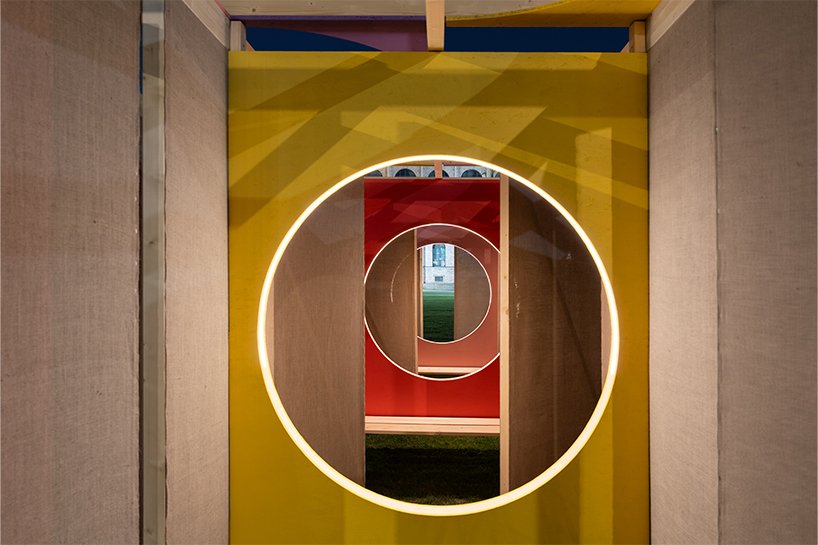
As daylight fades, circular lights glow through the fabric and the maze becomes less legible, not more. DELULU tightens its argument at this threshold: orientation is never secured once and for all, but rebuilt through movement, contact, and attention along a shifting line of jute.
Studio Carraldo
Studio Carraldo is an architectural collective based in Innsbruck, Austria, working across installations and participatory spatial research. Its practice is organised around architecture as an event rather than a fixed object: materials are selected not only for appearance or performance, but for the behaviours, encounters, and sensory conditions they can generate. The collective’s team for DELULU includes Franka Ruhnau, David Zauels, Jonas Rosenfelder, Luis Navarro, Valentin Fick, and Francisco Praxmarer.
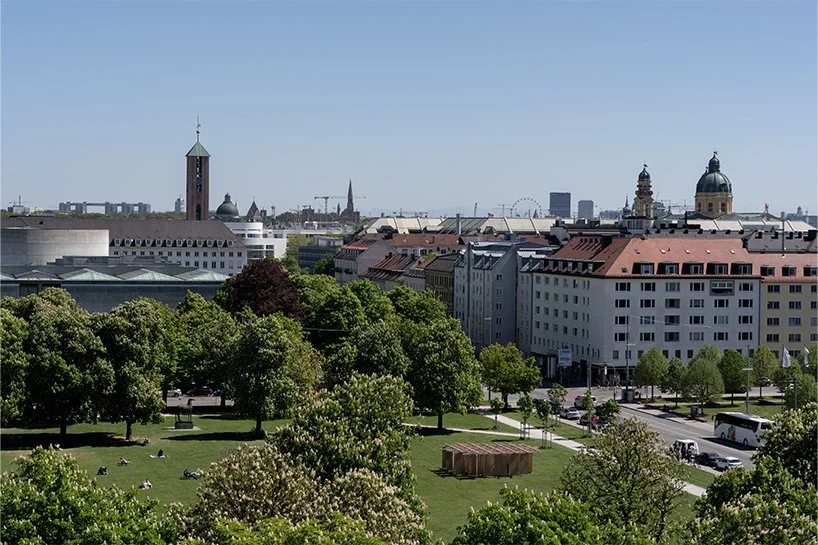
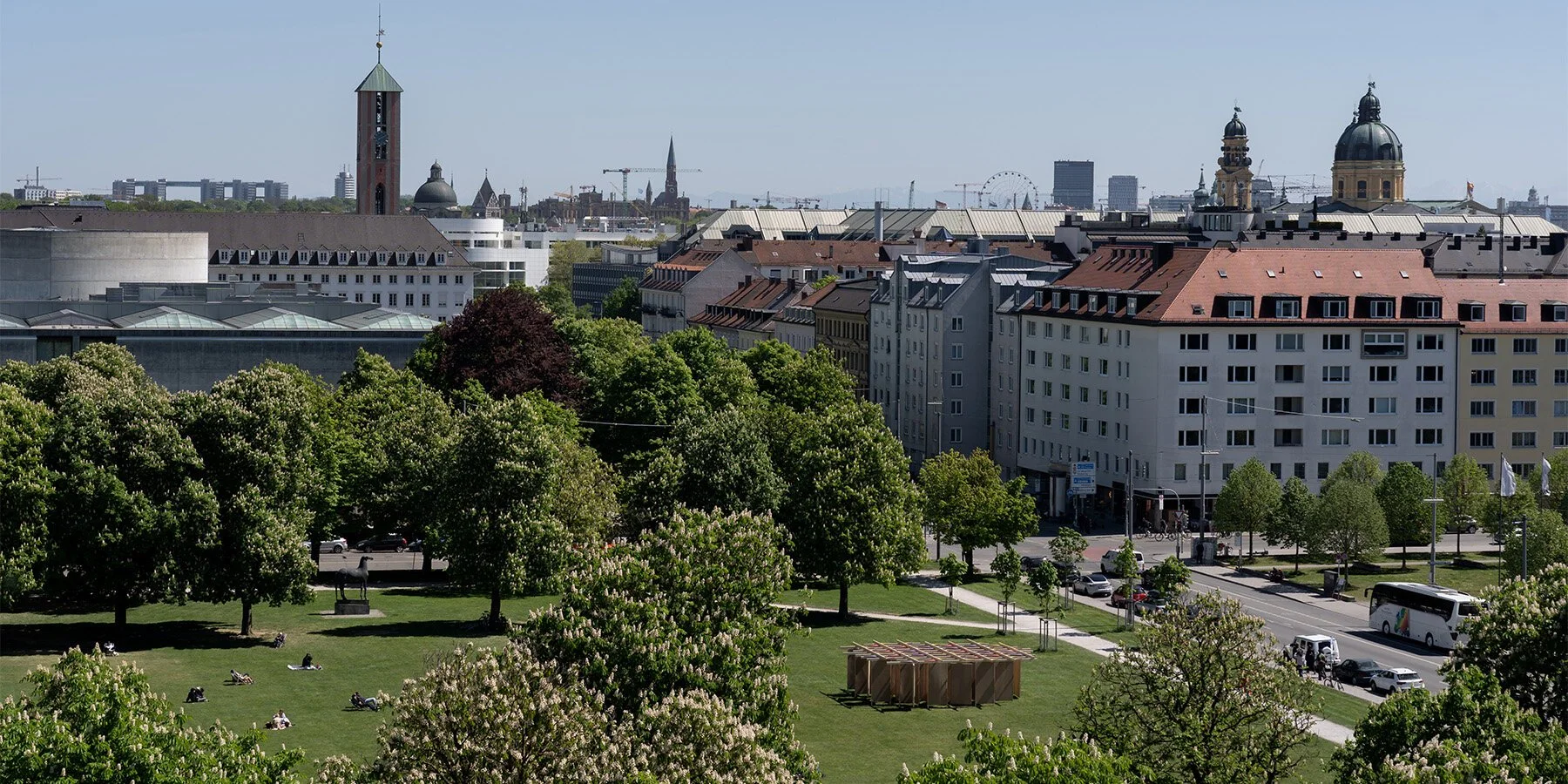
DELULU extends this interest through a labyrinth of jute-covered partitions developed for Munich Creative Business Week 2026. Presented on the south lawn of the Alte Pinakothek, the installation translated the festival theme, “Playground of Possibilities,” into an environment in which movement could repeatedly alter the architecture. Studio Carraldo framed disorientation not as spatial failure but as an opening for attention, imagination, and social negotiation.
The collective’s related project, Cappella del Suono, further clarifies its approach. Originally designed for the 2025 Festival di Microarchitettura and later shown in Munich, the timber pavilion uses differently sized sound-absorbing elements to create shifting relationships among wind, sound, light, shadow, and human presence. Together, the projects reveal a practice concerned with permeability and participation: architecture remains formed, yet incomplete without environmental forces and bodily action.
Studio Carraldo’s work is especially relevant to contemporary exhibition design because it joins modest construction with conceptual ambition. Rather than relying on digital spectacle, the collective uses direct mechanisms, tactile materials, and legible assemblies to make visitors conscious of how space acts upon them—and how they, in turn, act upon space.
Architect: Studio Carraldo | @studio.carraldo
Design Team: Franka Ruhnau, David Zauels, Jonas Rosenfelder, Luis Navarro, Valentin Fick, Francisco Praxmarer
Location: Munich, Germany
Photographer: Jonas Zauels | @blackbvrds
All images courtesy of Jonas Zauels, Studio Carraldo