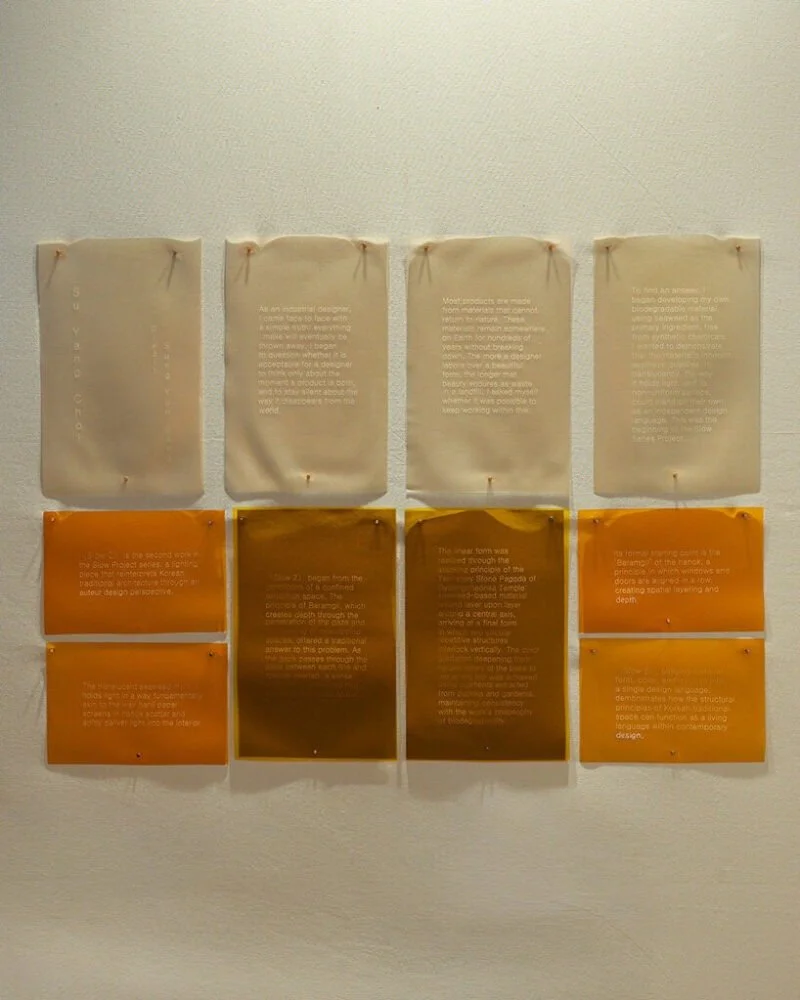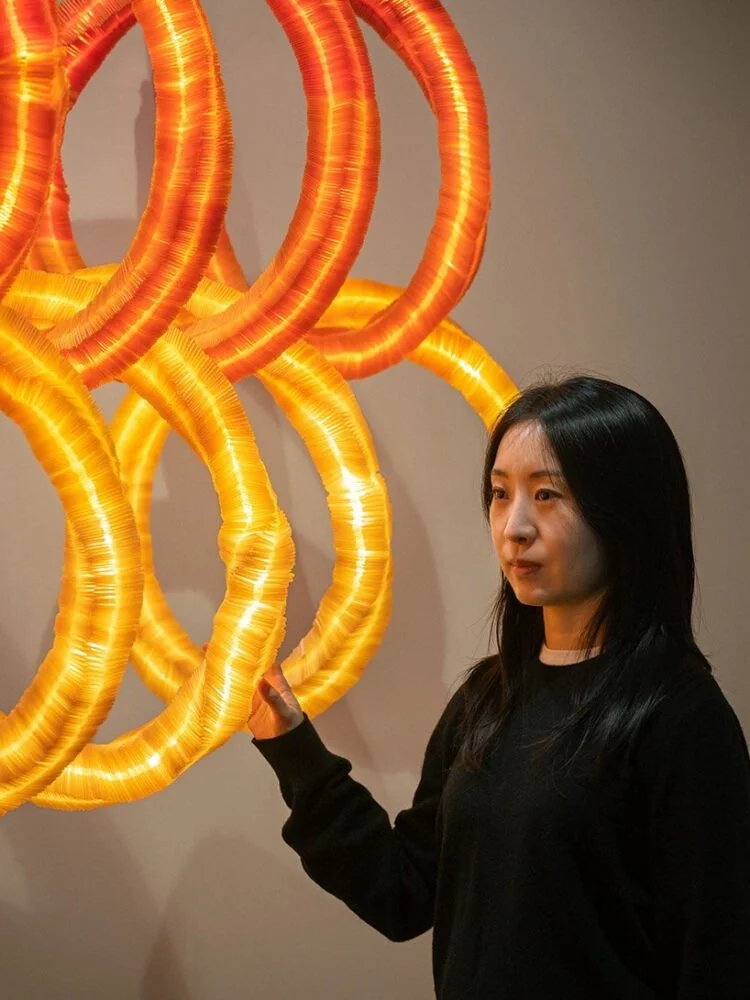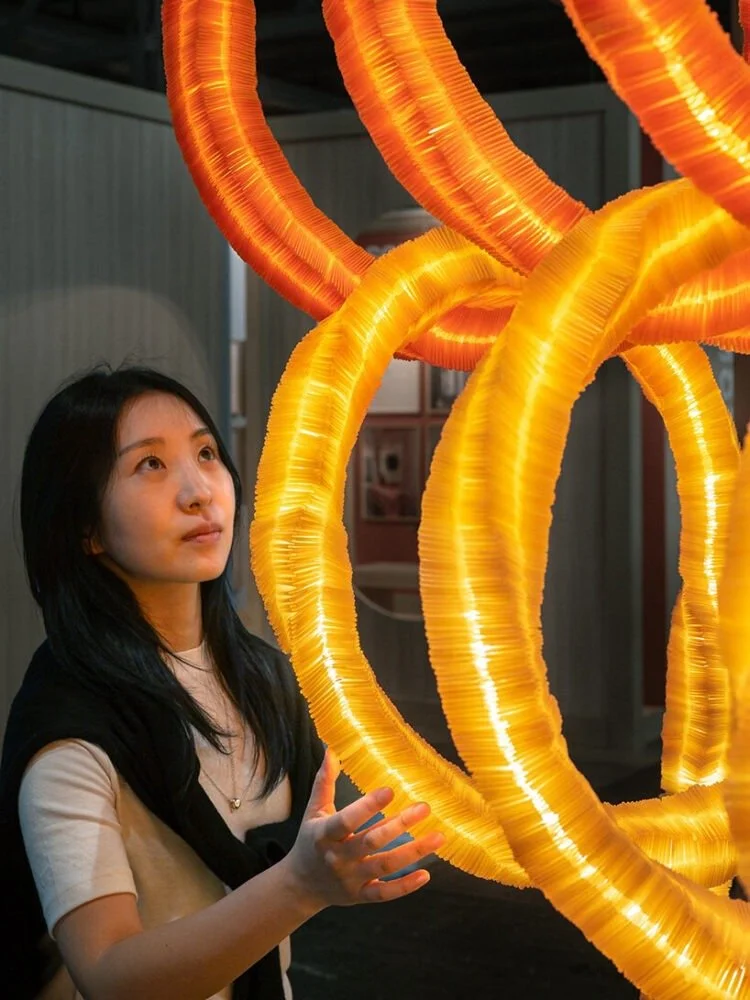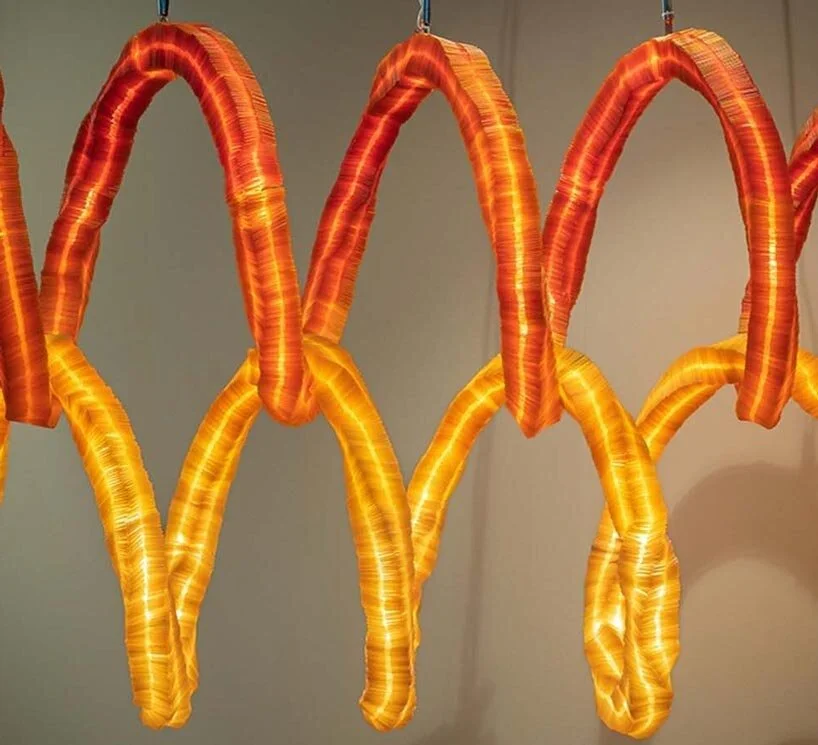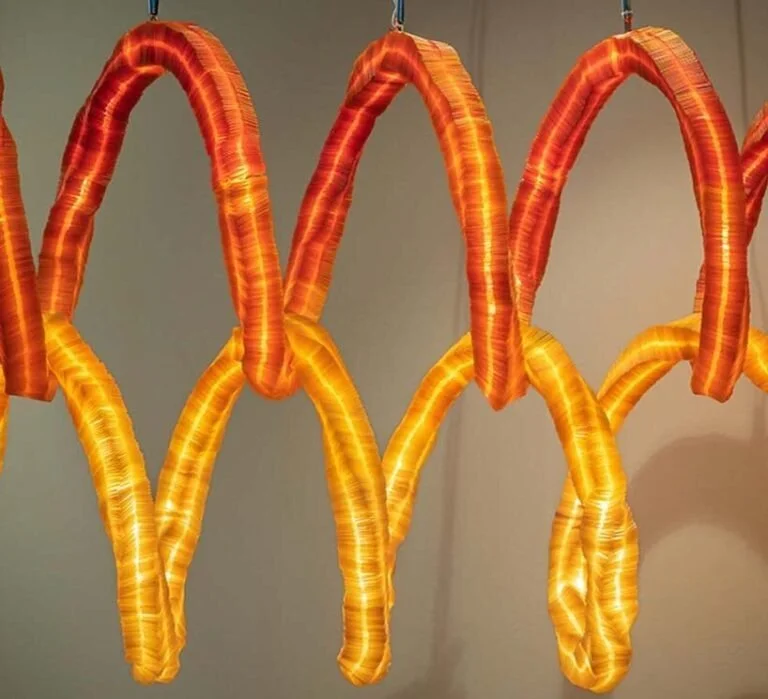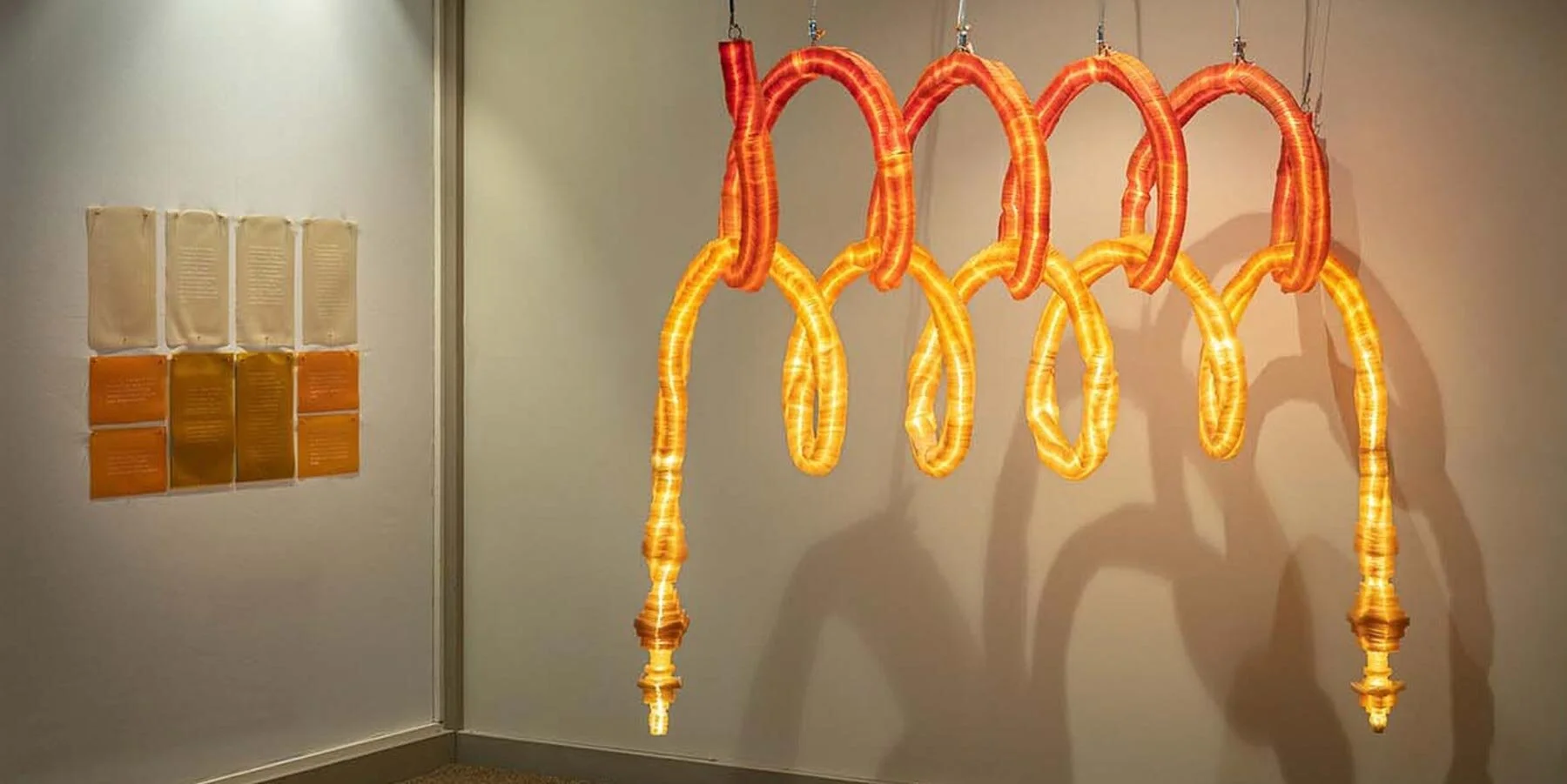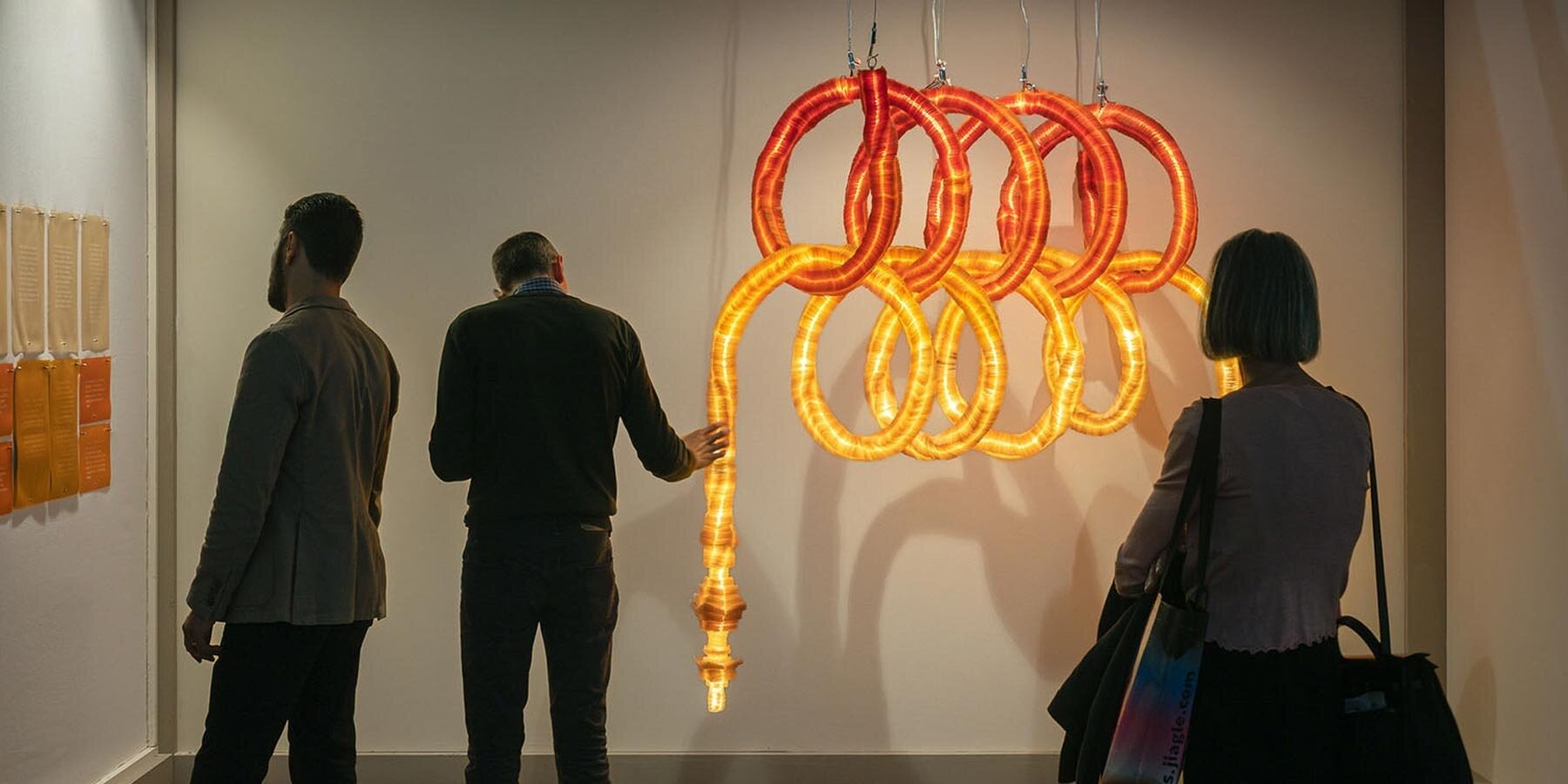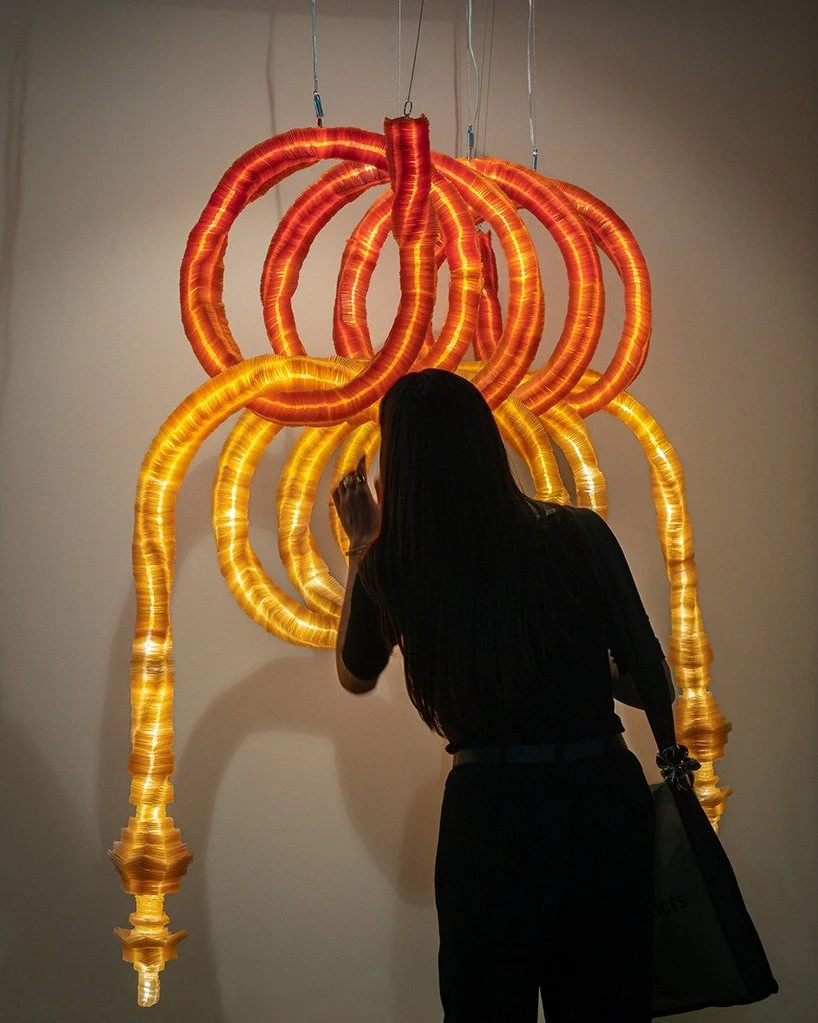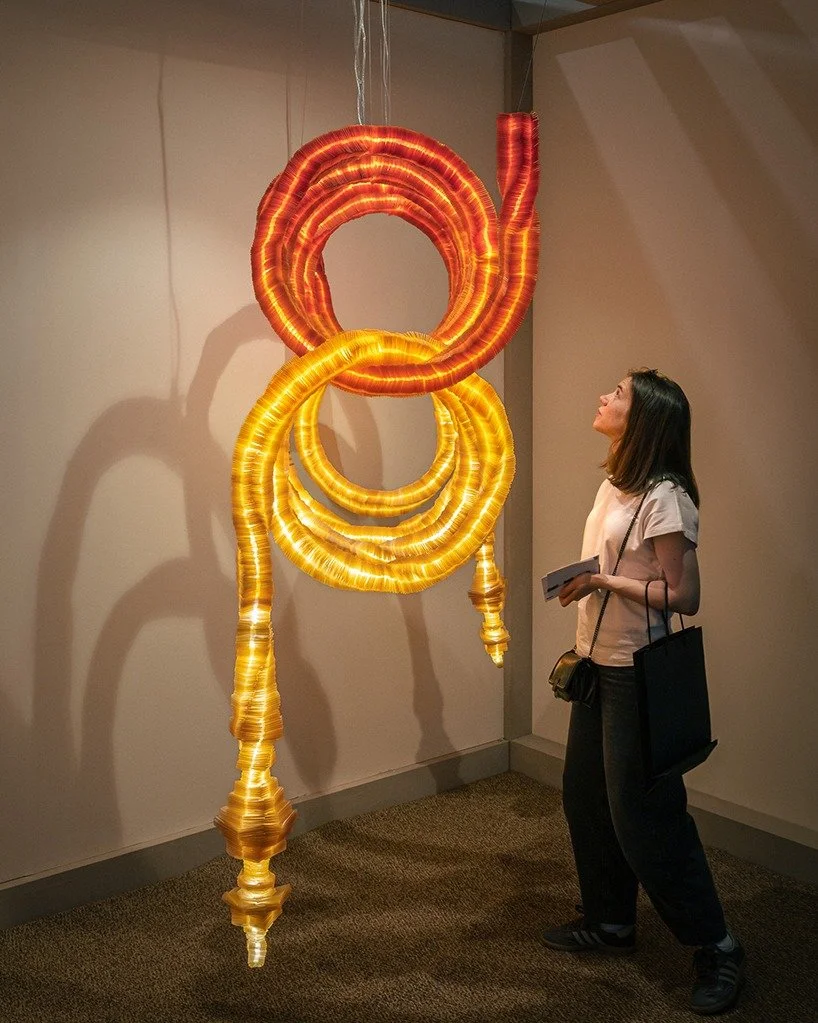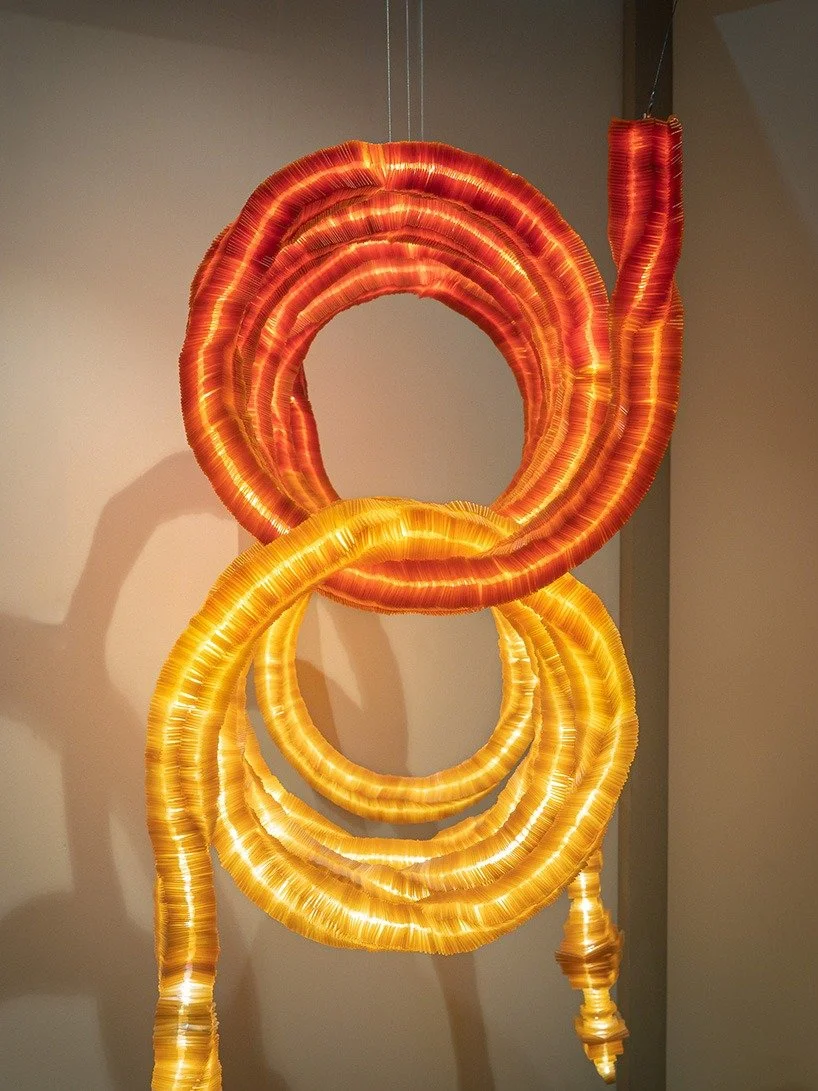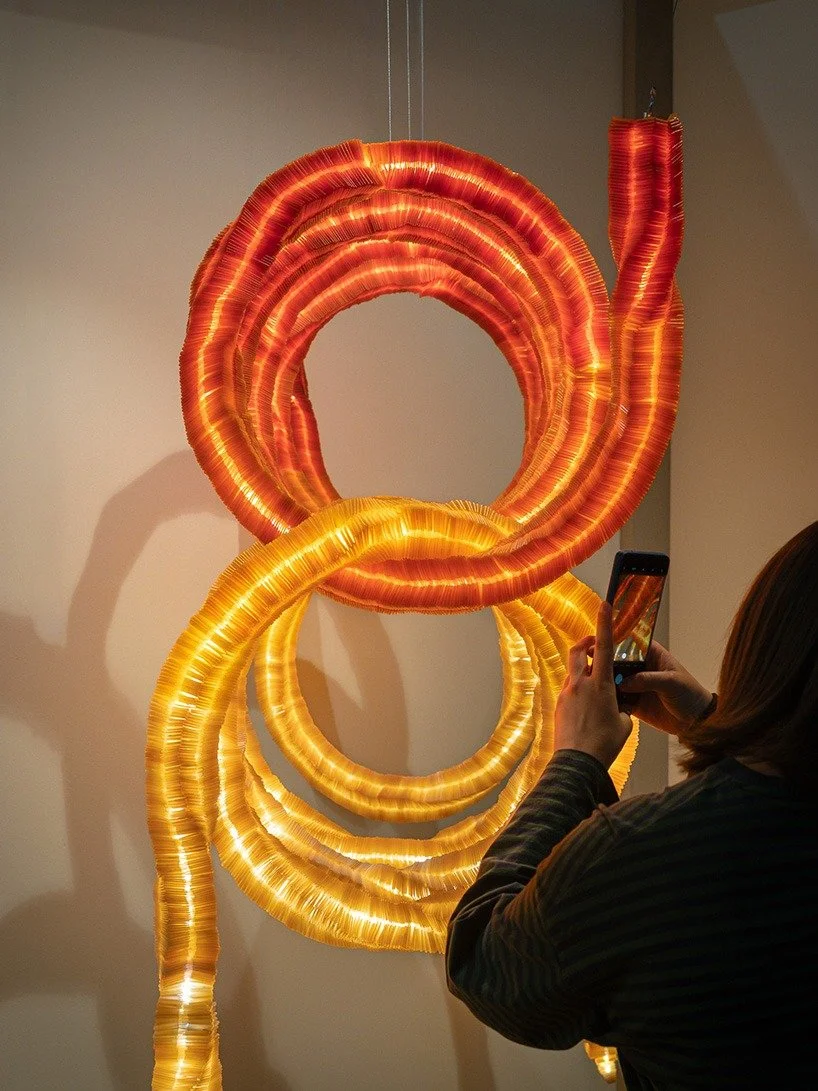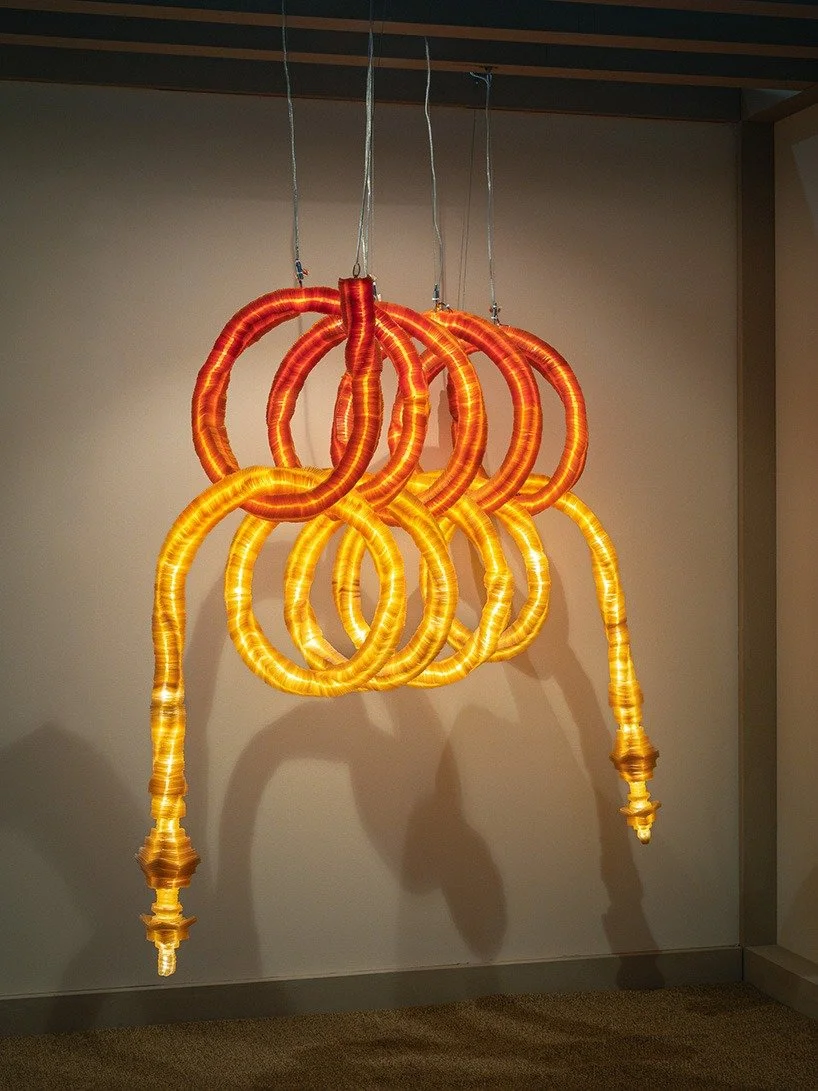
Slow2 by Su Yang Choi transforms seaweed-derived agar into luminous architectural skin. Two interlocking tubes reinterpret the Korean hanok’s baramgil, directing air, sight, and depth. Pigmented with paprika and gardenia, the installation frames biodegradability not as a sacrifice, but as a sensorial encounter between fragility, structure, cultural memory, and light itself.
Slow2
“Seaweed light joins structural memory with biodegradable, atmospheric material futures”
June 13, 2026
Materials
Connetion : +985412
Shares : 754164
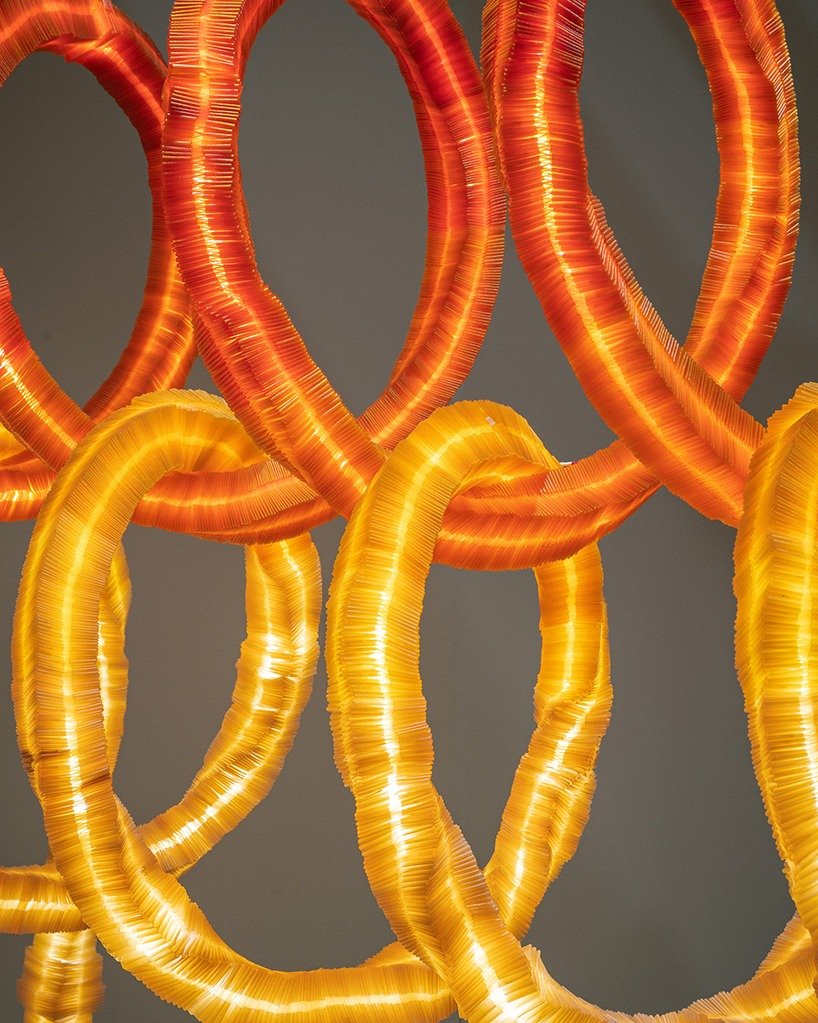
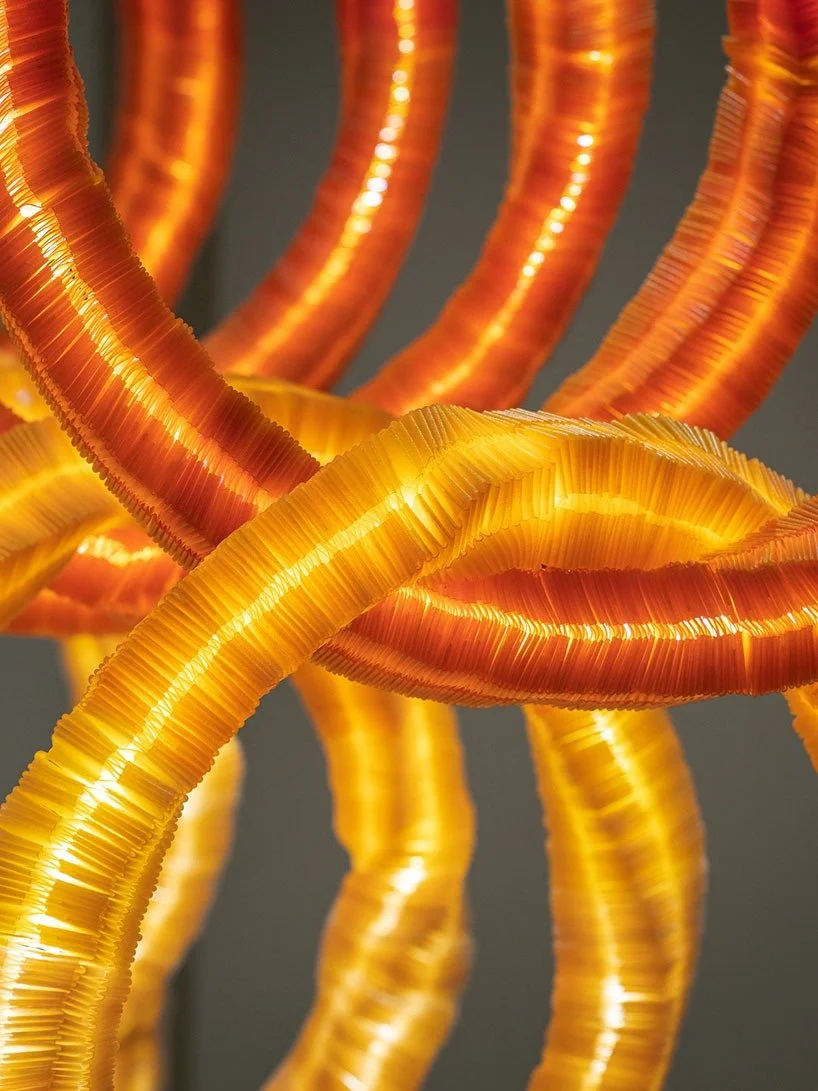
From afar, Slow2 appears as a pair of glowing lines suspended in measured conversation. Their tubular bodies cross without collapsing into one another, while warm light gathers inside translucent surfaces and softens each edge. Up close, the skins reveal irregular density, faint layering, and colour that seems held within the material rather than applied upon it. The encounter becomes a dialectic of durability and dissolution. This is not structure or fragility, but structure and fragility mutually generating each other, and Su Yang Choi argues that biodegradable matter can act as an architectural medium rather than an ecological substitute.
The installation begins with agar, a seaweed-derived material shaped into thin biodegradable sheets. Choi wraps this skin around a steel armature, allowing a rigid internal frame to support a surface that remains visually delicate and materially temporary. LED light warms the membrane from within, making thickness, seams, and variations in pigmentation perceptible. The form therefore does more than illuminate a room: it occupies space as a porous body, simultaneously present and vulnerable. Viewers are drawn nearer to inspect its translucency, then pushed back to read the larger geometry. That movement returns the work to its central knot, where permanence is not denied but redistributed between frame, skin, and perception.
Its two interlocking tubes reinterpret baramgil, a spatial principle associated with the Korean hanok, in which aligned openings guide air, sight, and depth through an interior. Choi translates that environmental logic into a luminous crossing. The steel determines direction; the agar diffuses light; the joined forms produce corridors of vision that seem to open and close as the viewer moves. Instead of treating cultural reference as ornament, the installation turns it into behaviour. Space is not filled by a static object but is edited through alignment, airflow, and changes in visibility.
Natural pigments derived from paprika and gardenia deepen this material argument. Earthy translucency shifts toward a saturated red glow, giving biodegradability an emotional temperature. Colour does not decorate the surface; it reveals how organic matter absorbs, filters, and releases light. Slow2 therefore frames sustainability as an aesthetic agency capable of seduction, uncertainty, and memory. It proposes that lower-impact design may also transform expectations of repair, ageing, and attachment. At the installation’s edge, its argument becomes tangible, intimate, and inseparable from the act of looking: a thin seaweed skin holds light against the weight, line, and disciplined, enduring spatial resistance of steel.
Su Yang Choi
Su Yang Choi is a South Korean biodesign artist whose practice moves between spatial design, material research, and product experimentation. She previously worked as a spatial designer; during doctoral study at Seoul National University, her attention shifted toward product design and the cultural behaviours embedded in materials. Her practice investigates biodegradable matter not simply as an alternative to petrochemical products, but as a medium with its own texture, temporality, and emotional force.
Choi’s Slow Project series develops seaweed-derived agar through an auteur-led approach in which material testing and cultural interpretation advance together. Slow2, the second work in the series, was presented at SaloneSatellite 2026 in Milan, an edition focused on craftsmanship, experimentation, and responsible design. The installation combined agar sheets, steel, LED illumination, and natural pigments. Its reference to baramgil—the passage of air and sight through aligned openings in Korean hanok architecture—shows how Choi connects biomaterial innovation to inherited spatial intelligence.
Her work refuses the familiar opposition between ecological responsibility and visual pleasure. Rather than disguising the irregularity of biodegradable matter, she treats translucency, seams, colour variation, and eventual decay as active design qualities. This positions her practice within biodesign while retaining a distinctly culturally grounded language.
Choi publicly describes herself as a biodesign artist working with biodegradable materials and as a doctoral candidate affiliated with Seoul National University and the University of the Arts London. Across these contexts, she frames material research as environmental inquiry and perceptual choreography, asking how objects might illuminate, age, and disappear with greater honesty.
Designer: Su Yang Choi
Contributors: Sung Yun Jang, S R Choi
Photographer: Francesco Russo | @francescorussophoto
All images courtesy of Su Yang Choi