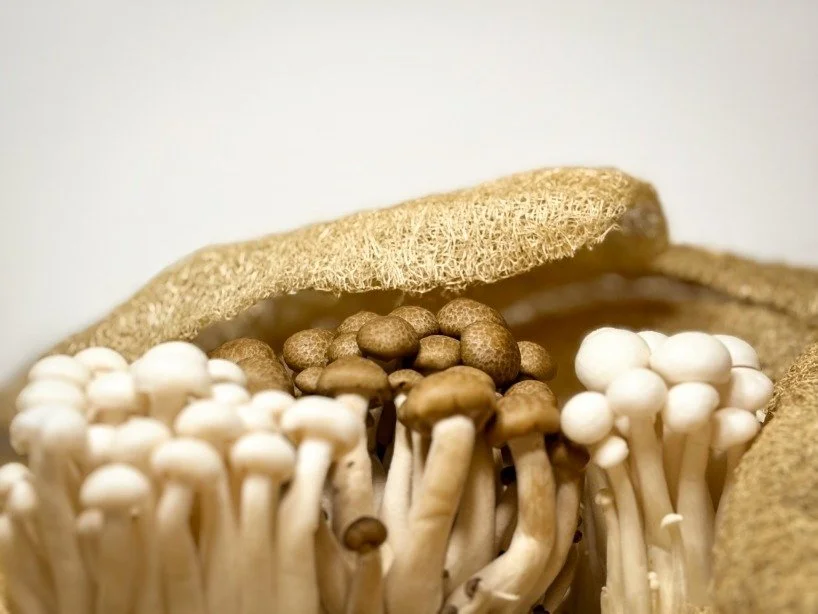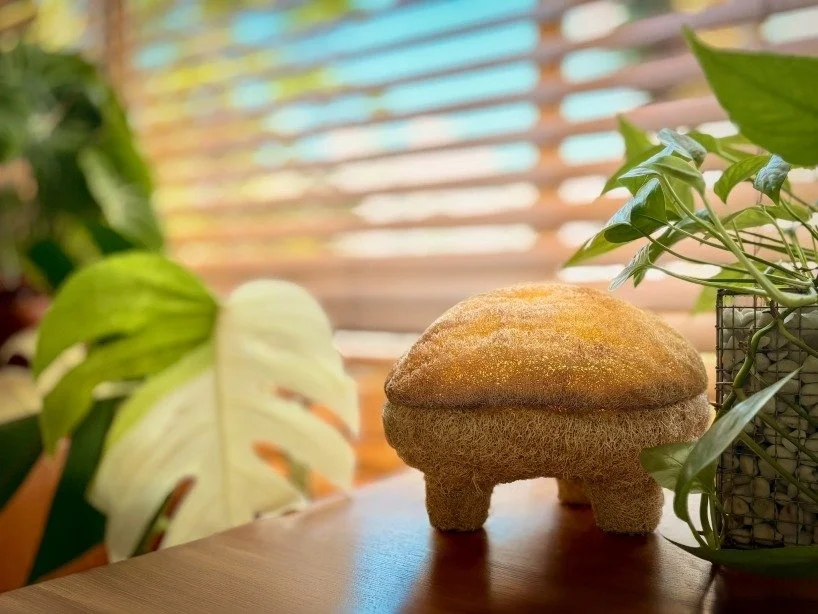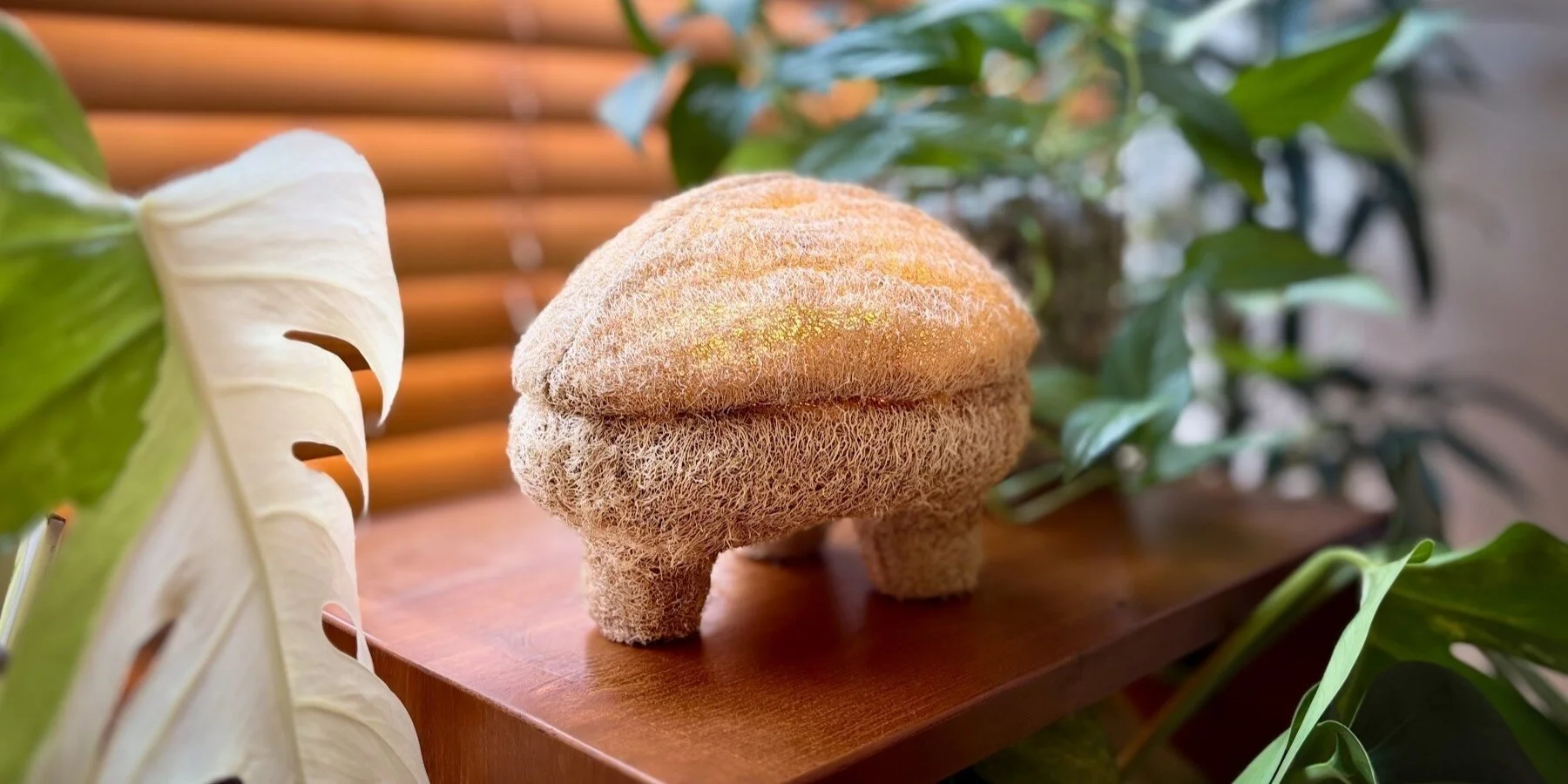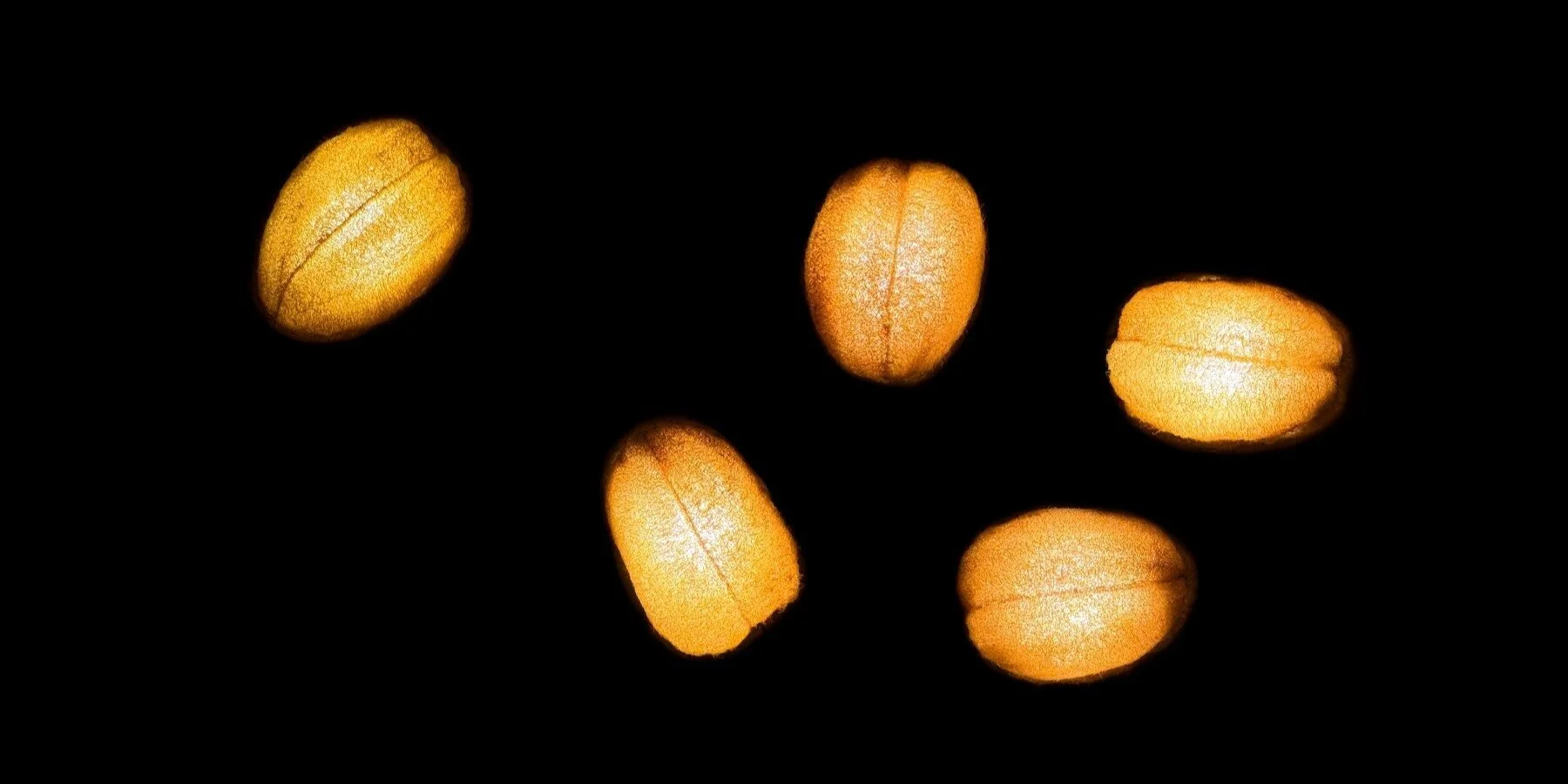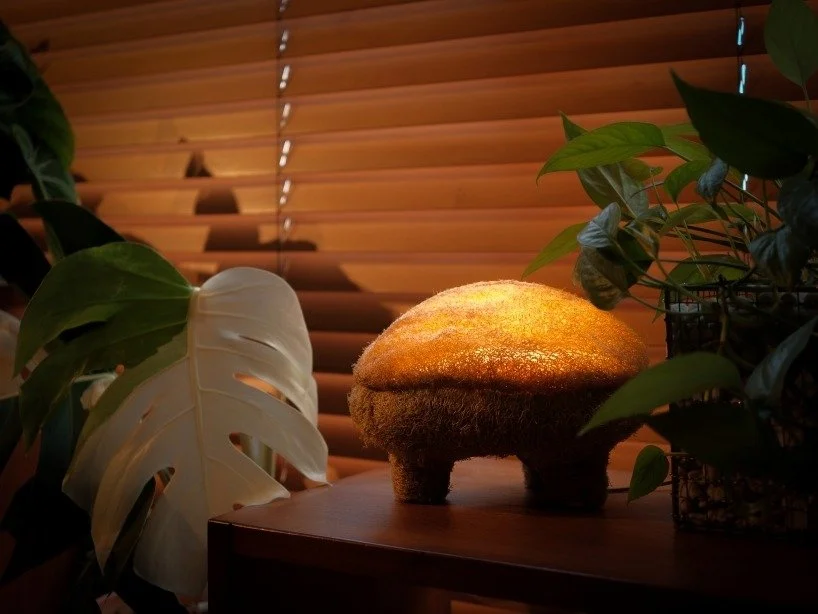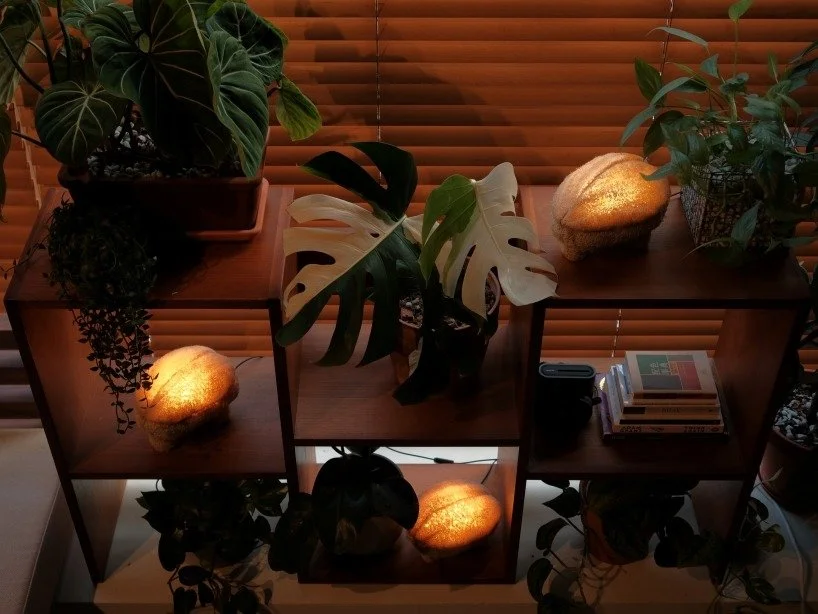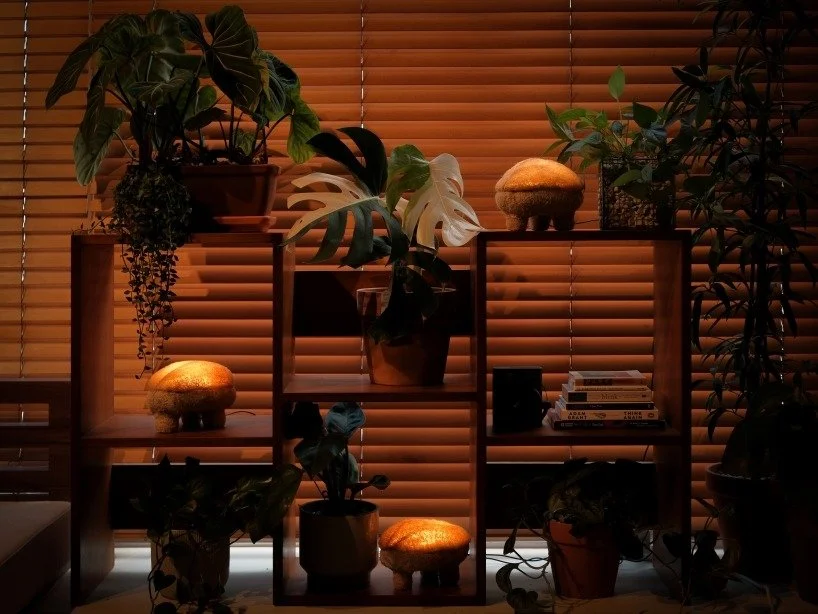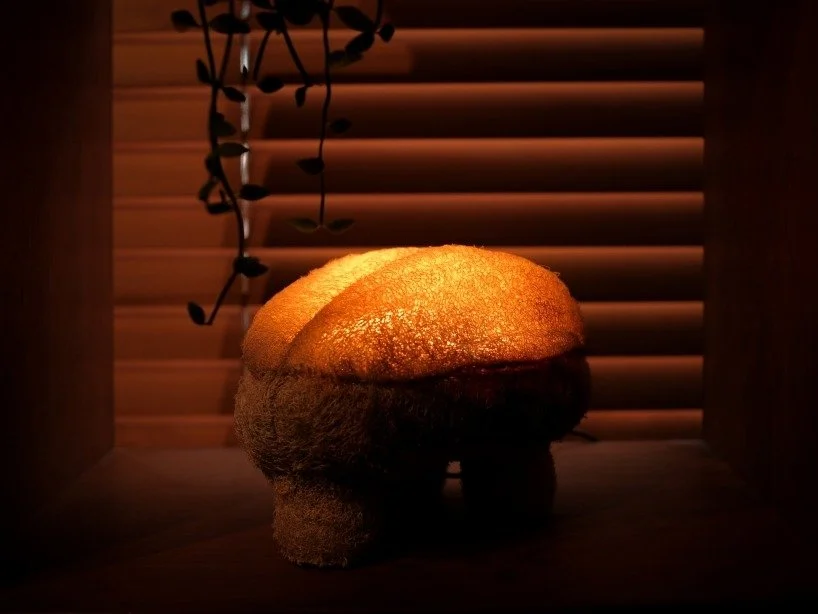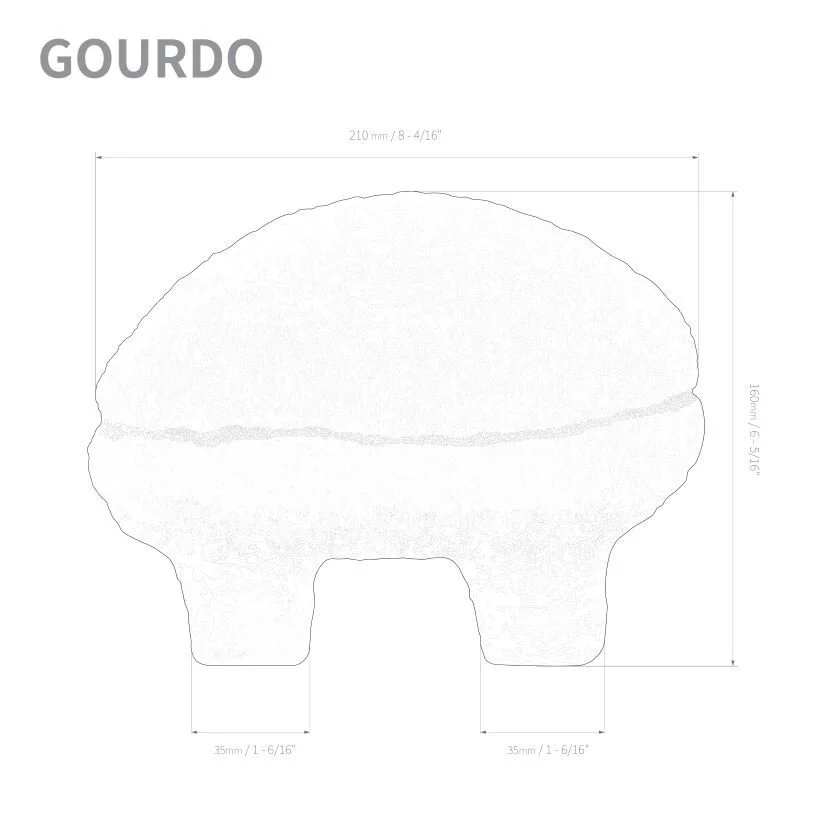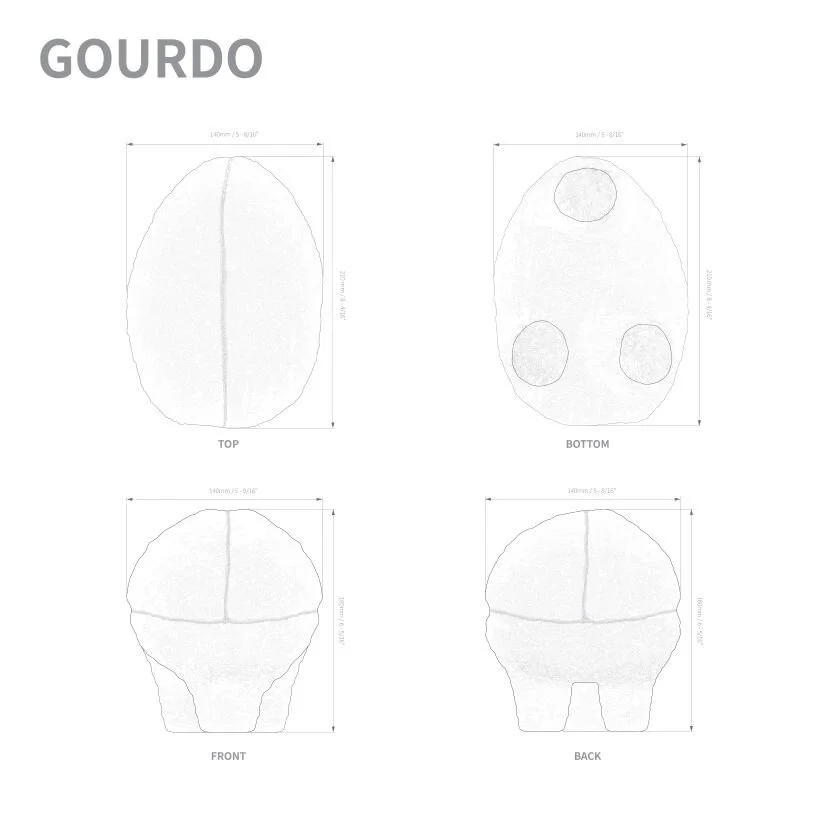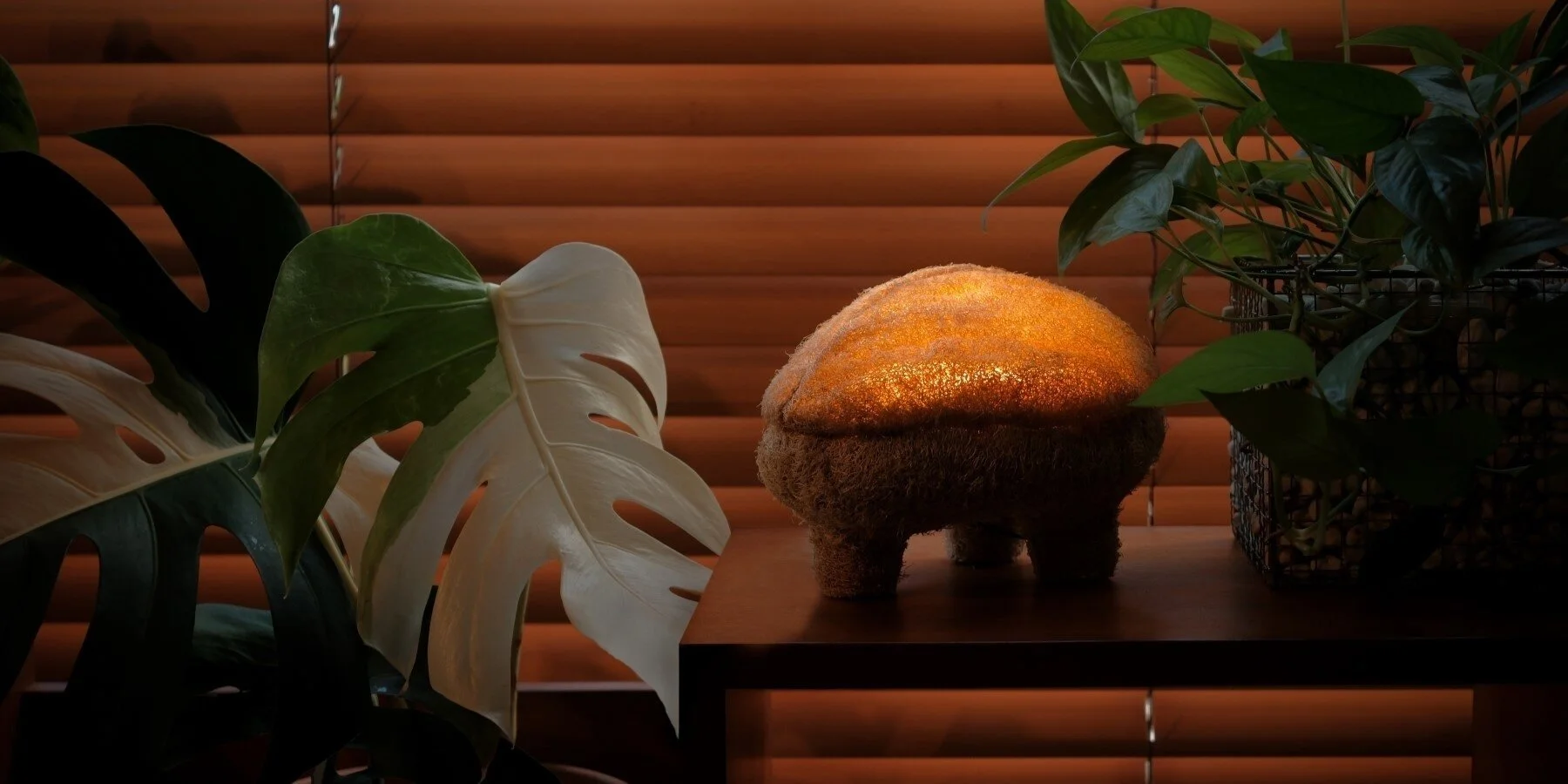
GOURDO turns cultivation into construction by fusing oyster-mushroom mycelium with luffa fibre. Justin Wan assigns the gourd’s dense core structural work and its porous skin luminous filtration. The lamp frames biological variation not as manufacturing error, but as evidence that material agency and designed intention can productively coexist in form.
GOURDO
The Mushroom Lamp
“Fungus and luffa grow warm light through regenerative material collaboration”
July 20, 2026
Materials
Connetion : +401456
Shares : 104126
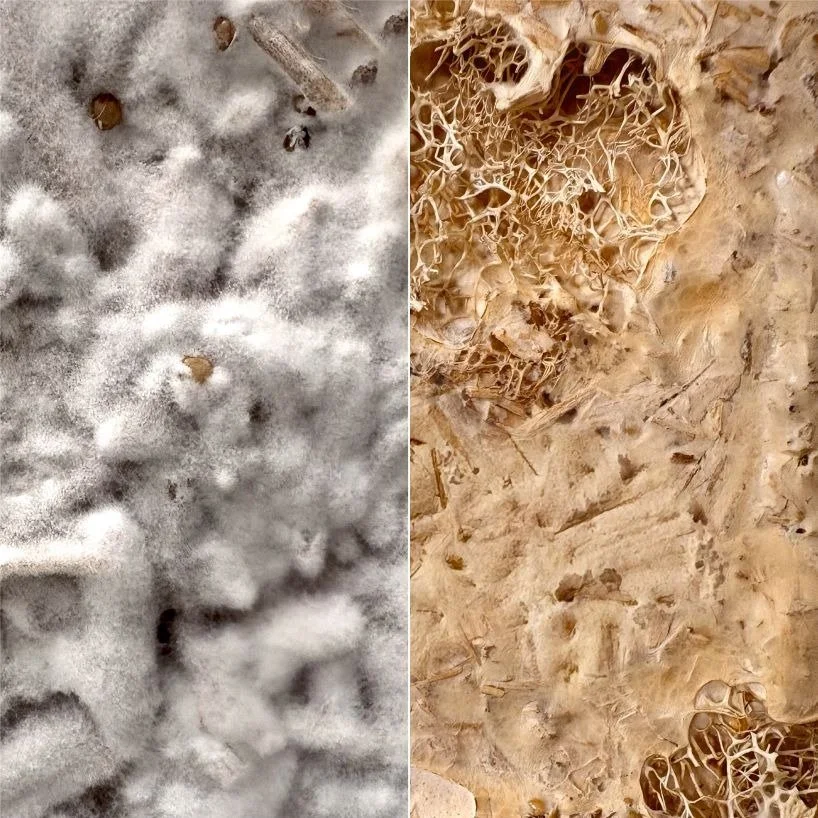
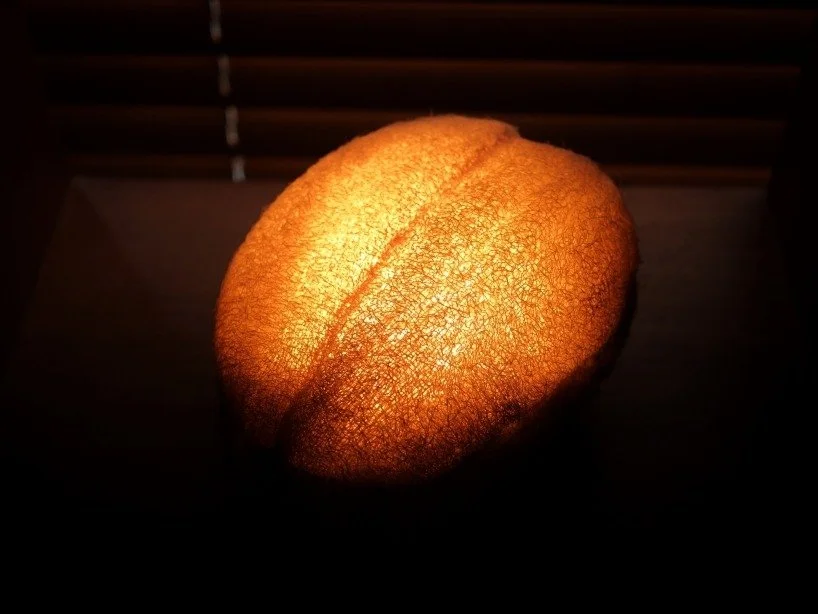
From afar, GOURDO appears as a small, amber body, its rounded silhouette hovering between a lamp, a fruit, and a resting creature. Light seeps through a porous luffa skin, softening the boundary between enclosure and atmosphere. Up close, the surface becomes a tangled field of fibres, cavities, fungal traces, and irregular seams. This is not natural growth or designed control, but natural growth and designed control mutually generating each other. Justin Wan frames that reciprocity as a regenerative design method; he argues that biological agency can become constructional intelligence rather than decorative symbolism.
The material system joins oyster-mushroom mycelium to the reticular structure of luffa. Wan cultivates the fungus in a substrate composed of shredded luffa, coconut husk, corn kernels, and wood chips, allowing microscopic hyphae to spread through the organic matter and bind it. The luffa core supplies a tensile skeleton, while the mycelium consolidates around it as a compressive, sculptable mass. Moulding does not simply impose form: it provides temporary limits within which growth occupies, connects, and thickens. The viewer therefore encounters a bulbous object whose unevenness records cultivation, returning control to variation.
After roughly two weeks of incubation, the colonised substrate is fragmented, remixed, and packed with luffa cores into a mould. Temperature and humidity guide a second phase of growth until the fungal network fuses the loose matter into the lamp base. Oven-drying then arrests that living activity, stabilising the structure without erasing its fibrous evidence. Wan wraps the softer outer luffa layer around the base as a translucent shade. Structure and filter consequently come from one fruit, reducing separation between component, function, and waste.
Illumination activates this composite logic. The light does not merely reveal the material; it is slowed, scattered, and warmed by the luffa’s cellular network. The viewer moves nearer to inspect the grain, then retreats to read the softened glow as atmosphere. GOURDO thus converts perception into evidence: its warmth depends on porosity, its stability on interlocking networks, and its individuality on growth that cannot be perfectly repeated. Emerging from Wan’s earlier Luffa Stoolita research, the lamp advances food by-products from discarded matter to active collaborators in furniture and construction. Its ethical position lies in designing with transformation rather than demanding inert uniformity. Its form is therefore cultivated, negotiated, and finally held in suspension. At the end, the argument remains visible in the lamp’s uneven surface, where a thin amber line of light presses through fibre.
Justin Wan
Justin Wan is a designer whose practice connects product design, material research, and ecological thinking. His work concentrates on plant-based by-products, food waste, and biologically grown composites, asking how discarded matter might re-enter daily life as structure rather than embellishment. GOURDO identifies him as a designer interested not only in sustainable substitution, but in the behaviour of living systems: growth, variation, binding, and stabilisation.
Wan’s Luffa Stoolita, developed with Paul Edward Liu and Tim Ting-Hao Chen while they were master’s students at Columbia University’s Graduate School of Architecture, Planning and Preservation, combined luffa sponge, spent coffee grounds, and clay-rich soil. Guided by Professor Lola Ben-Alon and the Natural Materials Lab, the project used parts of the luffa for formwork, reinforcement, and cushioning, establishing a full-material approach that GOURDO later extends into lighting.
Across these projects, Wan treats design as a negotiation with botanical and fungal intelligence. He is drawn to materials that evolve, and to processes in which the designer establishes conditions rather than dictating every outcome. GOURDO’s oyster-mushroom mycelium, organic substrate, moulding, and porous luffa diffuser demonstrate this position clearly. The lamp’s compact, creature-like form and variable finish make regeneration perceptible rather than abstract. Designboom describes the project as an extension of his research into alternative resources for furniture and construction, while the attached biography emphasises human health, responsible consumption, and environmental regeneration. Together, these concerns position Wan within an emerging generation for whom biomaterial design is technical, sensory, and ethical.
Designer: Justin Wan
Fascinated by natural materials, Justin Wan aims to encourage responsible consumption and pioneer regenerative design solutions with biomaterials.
Instagram handle: @just1nwan email: jcw2232@columbia.edu
All images courtesy of Justin Wan