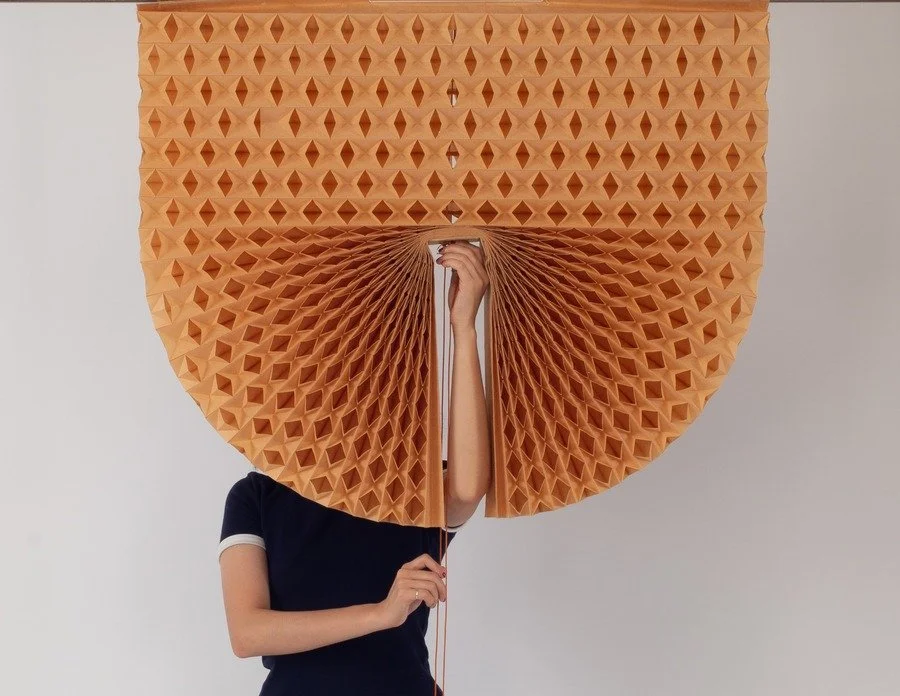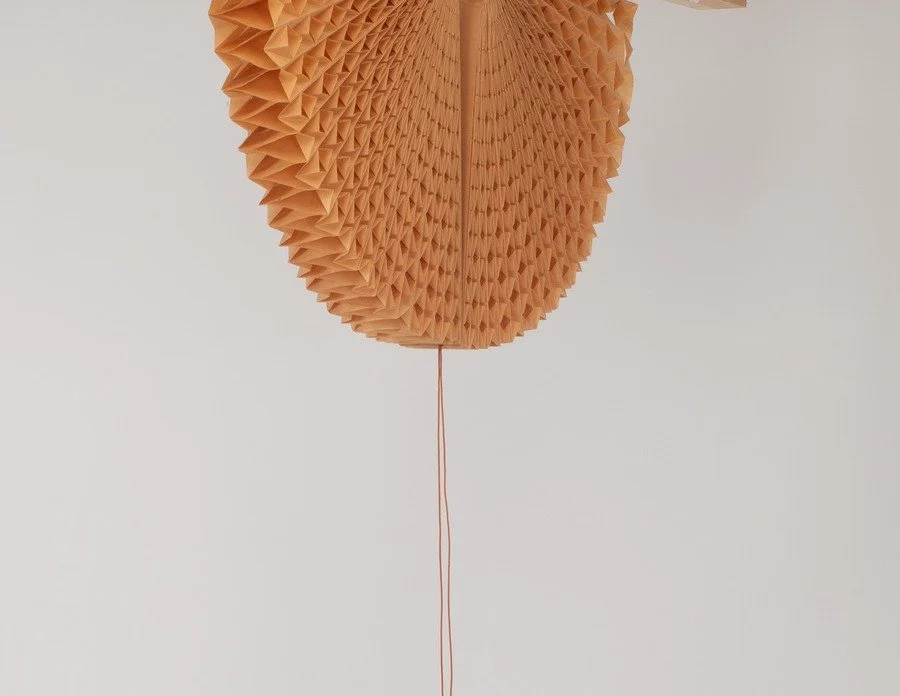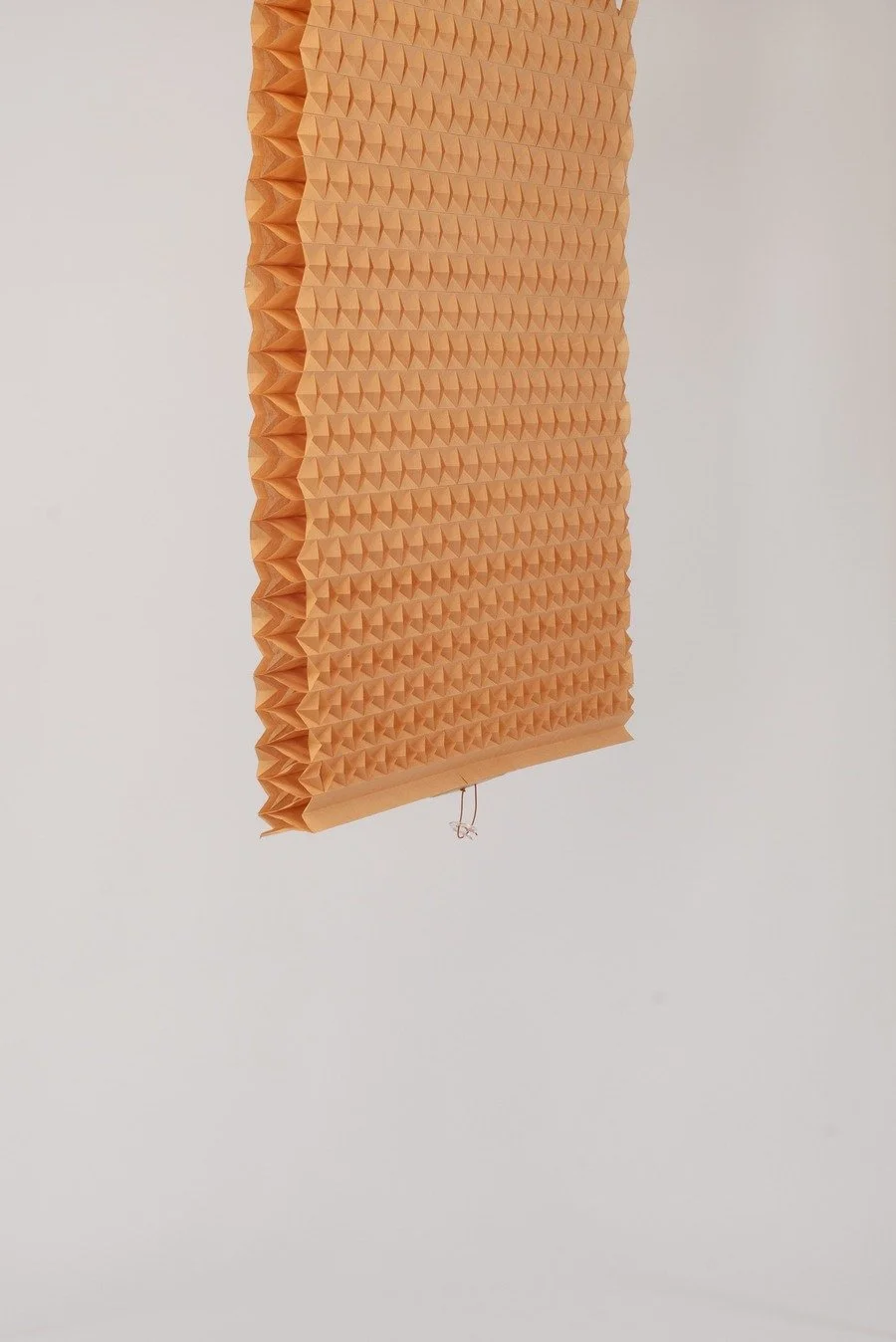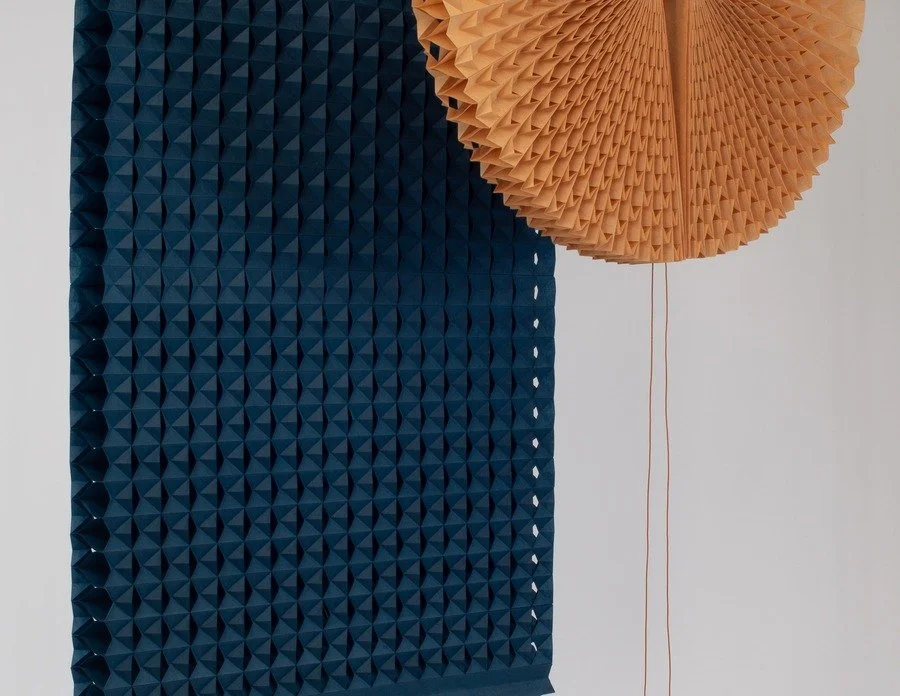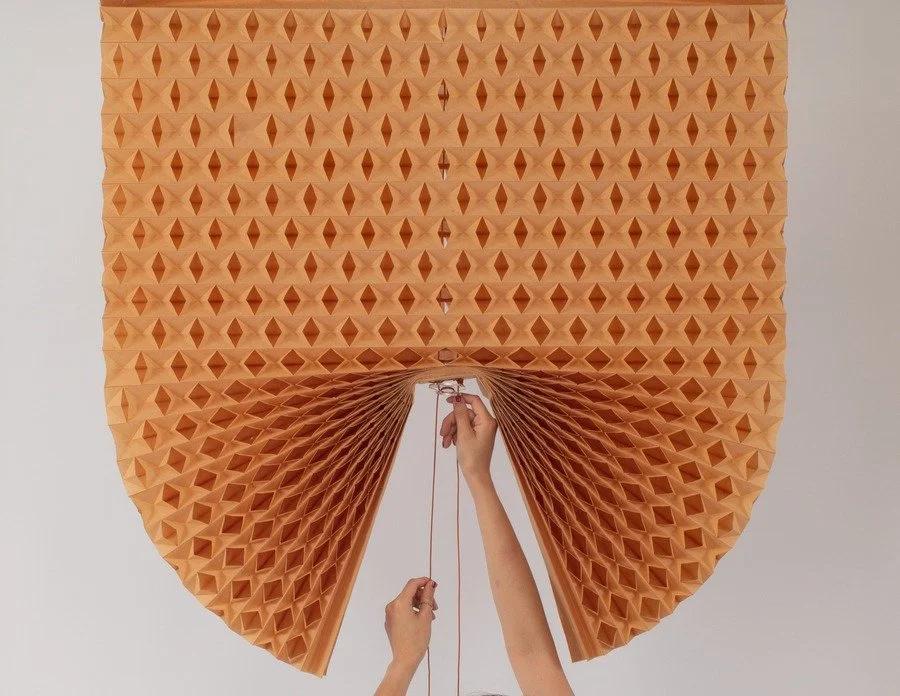
Paper Blind transforms folded paper into an adjustable, replaceable window system. Natchar Sawatdichai frames fragility and durability as mutually generating qualities, using hand-shaped surfaces, a central cord, and a pulley to control light, fit varied openings, reduce material waste, and make repair active in everyday domestic living spaces.
Paper Blind
“Folded paper filters light while redesigning domestic habits through repair”
May 13, 2026
Materials
Connetion : +721456
Shares : 244126
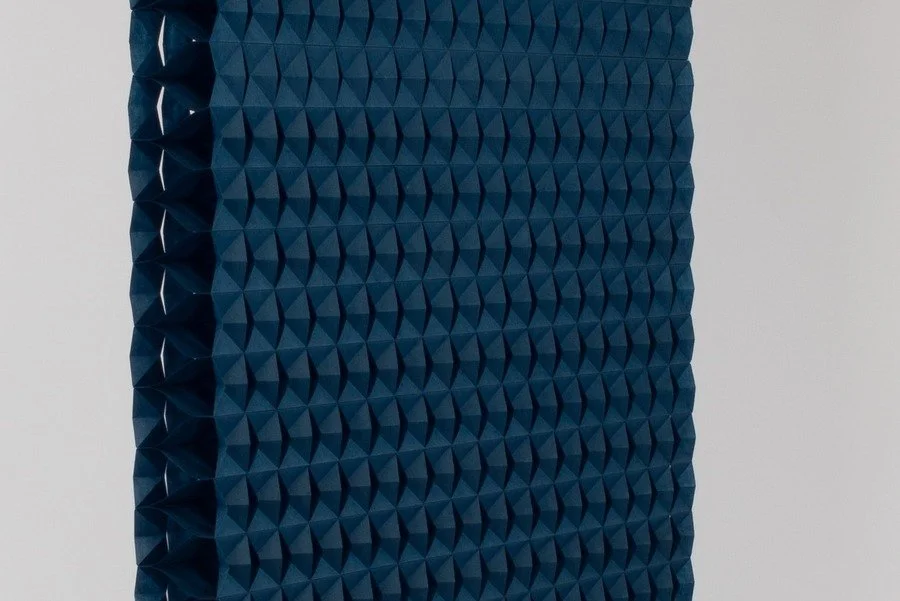
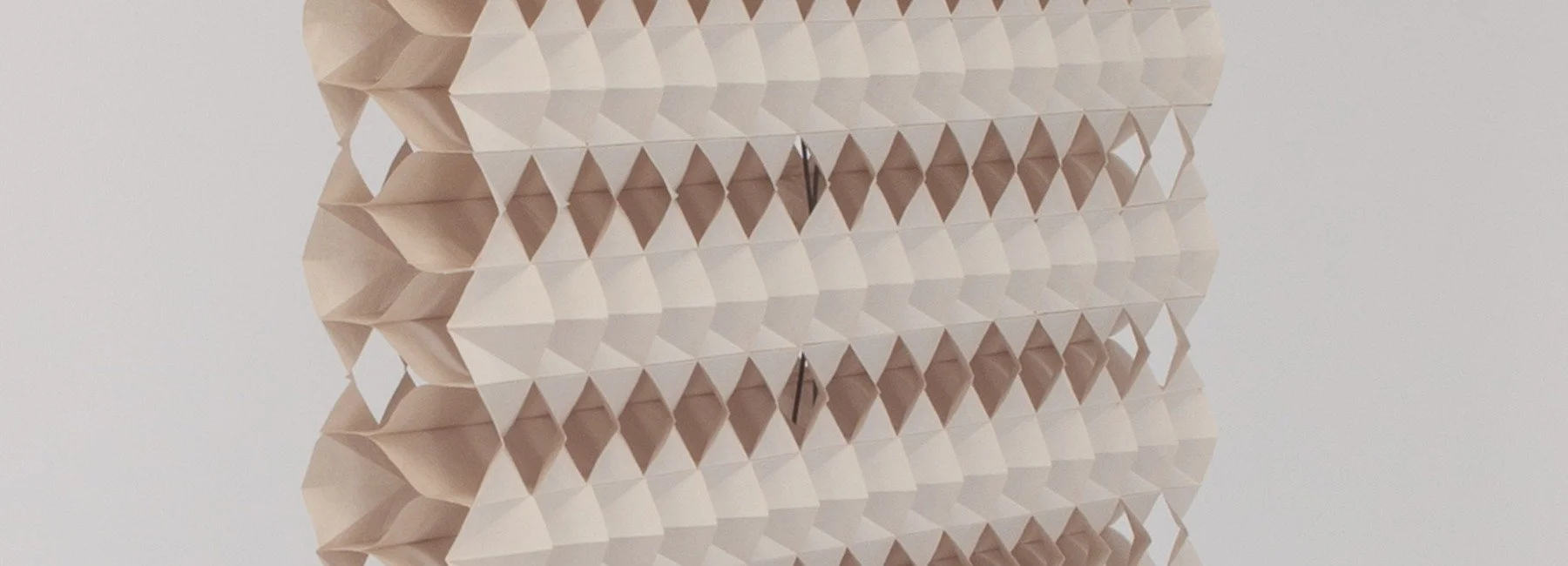
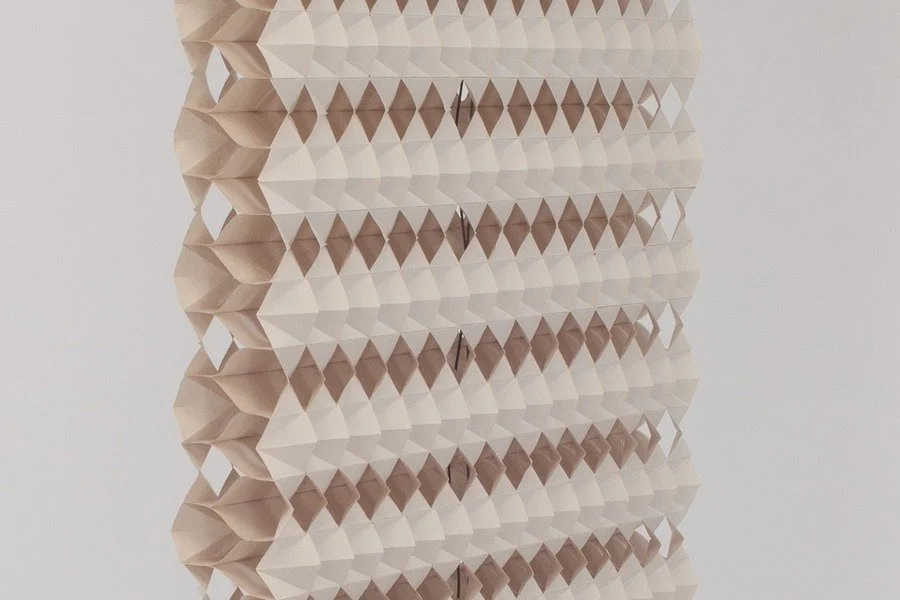
From afar, Paper Blind appears as a pale, pleated field suspended against the window, its surface holding light without becoming fully opaque. Up close, folds sharpen into ridges, apertures, and shadows; the sheet reveals both its thinness and structural discipline. The blind seems light enough to flutter yet ordered enough to regulate a room. This is not fragility or durability, but fragility and durability mutually generating each other. Natchar Sawatdichai frames this confrontation as a material argument: paper gains authority not by imitating heavier substances, but by turning vulnerability into adaptability. She argues that domestic longevity can arise from replaceable parts rather than permanent, over-engineered wholes.
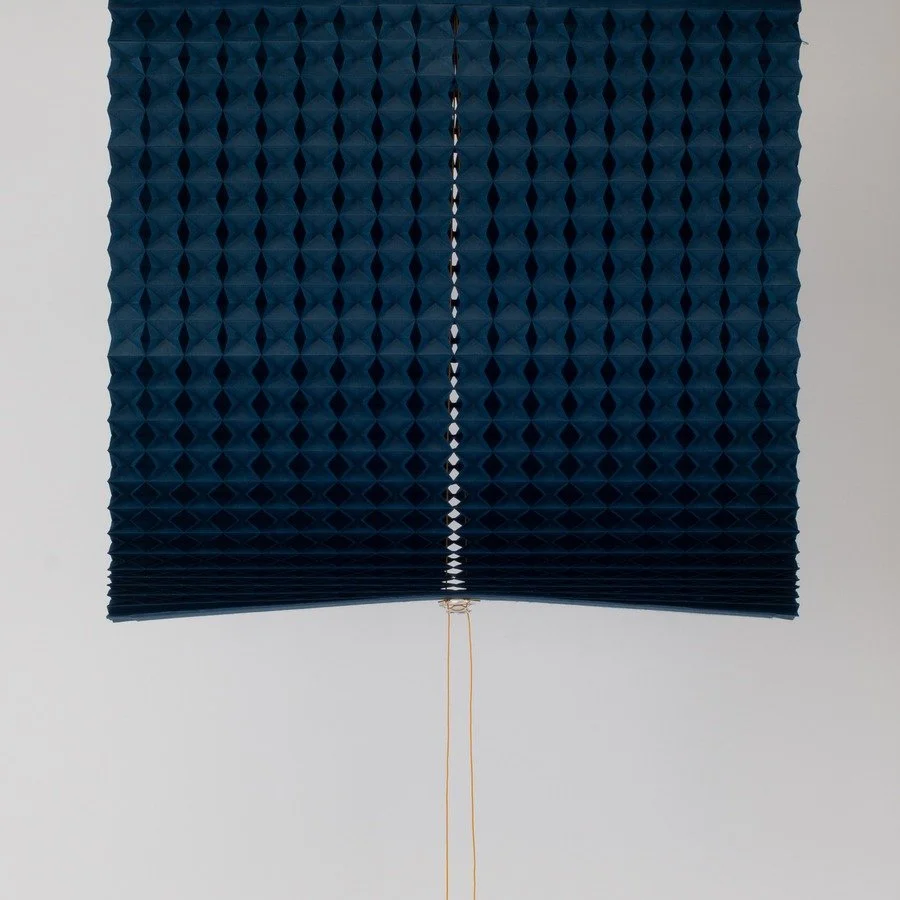
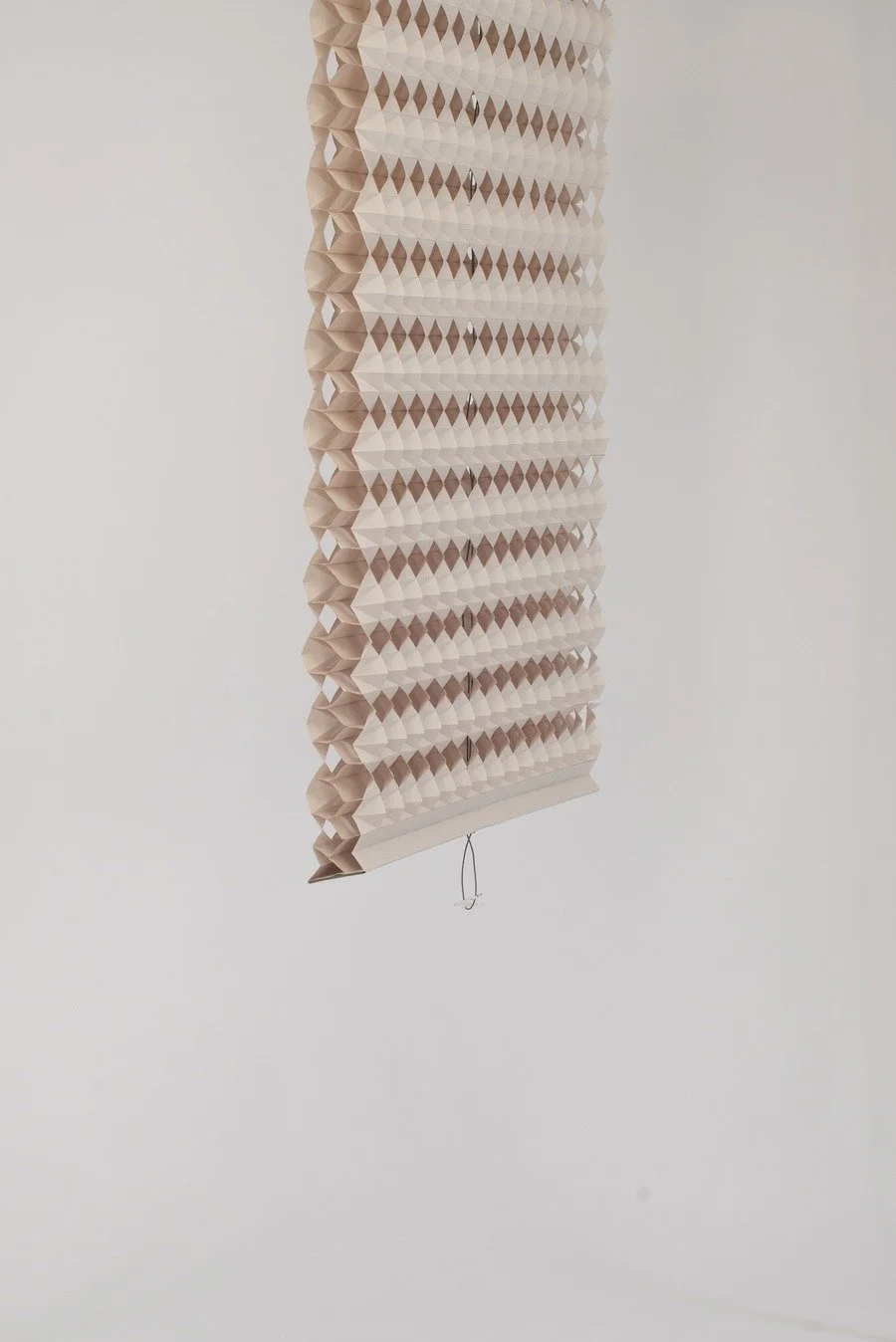
The material is paper, cut and creased by machine, then folded and glued by hand into dimensional patterns. Sawatdichai describes conventional interior materials as “over-qualified” when their production and disposal demand more energy than their use requires. Here, the sheet behaves differently: folding gives it stiffness, rhythm, and depth, while its patterned surface filters daylight into a softer atmosphere. As the blind occupies the window, it neither seals the exterior away nor leaves the interior exposed. The viewer encounters privacy and permeability at once, reading the folds as both barrier and luminous membrane. The paper’s apparent weakness, therefore, becomes the method by which it controls space.
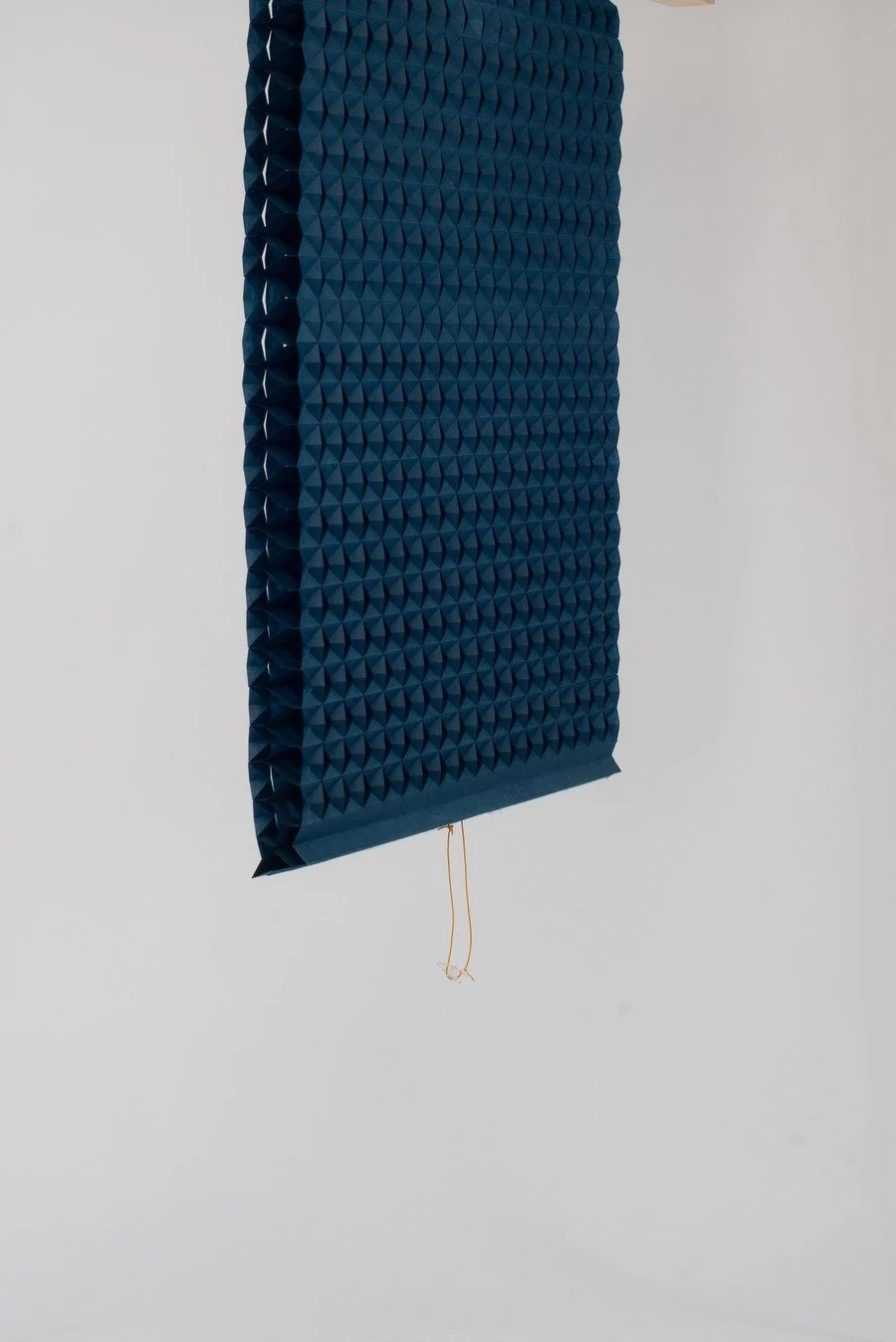
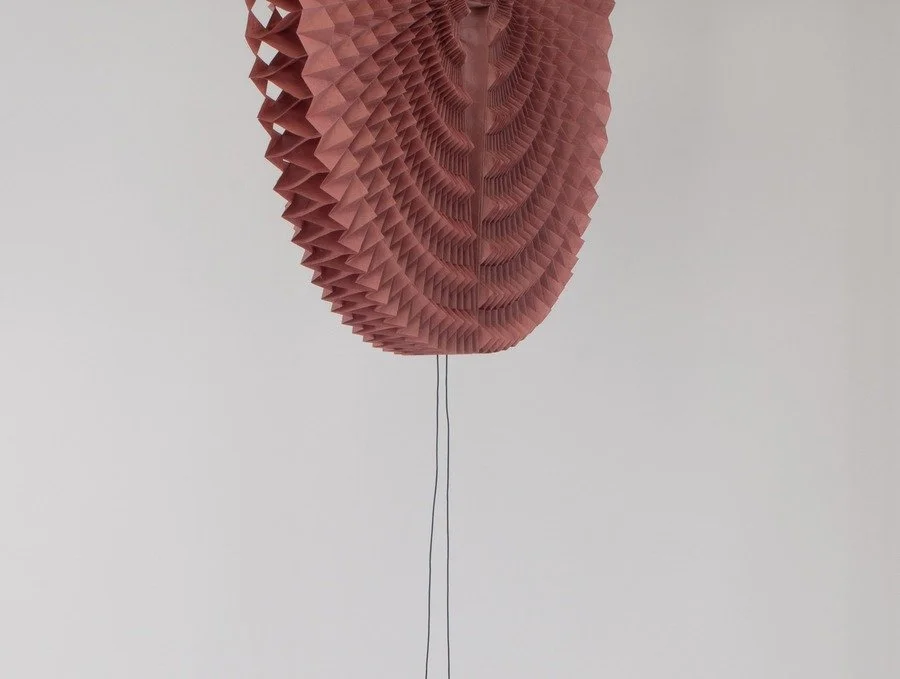
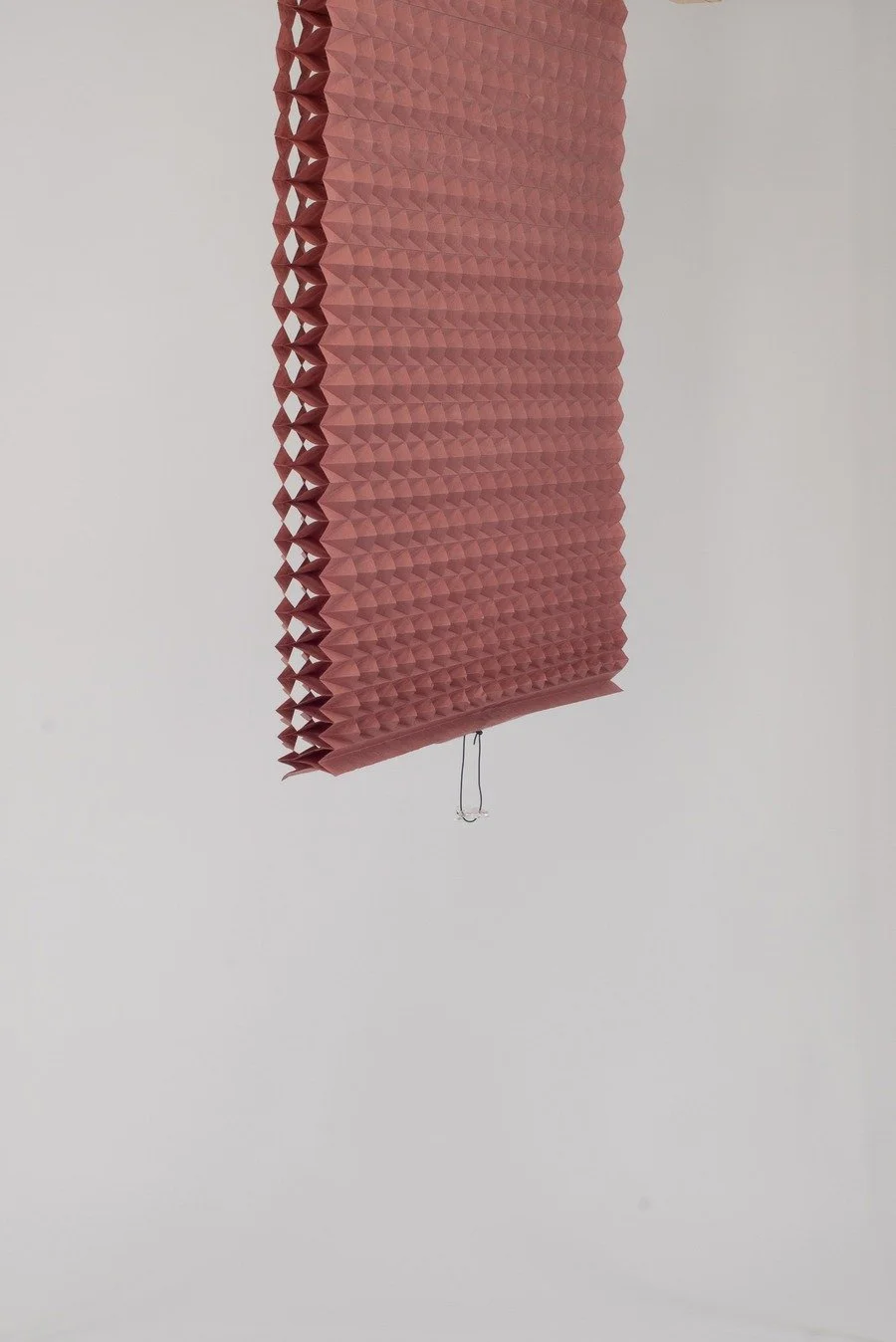
The mechanism reduces the object to three principal elements: curtain, cord, and pulley. Positioned centrally, the moving system allows the blind’s edges to be trimmed for different window widths without disrupting its operation. Pulling the cord compresses or extends the pleated form, changing its height and silhouette. The user does not simply observe this transformation but performs it, approaching the window, adjusting tension, and watching light redistribute across the room. Form becomes behaviour: the blind gathers, releases, shades, and reveals. Its adaptability makes standardisation less rigid, allowing one modest assembly to respond to varied domestic boundaries.
Replaceability gives that movement an ethical consequence. When the paper panel becomes worn, it can slide from its bracket and be exchanged while the cord, pulley, and support remain. The project therefore shifts attention from disposal to maintenance, and from product ownership to material stewardship. Because the discarded sheet can be recycled, obsolescence is confined to a component rather than imposed on the entire object. Paper Blind does not romanticise impermanence; it organises it. At the window, the final evidence is tangible: a folded surface quietly carrying light along every single precise crease.
Natchar Sawatdichai
Natchar Sawatdichai is a Thai designer and lecturer whose practice treats material selection as environmental inquiry. Based in Bangkok, she holds a master’s degree in Product and Furniture Design from Kingston University, London. Rather than beginning with a fixed object type, she approaches design as an experiment in material capabilities, describing the designer’s role as akin to that of a scientist combining substances, processes, and uses to produce possibilities.
Paper occupies a central place in her work. Across projects including Paper Blinds, Paper Stool, Paper Clock, Unfolded, and Glueless Paper Blinds, Sawatdichai tests how an inexpensive, recyclable sheet can acquire structure through cutting, creasing, folding, joining, and repetition. Her concern is not simply to substitute paper for wood, plastic, or metal. She questions why domestic products are often made from materials whose strength, energy cost, or lifespan exceeds what their function demands. This critique of “over-qualified” materials supports an interest in reducing ecological impact without reducing sensory or functional value.
Her process remains closely tied to craft. The original Paper Blinds were machine-cut and creased, then folded and glued by hand, with one blind requiring approximately six to seven hours of labour. That investment complicates paper’s association with disposability: the material is replaceable, but the thinking and making are deliberate. Exhibited in London and presented through international design platforms, her projects position folding as both engineering and visual language. Sawatdichai’s contribution lies in showing that sustainability need not appear austere; it can emerge through patterned light, adaptable form, and reconsidered material limits.
Designer: Natchar Sawatdichai
Studio: @natchar.studio
All images courtesy of Natchar Sawatdichai