Packioli, designed by Alara Ertenü, turns discarded artichoke leaves and pea pods into heat-sealable bio-wraps for soap, meeting hygiene and shipping demands without petro-plastic. The plant-pigmented film stays water-resistant for about a week, then biodegrades in 10–15 days. Rooted in western Turkey’s artichoke waste, it makes circular packaging practical today.
Packioli
“Agricultural waste becomes hygienic bio-wraps, letting soap travel plastic-free safely”
Jan 21, 2026
Materials
Connetion : +511436
Shares : 3151
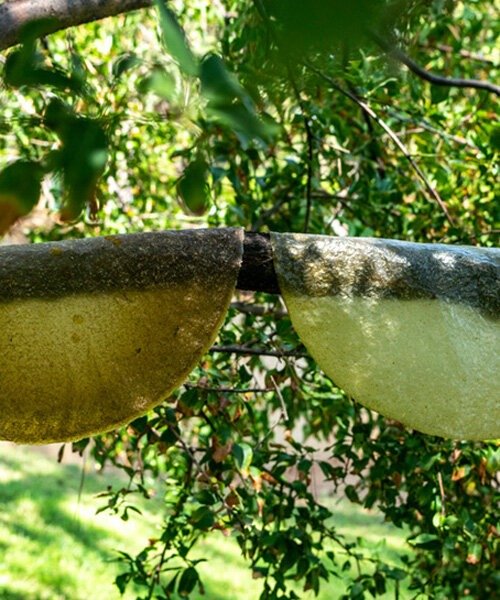
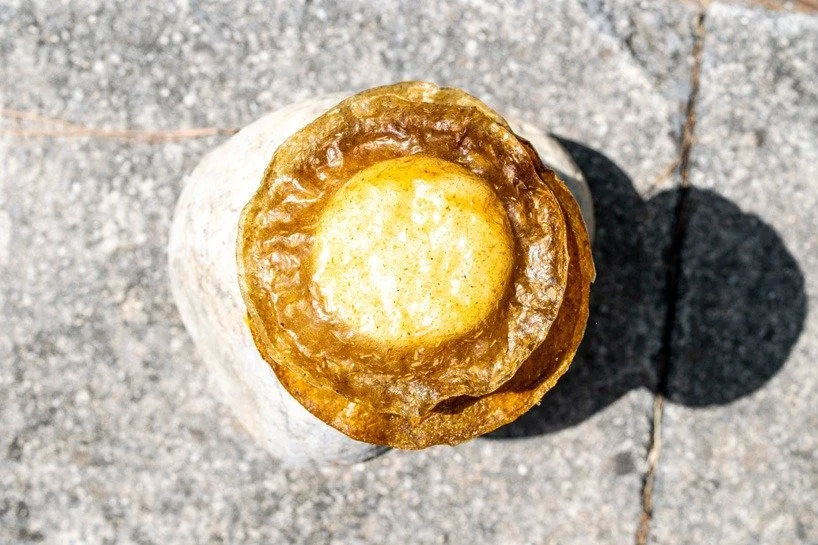
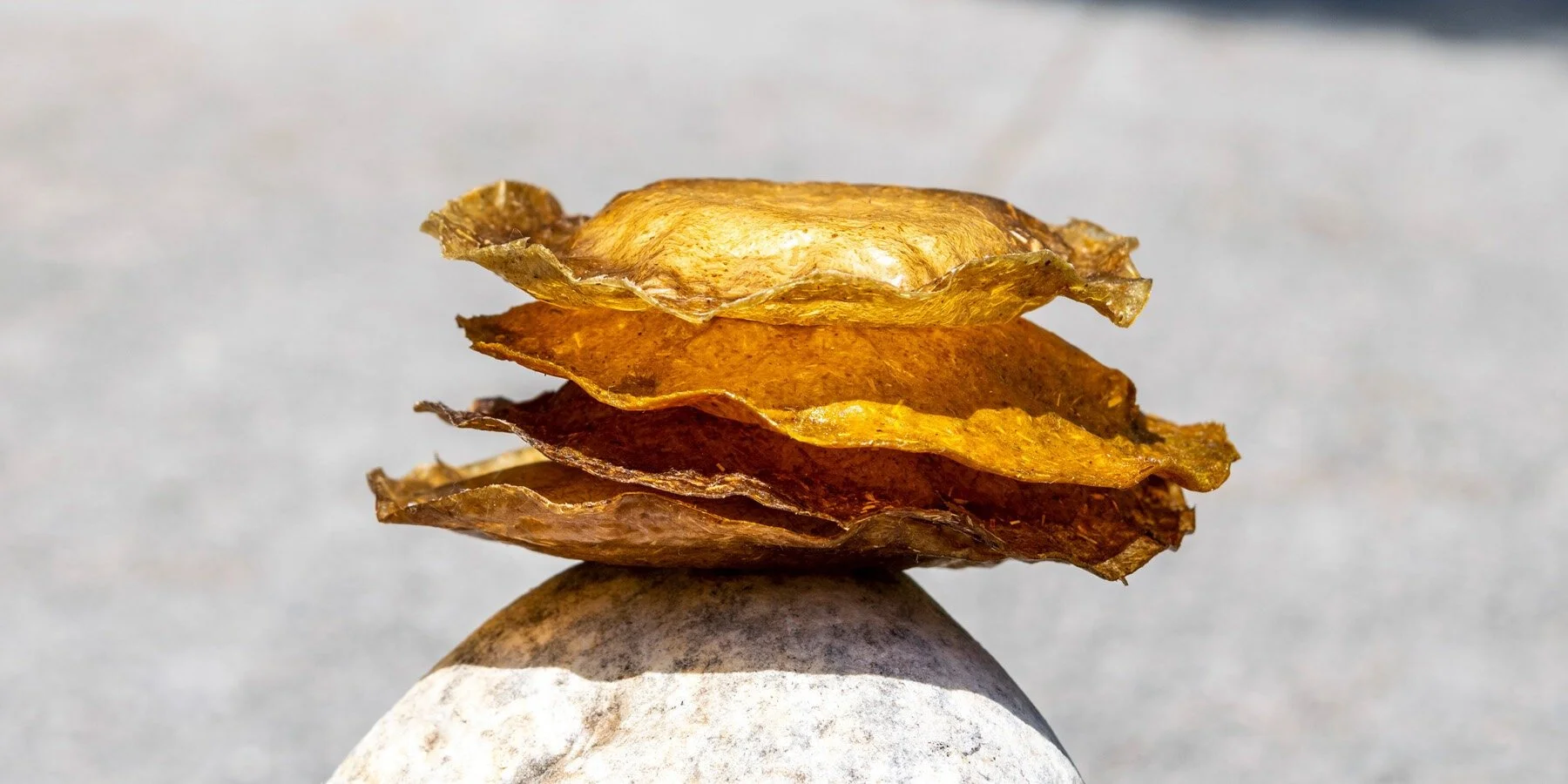
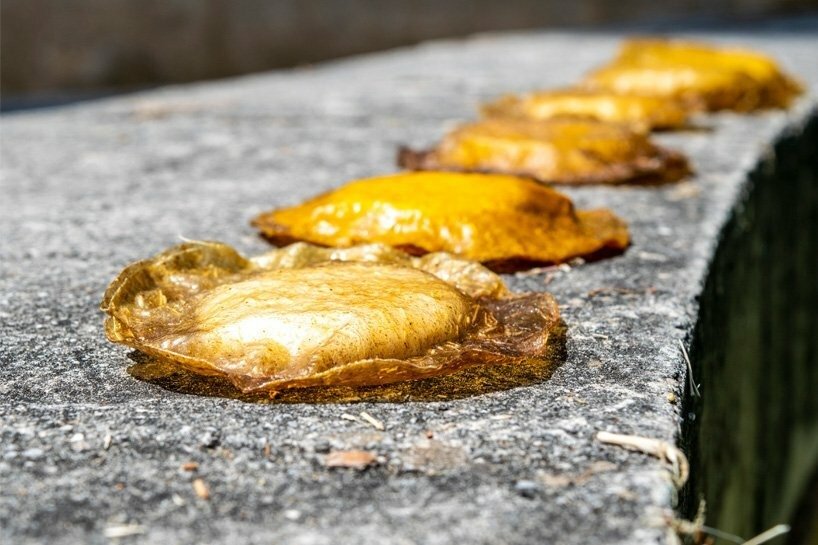
A soft amber skin sits tight around a bar of soap, its surface slightly cloudy, its edge pressed into a crisp seam. Under bathroom light, the wrap gleams and then dulls as droplets collect, holding a boundary between hand and object. Looking from afar, the package reads like ordinary retail certainty; looking up close, its fibres betray a plant origin and a fragility that feels almost intimate. The confrontation is immediate: this is not hygienic performance or ecological disappearance, but hygienic performance and ecological disappearance mutually generating each other. Packioli is positioned as a market-ready material system, and Ertenü frames the bathroom as a logistics site where ethics must survive handling and humidity. Ertenü argues that local discards can be engineered into trust.
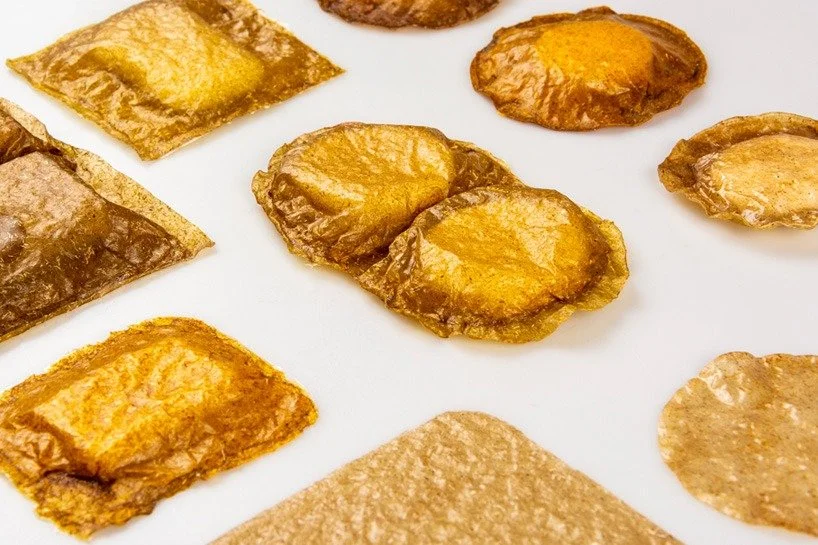
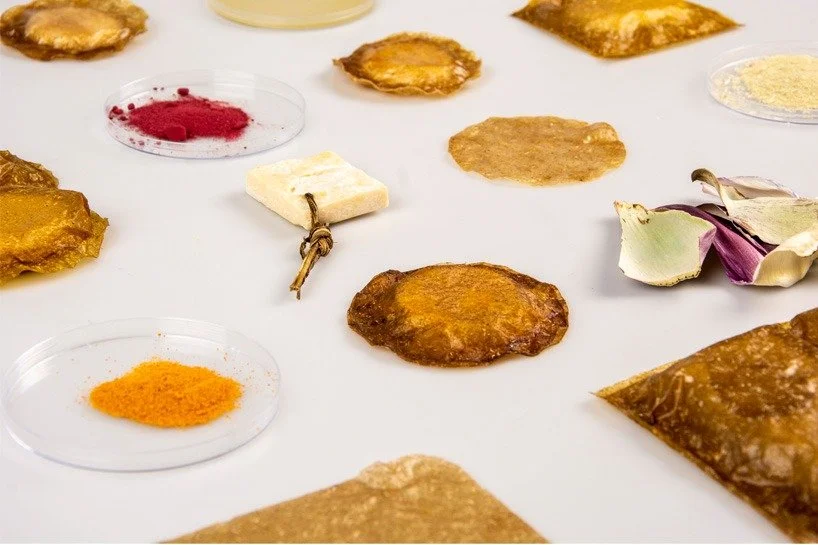
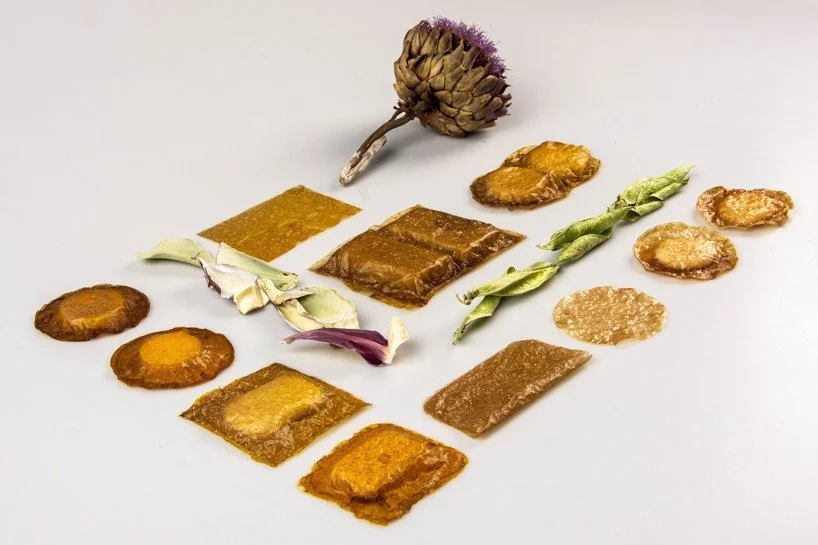
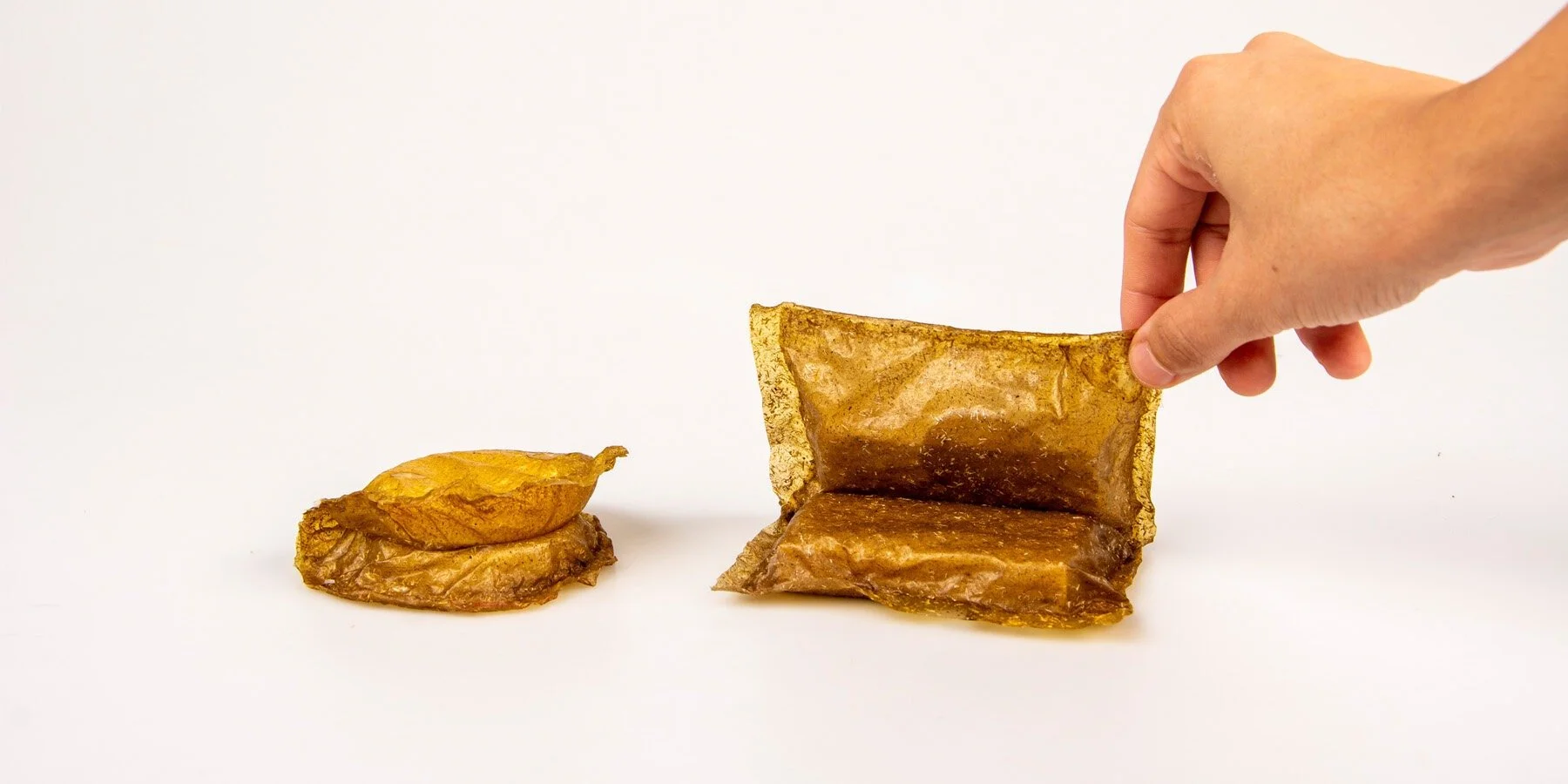
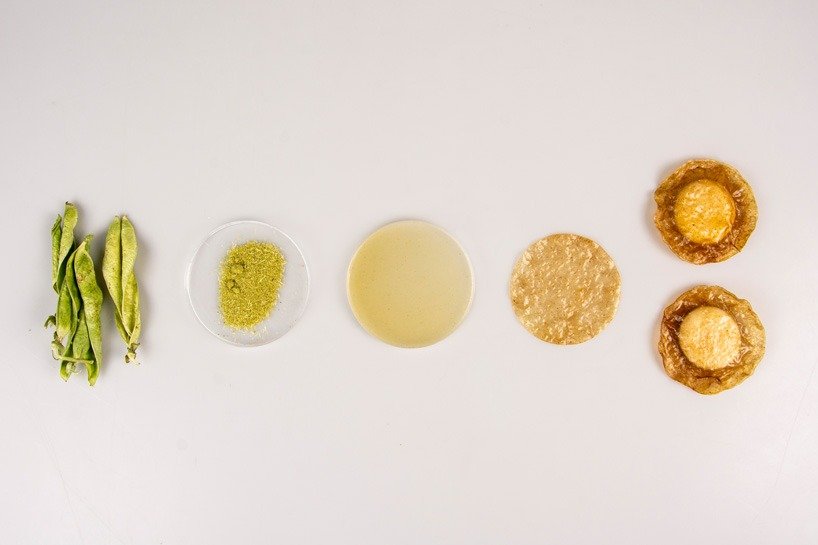
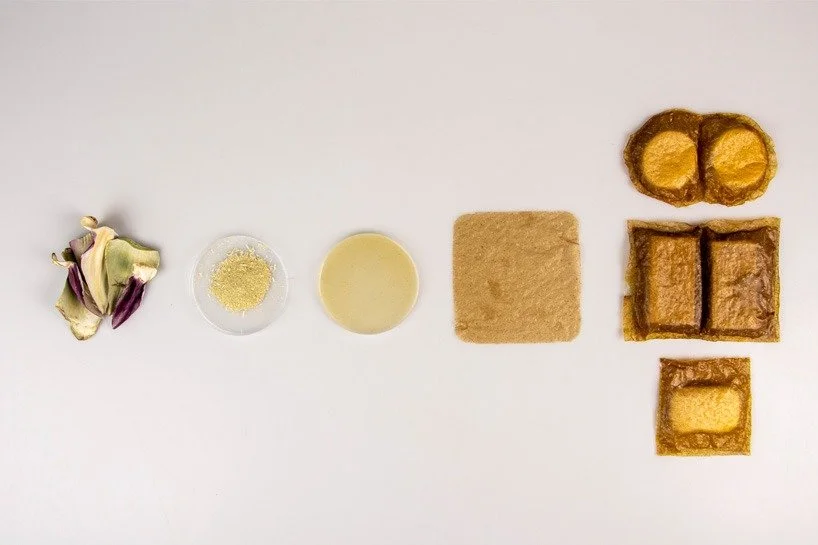
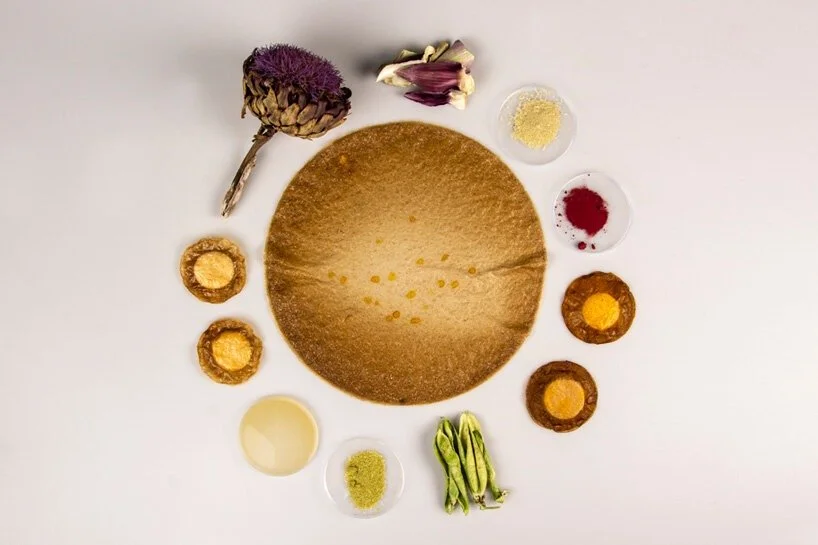
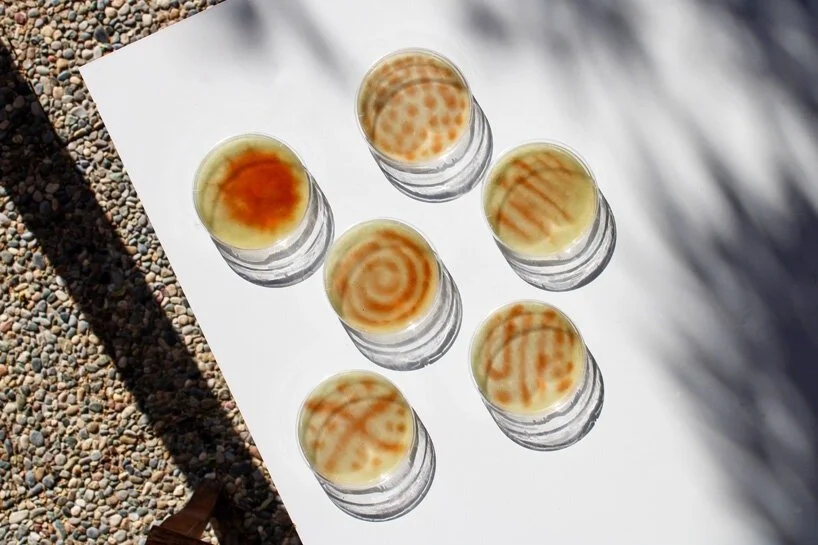
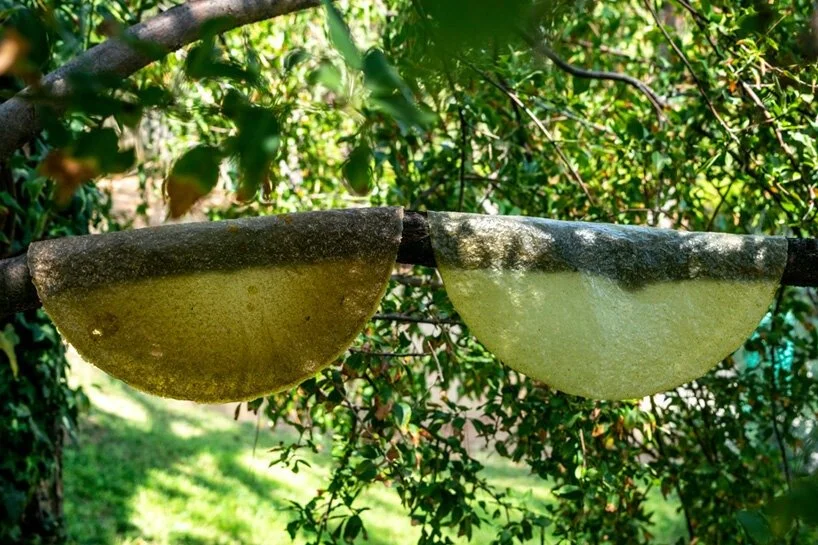
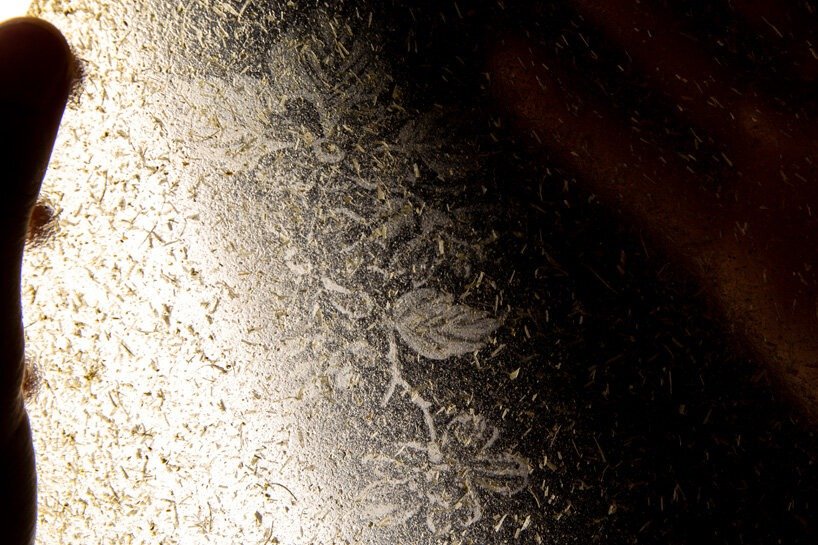
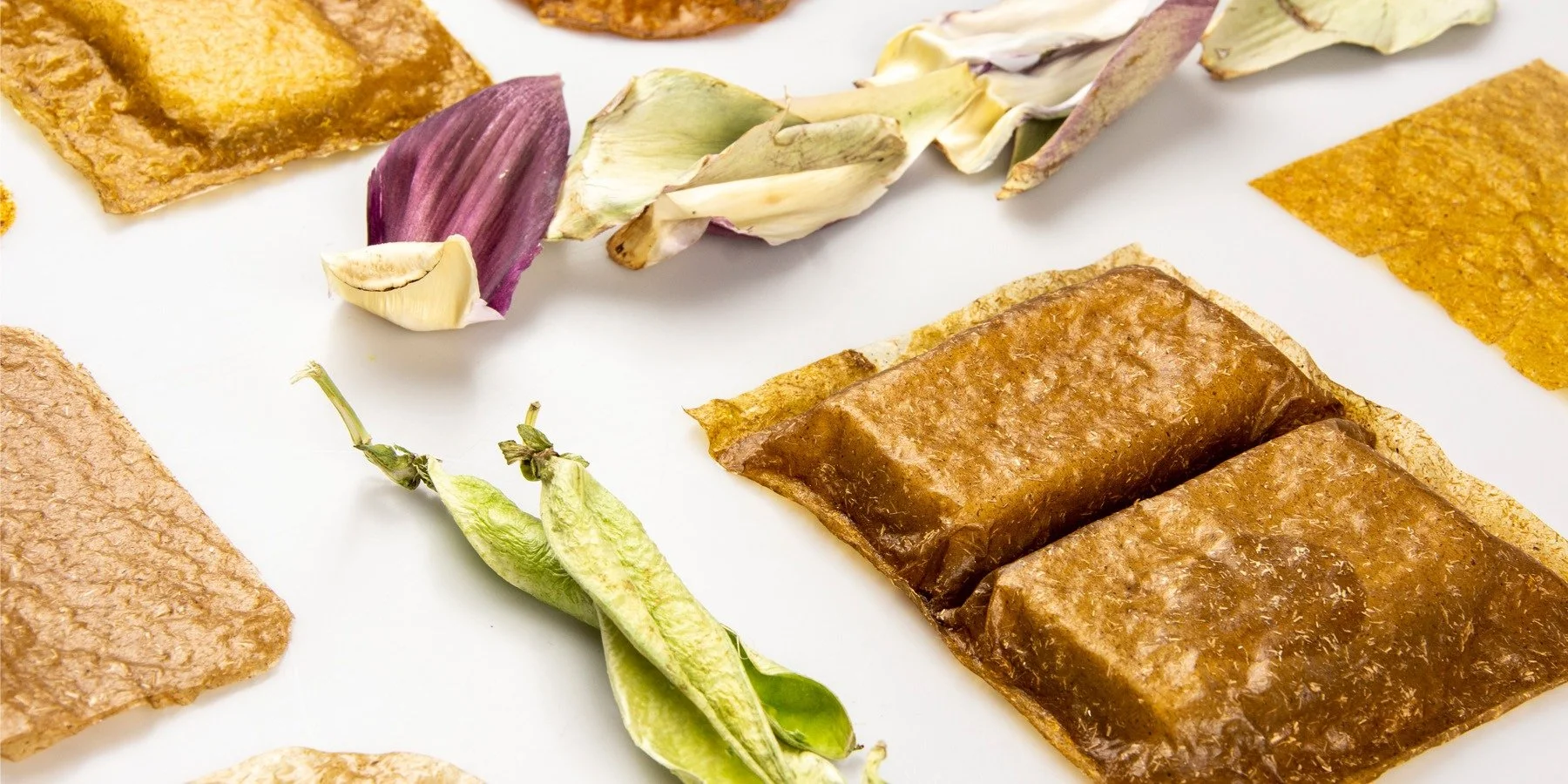
Materially, Packioli begins with agricultural residue—artichoke leaves and pea pods—processed into bioplastic sheets that can be heat-sealed into tight sleeves around soap. It answers a blunt local statistic: around 80% of each artichoke is discarded in western Türkiye, and that loss becomes the project’s feedstock. Plant pigments such as beetroot and turmeric tint the film without synthetic dyes, so colour reads as ingredient rather than coating. Formally, the wrap behaves like a thin membrane: it folds, creases, and locks into sealed edges that keep dirt and moisture out while allowing the object to be stacked, shipped, and stored. For the viewer, the familiar act of unwrapping becomes a close-reading exercise; fingers trace seams, test tackiness, and sense the slight waxy drag that signals protection without petrochemical stiffness. Packioli’s method turns waste into a surface that performs, and that performance keeps circularity from becoming a purely symbolic gesture.
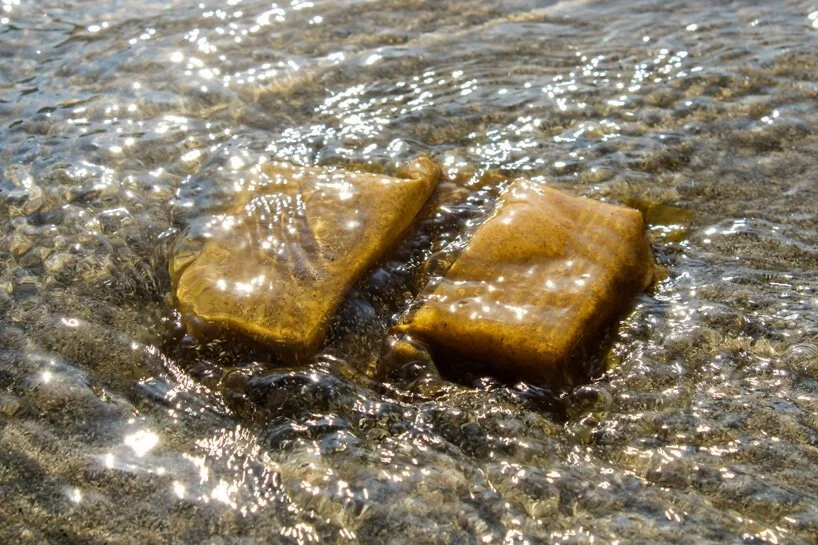
Its most pointed move is temporal. The bio-wrap stays water-resistant for up to a week, yet in water it biodegrades in roughly 10–15 days, so the package can survive distribution but won't last long after. An easy-tear opening is designed to release under water pressure, shifting hygiene from a sealed promise to a controlled dissolution. The wrap uses simple sealing equipment, making adoption easier. In use, the body is asked to negotiate care: to store the bar dry, to watch the membrane soften, to accept that “protection” can be measured in days rather than decades. That calibration is where Packioli tightens its argument—performance is not the enemy of biodegradation, but the condition that makes biodegradation adoptable. In the end, the seam’s thin line catches the light, then loosens into pulp.
Alara Ertenü
Alara Ertenü works at the intersection of biodesign, material research, and industrial design, based in İzmir, Türkiye. Her practice begins with a simple insistence: circularity cannot be imported as a slogan, but must be built from the wastes that already define a region’s economy and agriculture. That stance is visible in Packioli, yet it also describes the wider agenda of Alara Ertenü Studio—an emerging platform focused on turning bio-based experiments into value-added, everyday products.
Ertenü’s public biography links her research to education, positioning her as an industrial design student at İzmir University of Economics while preparing for further study in biodesign. Alongside that academic base, she frames studio work as partnership-led: impact grows when designers collaborate with progressive companies and supply-chain actors rather than treating “material innovation” as a gallery endpoint. After Packioli’s presentation during Dutch Design Week, she has spoken about the harder, less photogenic phase of the project—finding growers, processors, and brands willing to carry a new material through real manufacturing constraints and market risk.
Her work has circulated on award platforms, where Packioli is presented as a concept confronting plastic dependence with locally sourced biomaterials. That visibility keeps research legible to industry, without diluting regional specificity.
This emphasis on translation—from lab-like trials to logistics-ready prototypes—helps explain why Packioli reads as more than a single artifact. It becomes a case study in how a young designer navigates credibility: by grounding invention in local feedstocks, by articulating performance metrics, and by treating adoption as the final design problem.
Designer: Alara Ertenü @alaraertenu
All images by Alara Ertenü