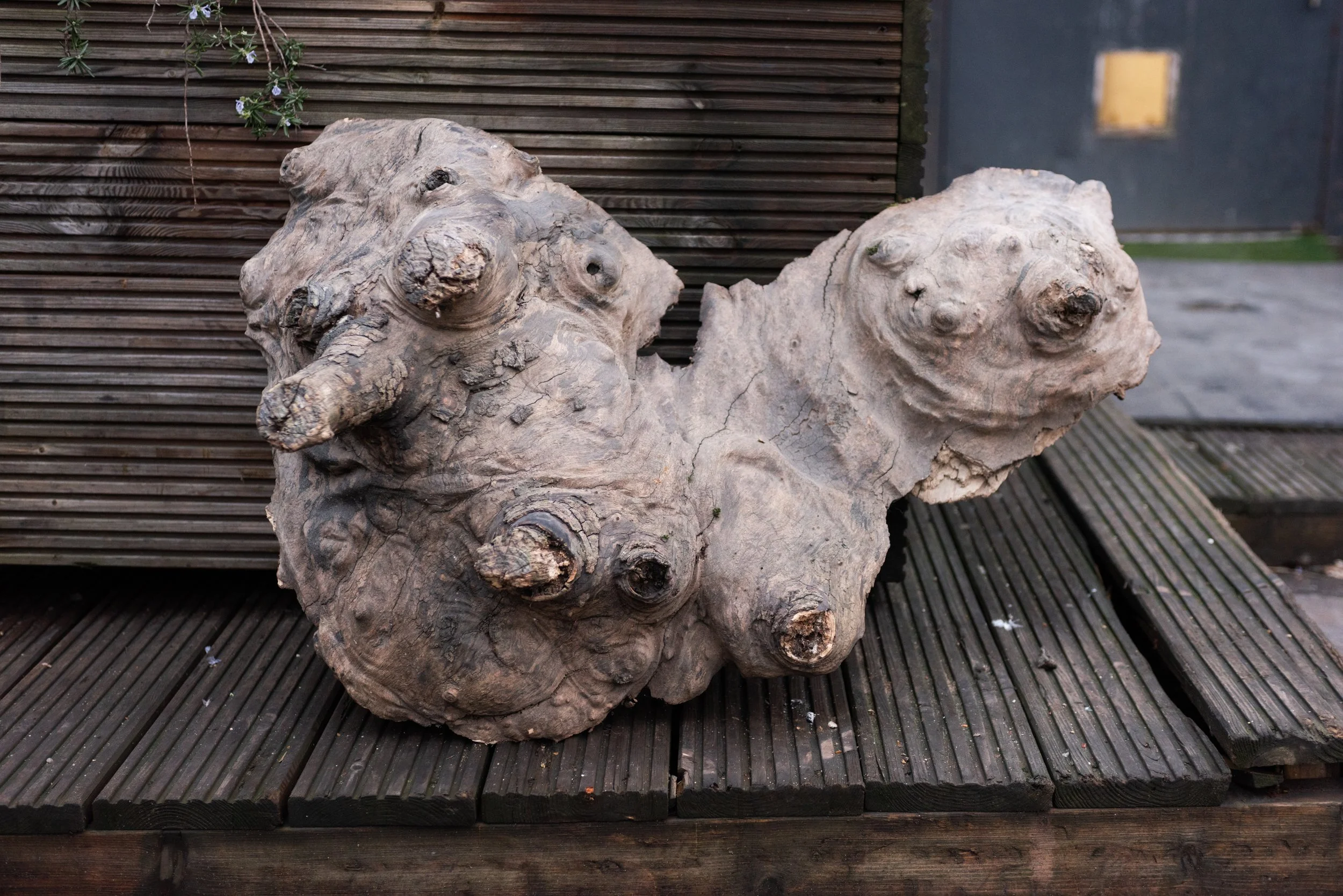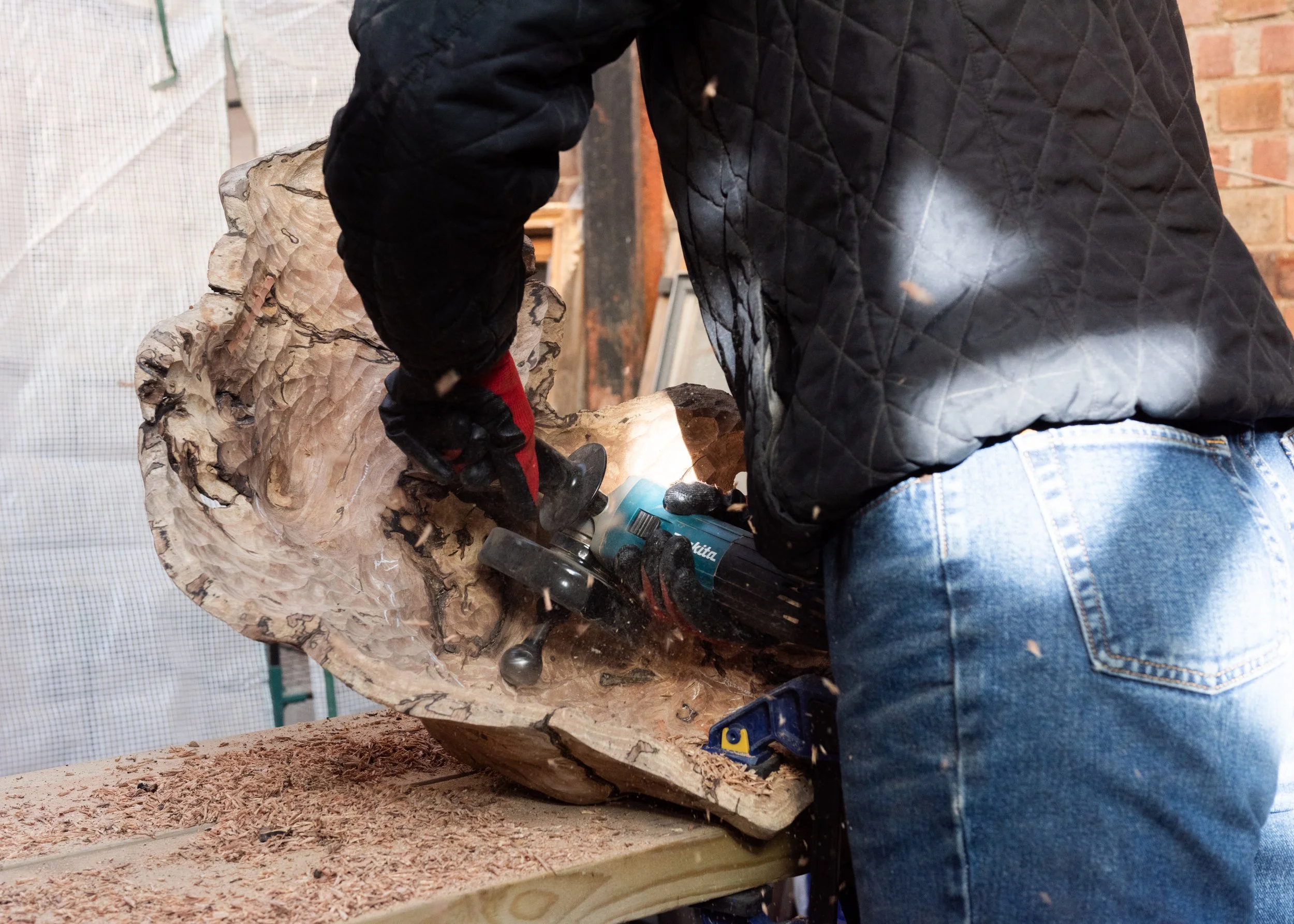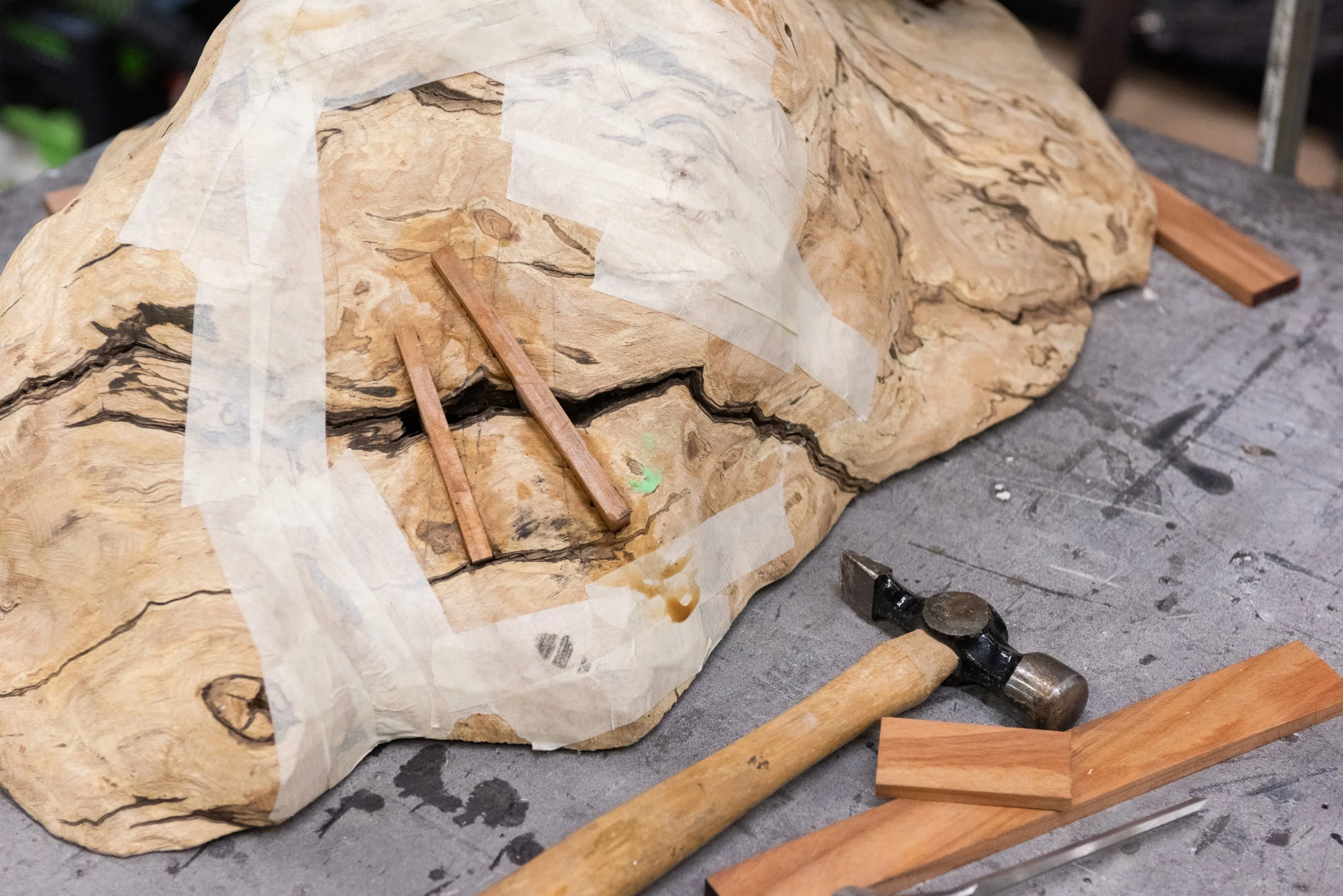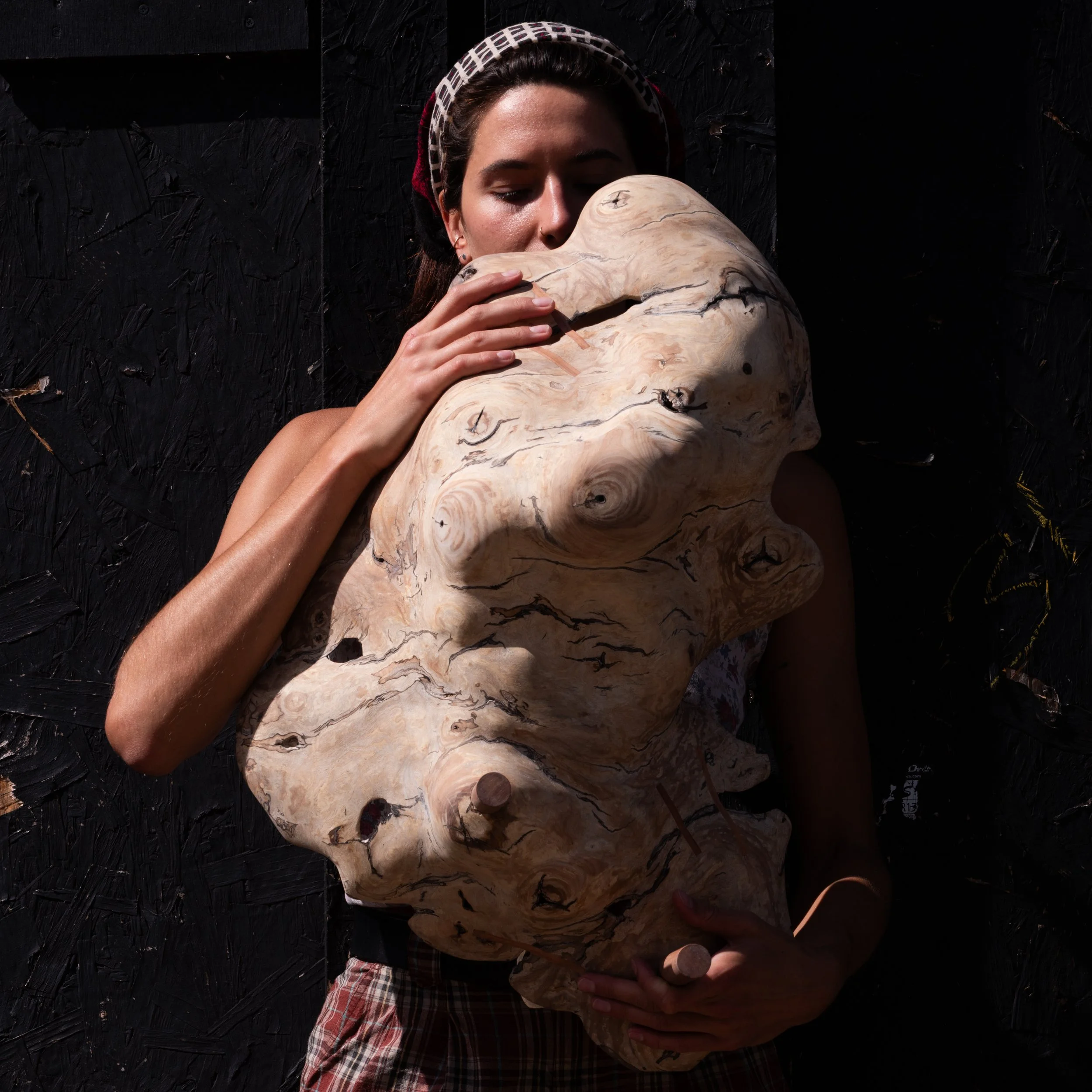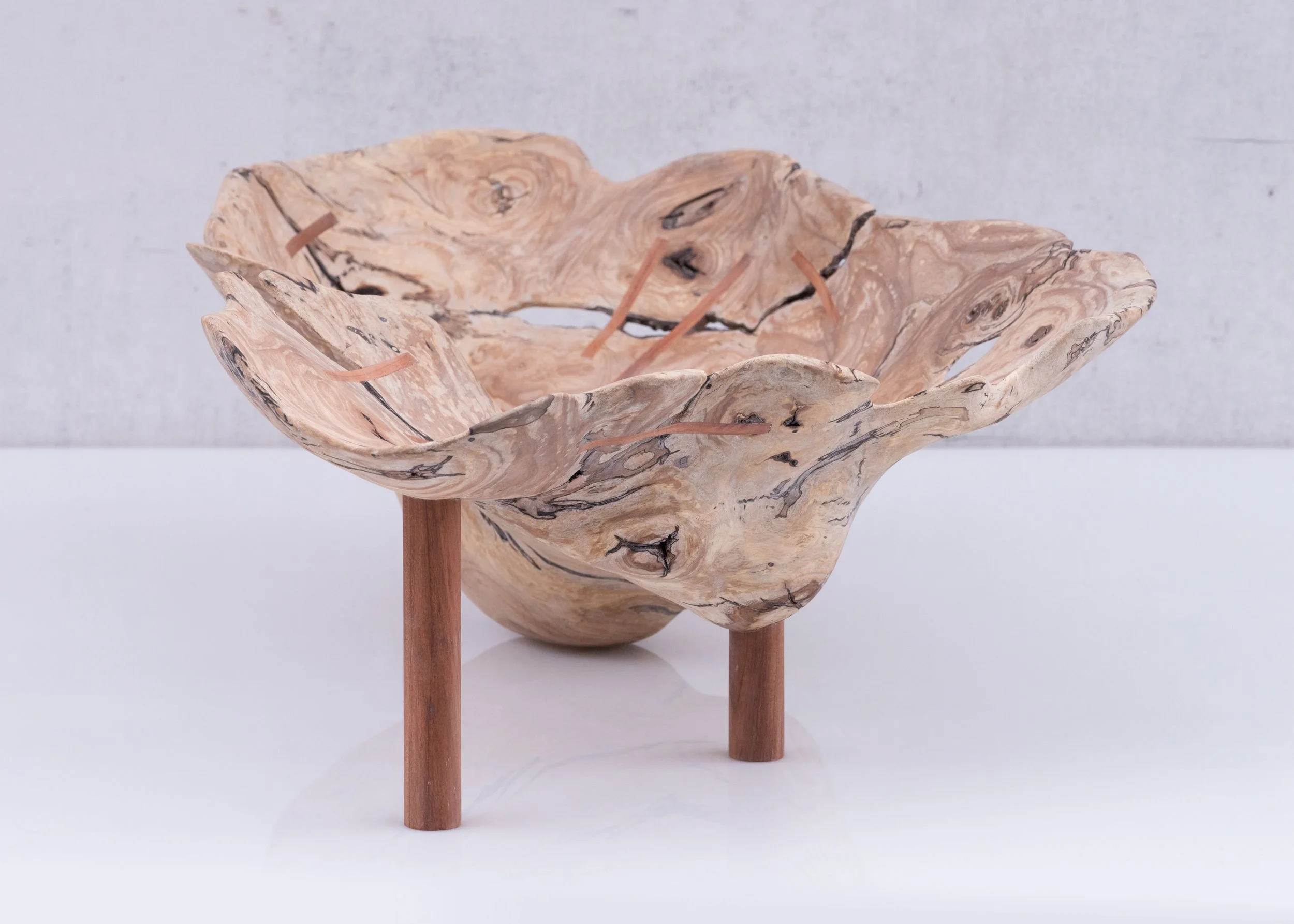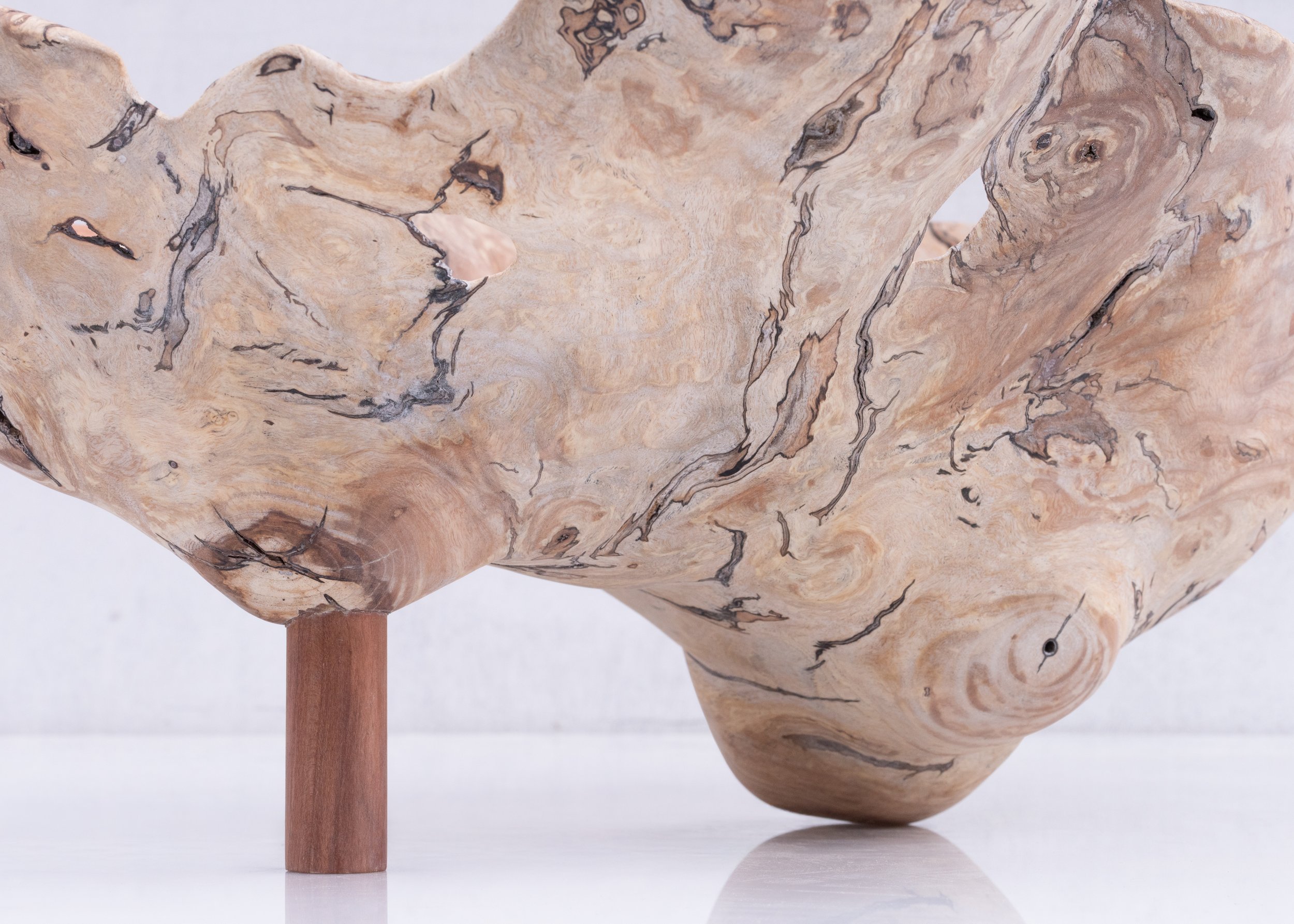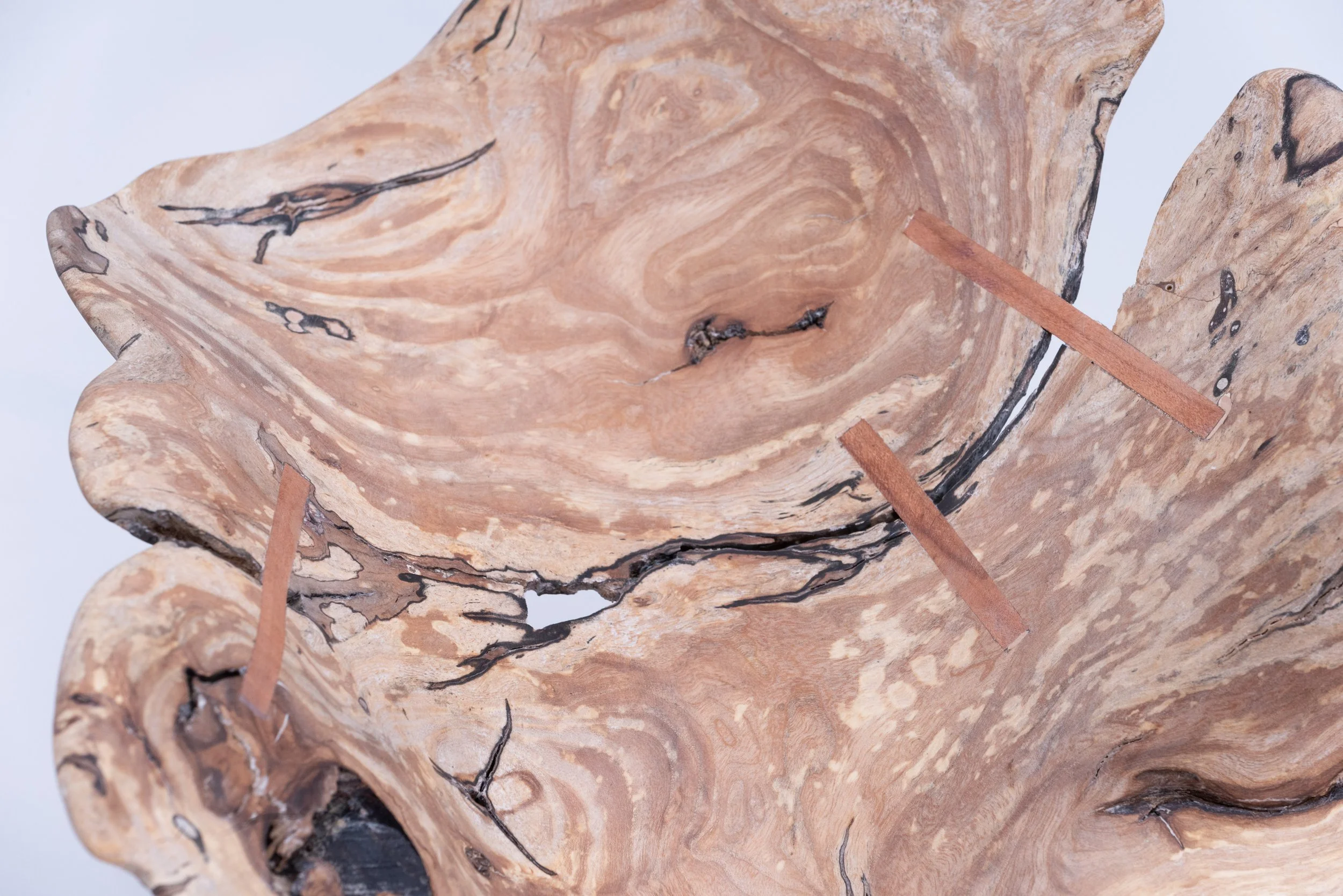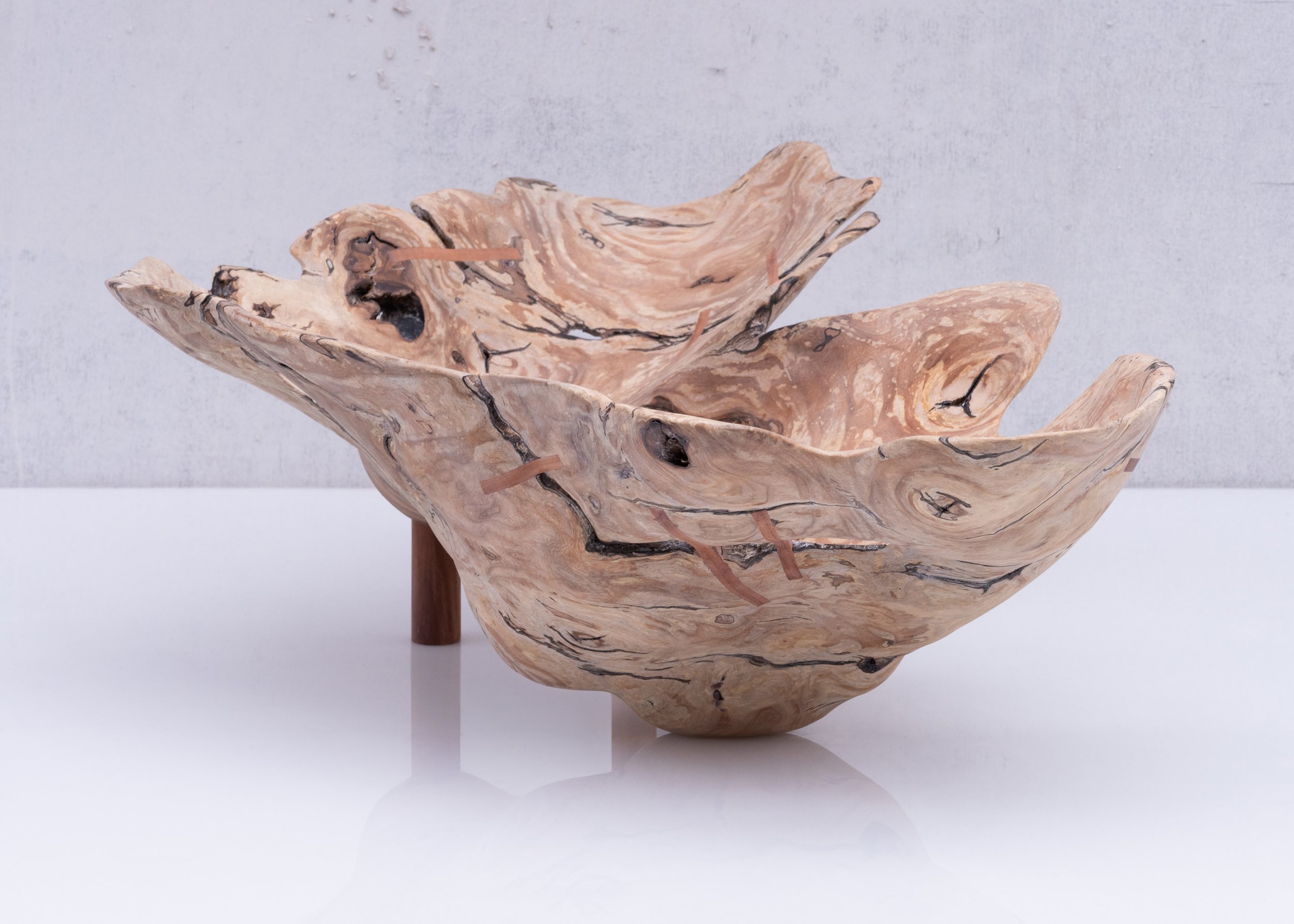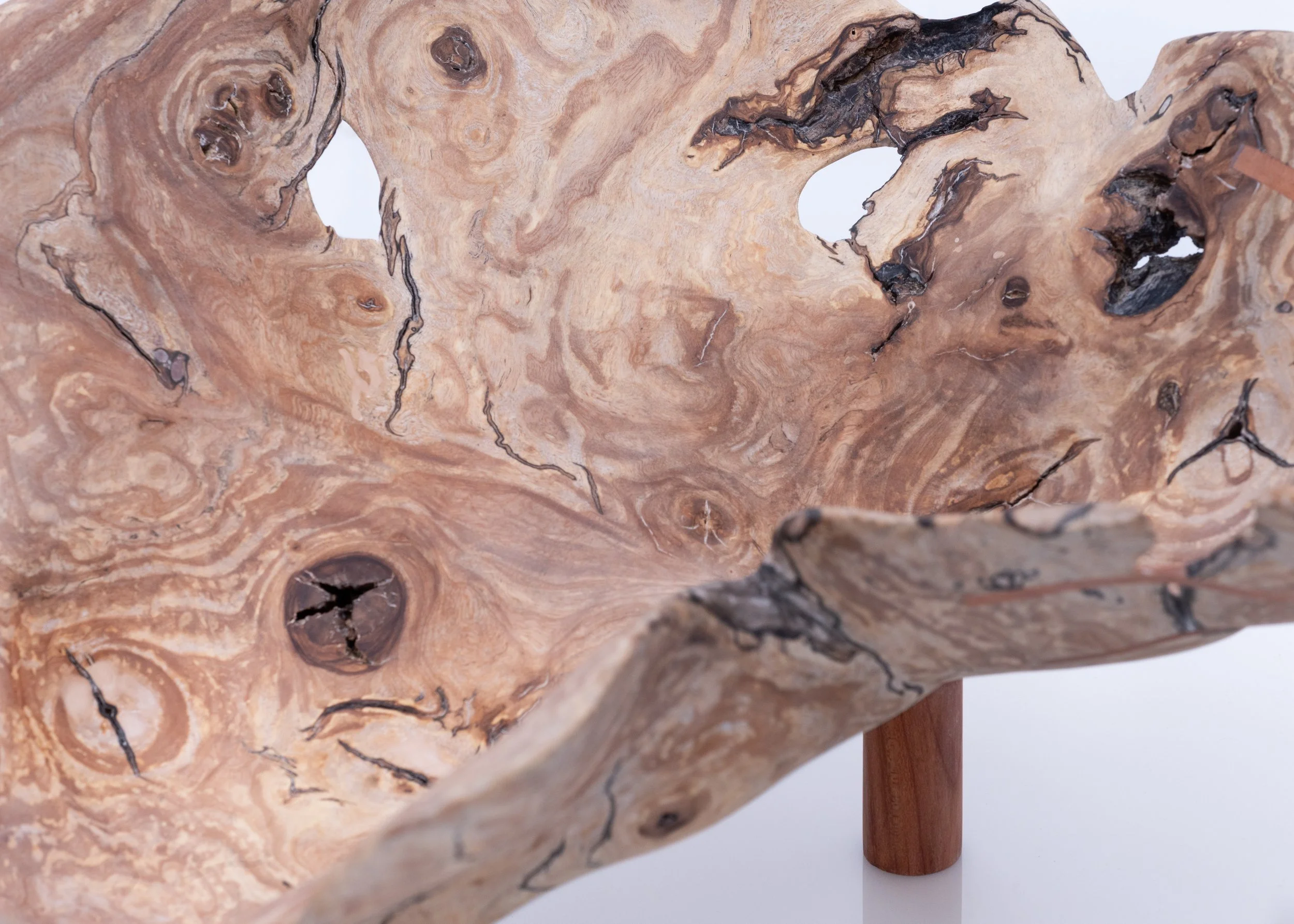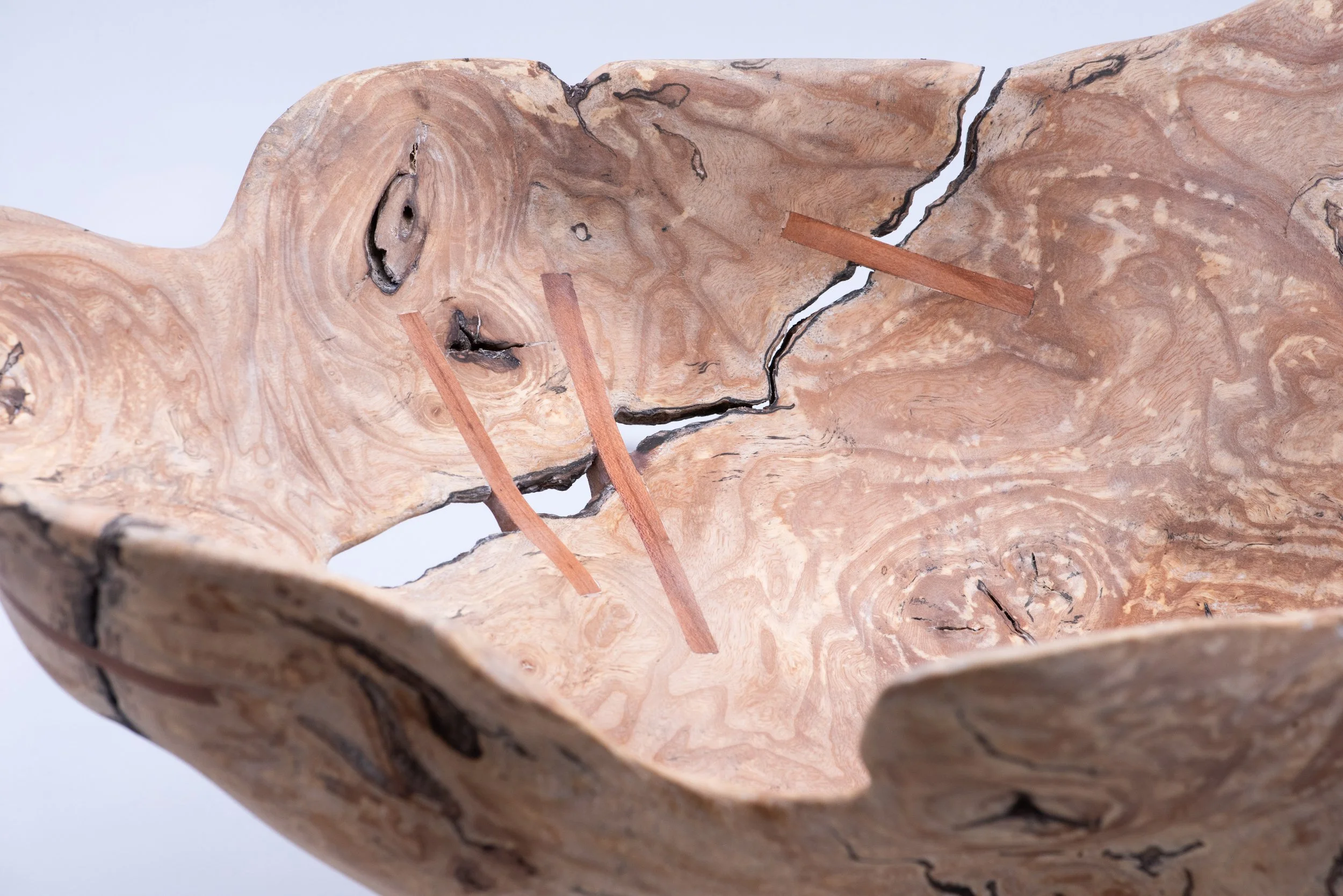
Stitch is a hand-carved bowl from black ash (Ealing) and plum (Camden), both felled by disease. Instead of masking fungal scars, Ash Pales reads them as evidence: urban weathering made tactile. Hand tools turn salvaged timber into a vessel for everyday use, binding local ecology to touch and civic care.
Stitch
“A diseased London timber bowl, turning urban loss into touch.”
Feb 1, 2026
Materials
Connetion : +452436
Shares : 83151
A shallow bowl sits on a table like a dark pool, its rim uneven where the tree once bent toward light. Pale streaks run through the surface, not as polish but as interruptions—fungus-written lines that catch and release glare. From afar, the object reads as ose, the grain breaks into bruised swirls and soft pits. The encounter becomes a dialectic of care and damage, and she argues that urban “defect” can be retrained into meaning.
Material and method anchor that claim. Stitch is carved by hand from two London trees: black ash from Ealing and plum from Camden, both felled after disease entered their fibres. What timber yards might discard for irregularity becomes, here, the project’s index. In commercial grading, those stains would be downgraded; here, their instability becomes a certificate of origin for London’s overlooked, felled urban forests. Using simple hand tools—handled until they feel bodily—Pales pares back bark, sapwood, and scar, letting the fungal trace remain legible rather than corrected. The bowl’s surface behaves like a map: it records weather, stress, and loss as a visible topography, turning biological disturbance into a craft language.
Form then tightens the politics. The work is not a monument; it is a vessel, scaled for the palm and the counter, insisting on domestic repetition. Its concavity gathers small things—keys, fruit, or nothing at all—so the viewer’s hand rehearses the city’s tree history each time it reaches in. Looking from afar, the bowl seems complete; looking up close, tool marks refuse closure, keeping the making present. Because the grain is allowed to misbehave, touch cannot stay neutral: fingers follow ridges, hesitate at softened pockets, and register that the material once lived. Stitch turns contact into a minor ritual of attention, where intimacy is produced by contingency.
This intimacy expands outward through Pales’ wider “Roots of Craft” agenda, which links making to forestry knowledge and a full-cycle understanding of wood. Rather than treating local trees as anonymous infrastructure, her practice imagines a civic material commons: councils, arborists, and makers cataloguing felled urban timber, prototyping low-tech objects, and returning provenance to everyday life. In that loop, craft does not oppose systems; it feeds them with evidence.
Stitch is not preservation or disposal, but preservation and disposal mutually generate each other. In the end, the bowl keeps its argument to itself: a thin seam of fungal discolouration running along the rim, catching the afternoon light.
Ash Pales
Ash Pales is a London-based maker whose practice bridges architecture, woodworking, and material research. Trained in architecture at Yale University (BA, 2020) and the Royal College of Art (MA, 2023), she turned toward the physical intelligence of timber—how it grows, fails, scars, and carries time.
Before and during her work at Ash Pales, Pales fabricated furniture and architectural elements at MFGR Designs in Bozeman, Montana, and later worked with Florian Busch Architects in Tokyo, experiences that sharpened her interest in craft across scales—from joinery details to spatial atmospheres.
Since establishing her own practice in 2020, she has focused on sculptures and functional objects made from locally sourced timber, especially wood felled for natural causes and disease—material that is often treated as waste within commercial supply chains. Her forms frequently follow what the wood “insists” on: knots, live edges, and irregular grain become compositional prompts rather than problems to erase.
Pales frames wood as both a design material and a living ecology. On the RCA platform, she describes being “humbled” by tree biology and positions designers as responsible for protecting the environments that sustain forests. That ethical stance underpins her “Roots of Craft” project, which imagines architecture and object-making as part of a full-cycle forestry culture—where work, life, and leisure reconnect through what is built and what it is built from.
Her work ranges from walnut to plum and ash, and she values pieces that read one way at a distance, then shift in the hand. Material ethics and handwork anchor her output.
Designer: Ash Pales @ash.pales
Ash Pales creates sculptures and functional woodwork.
All images by Ash Pales