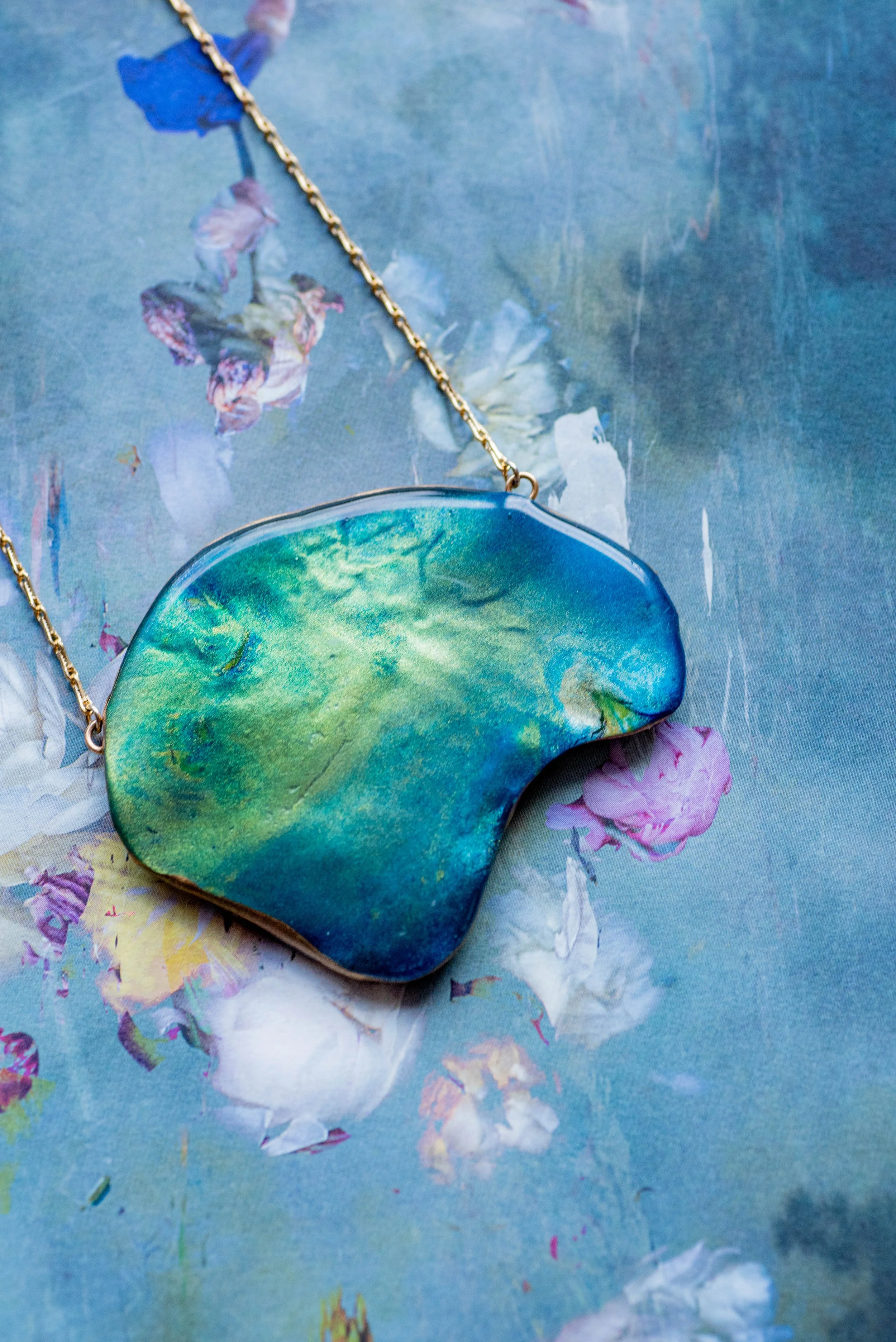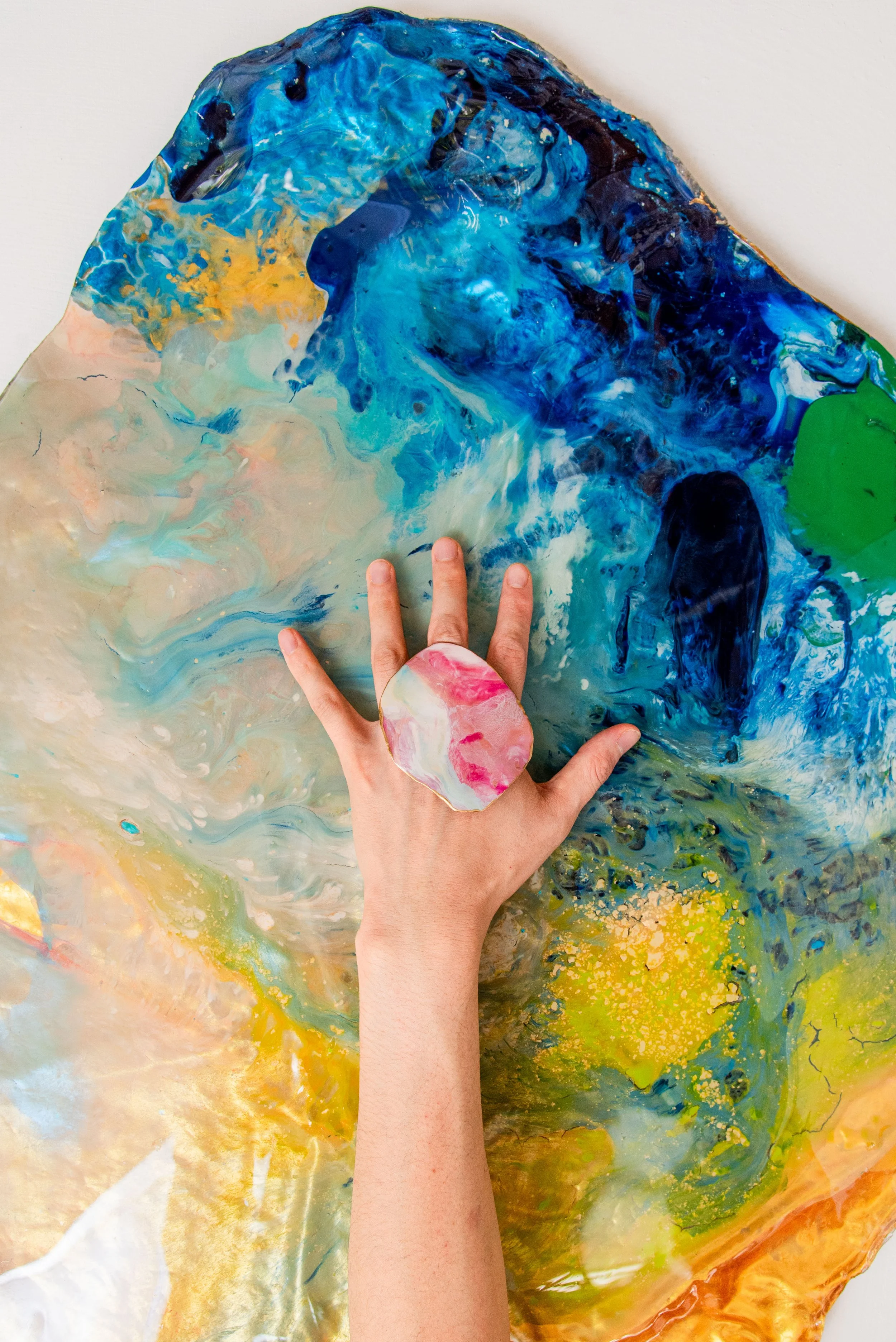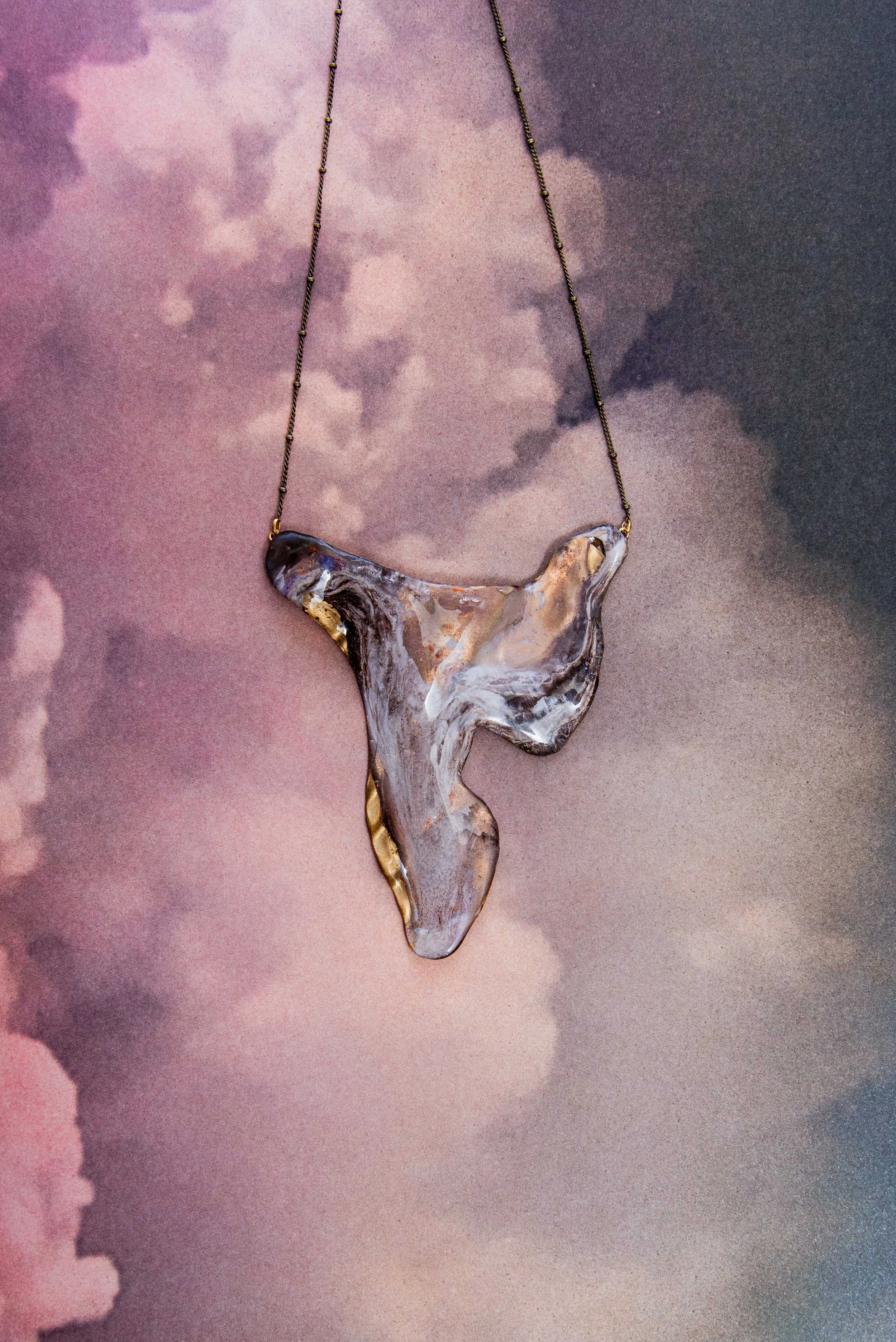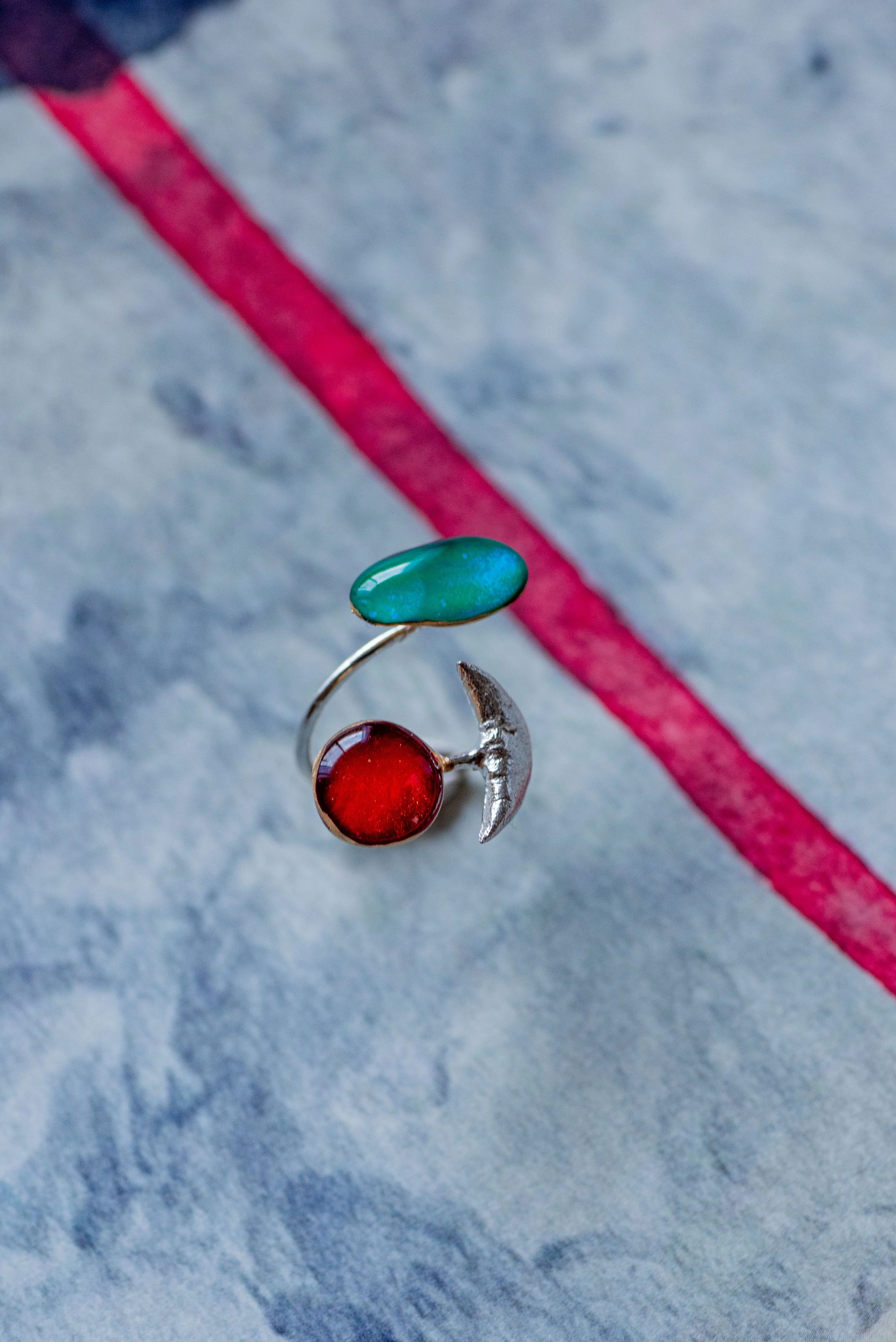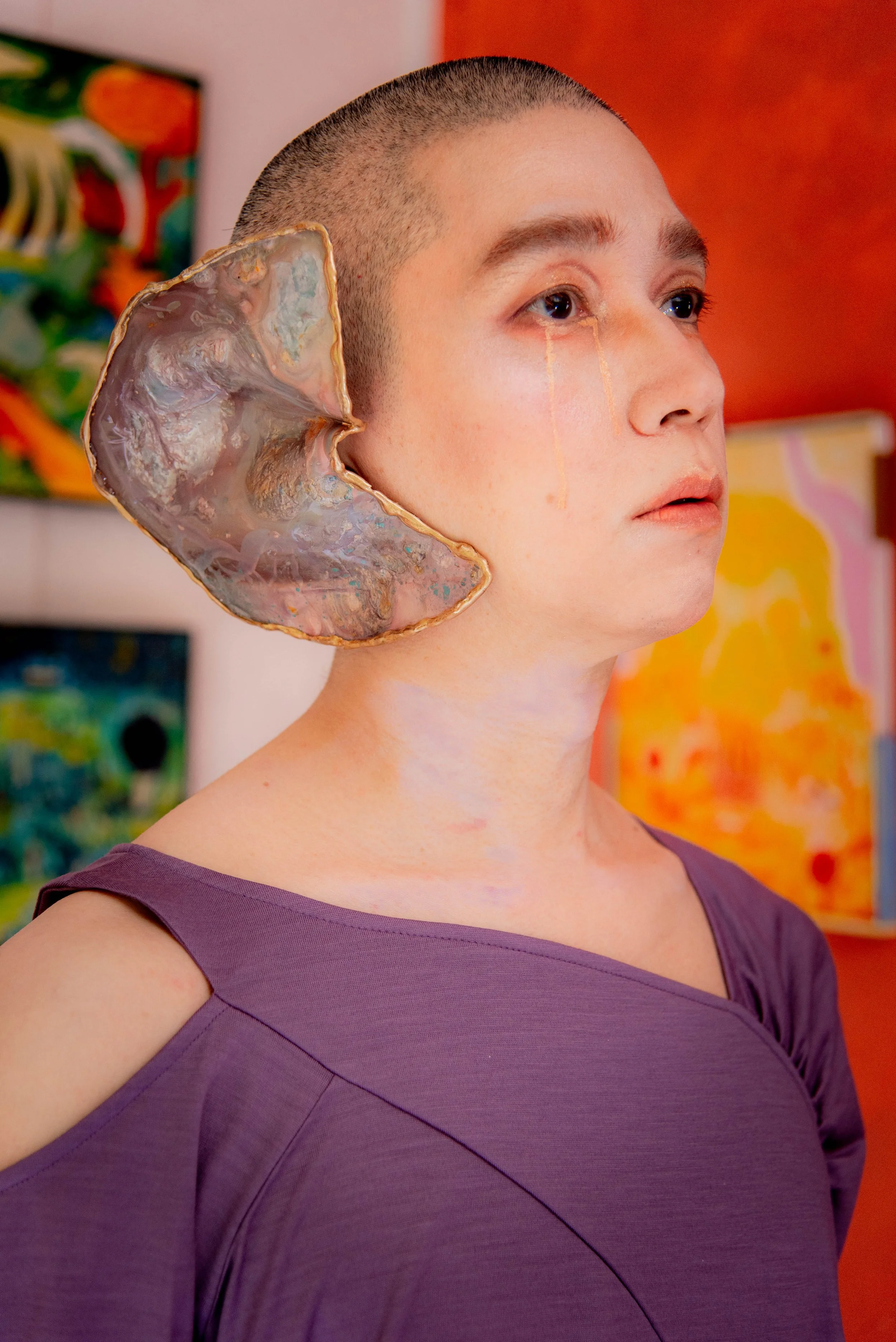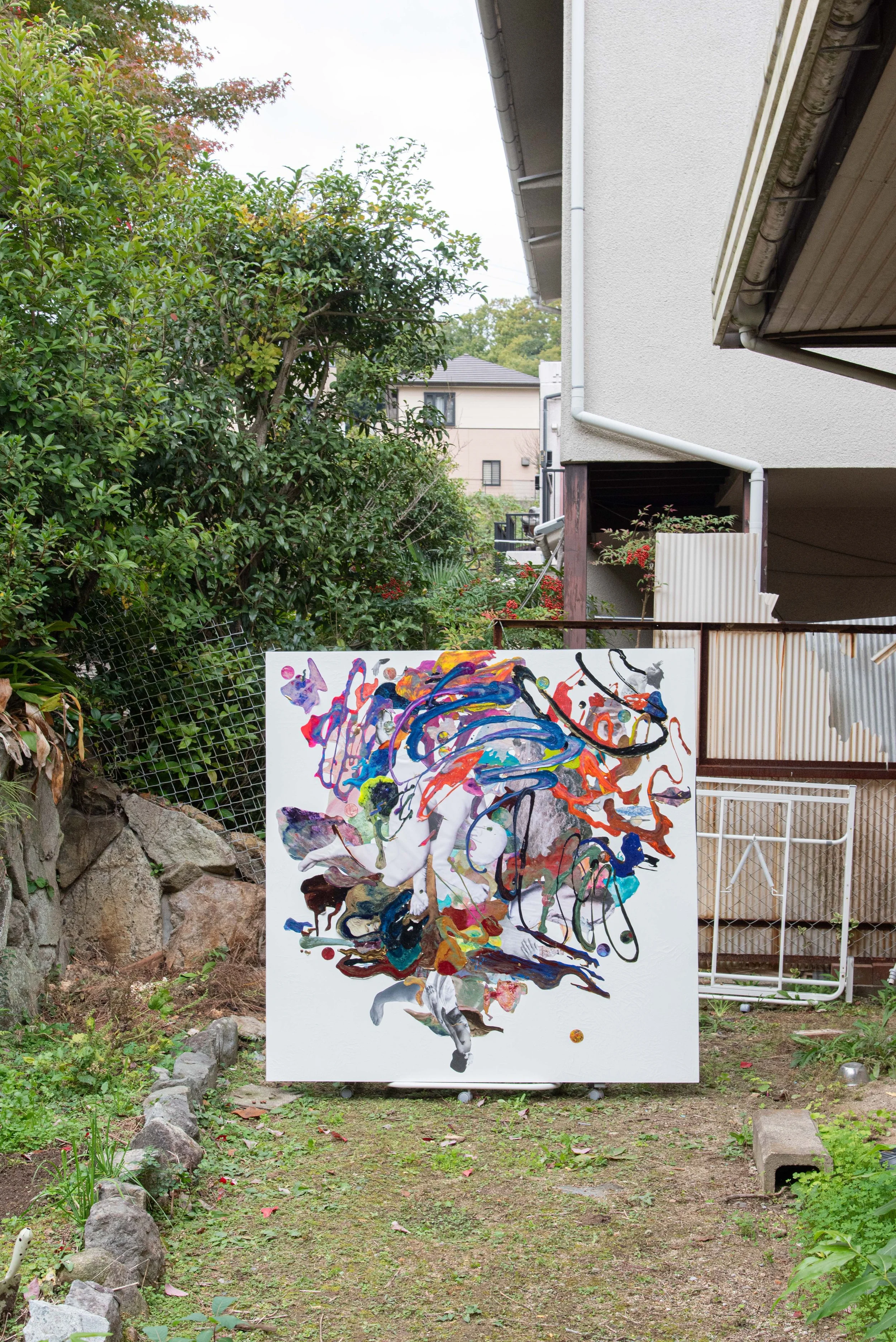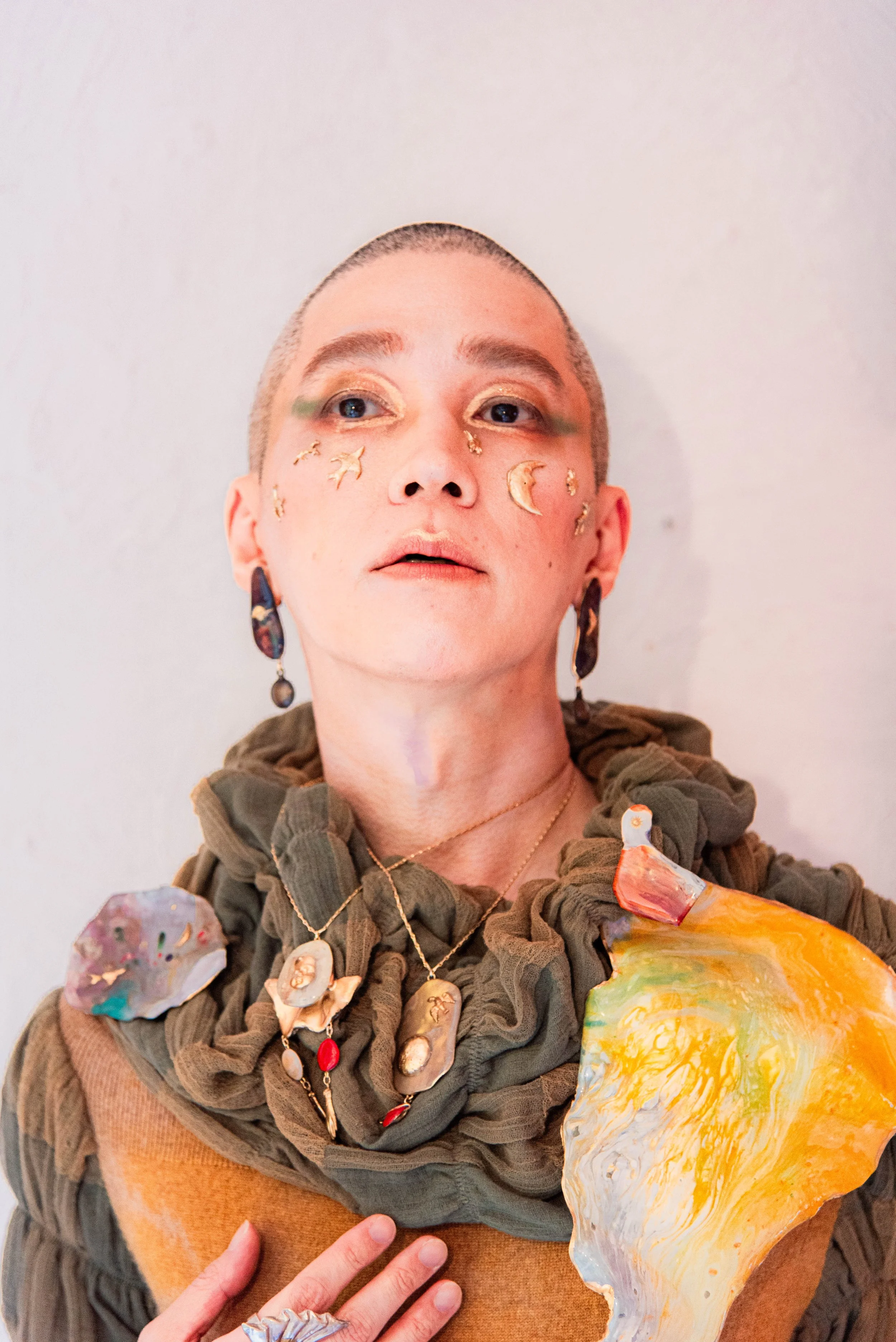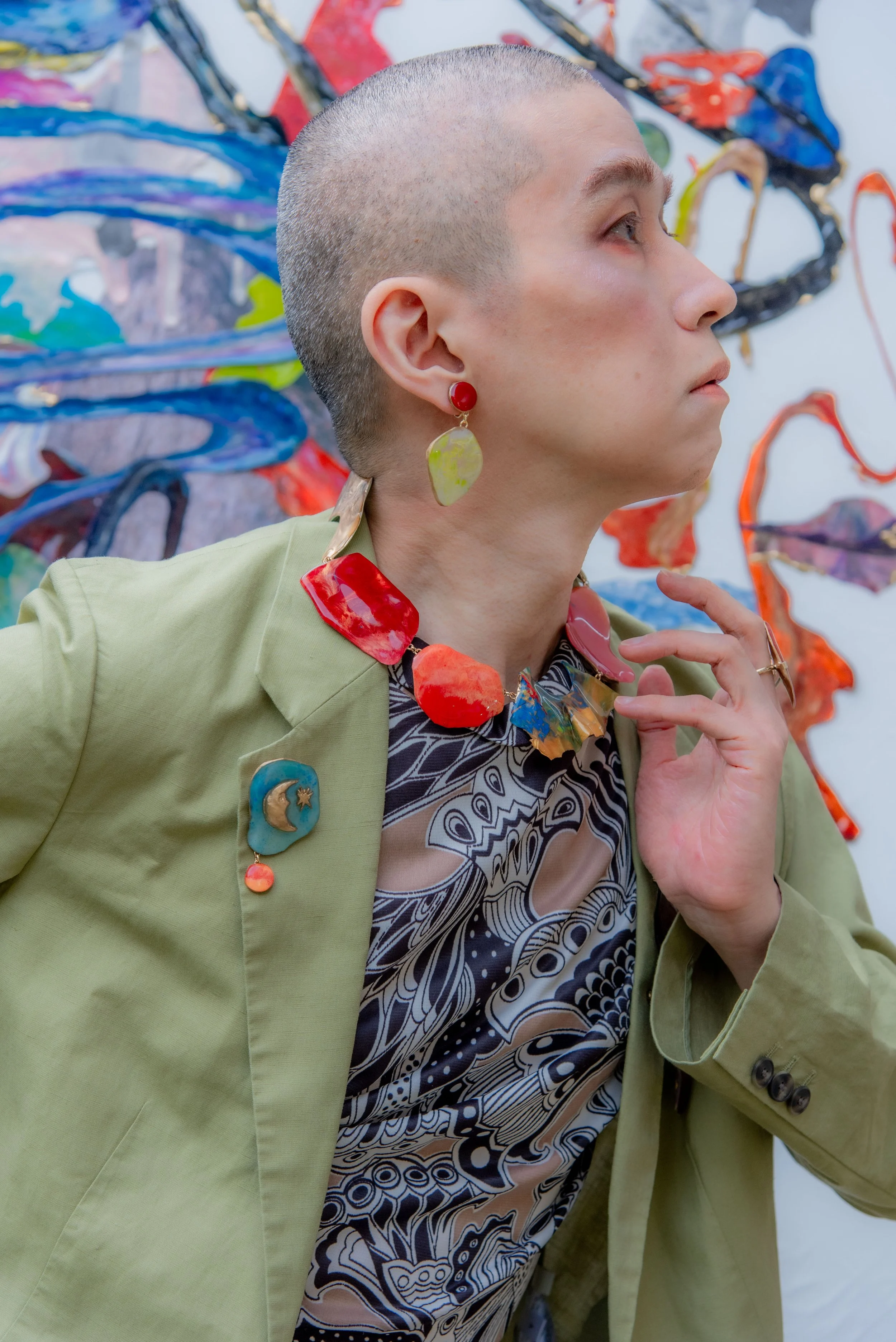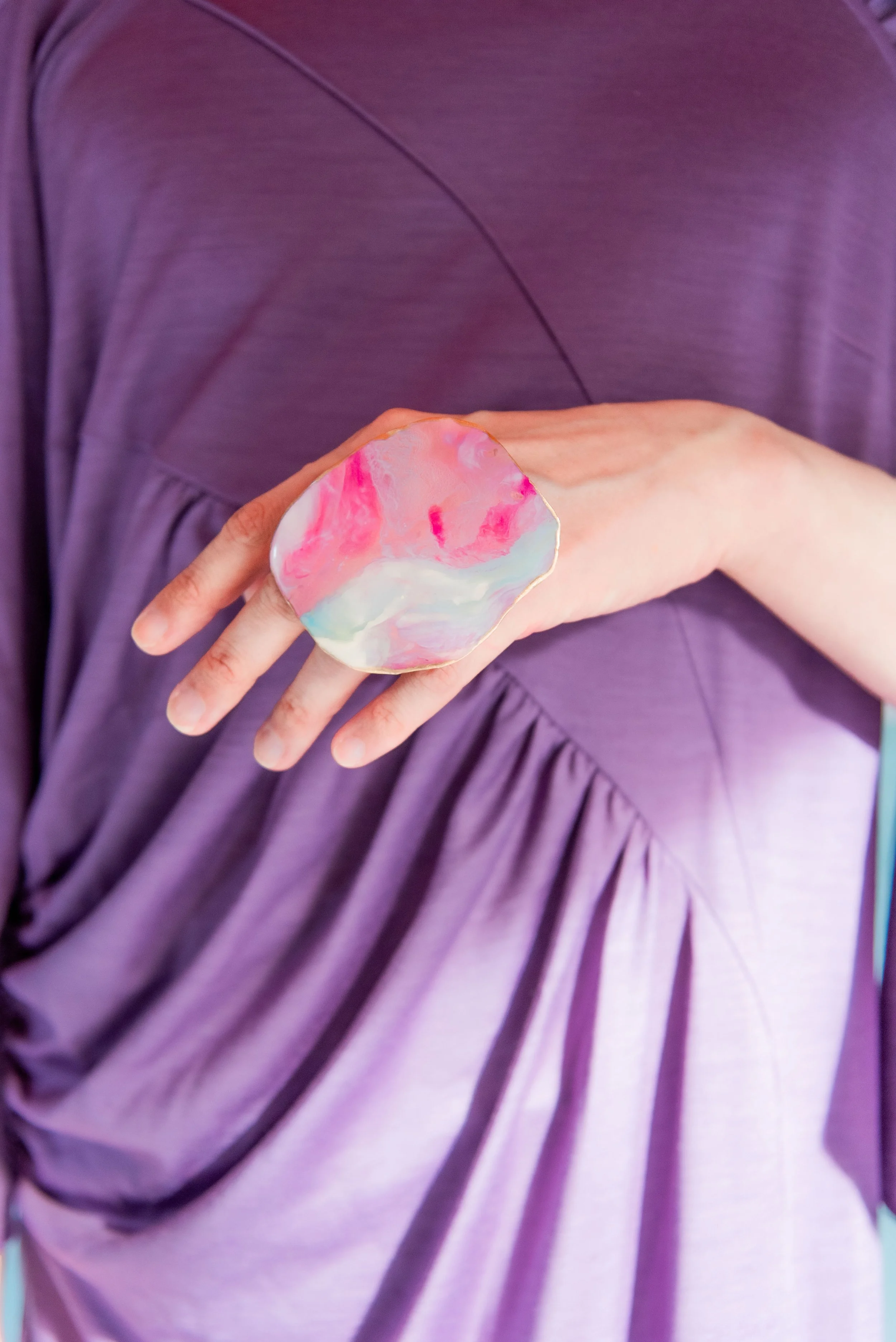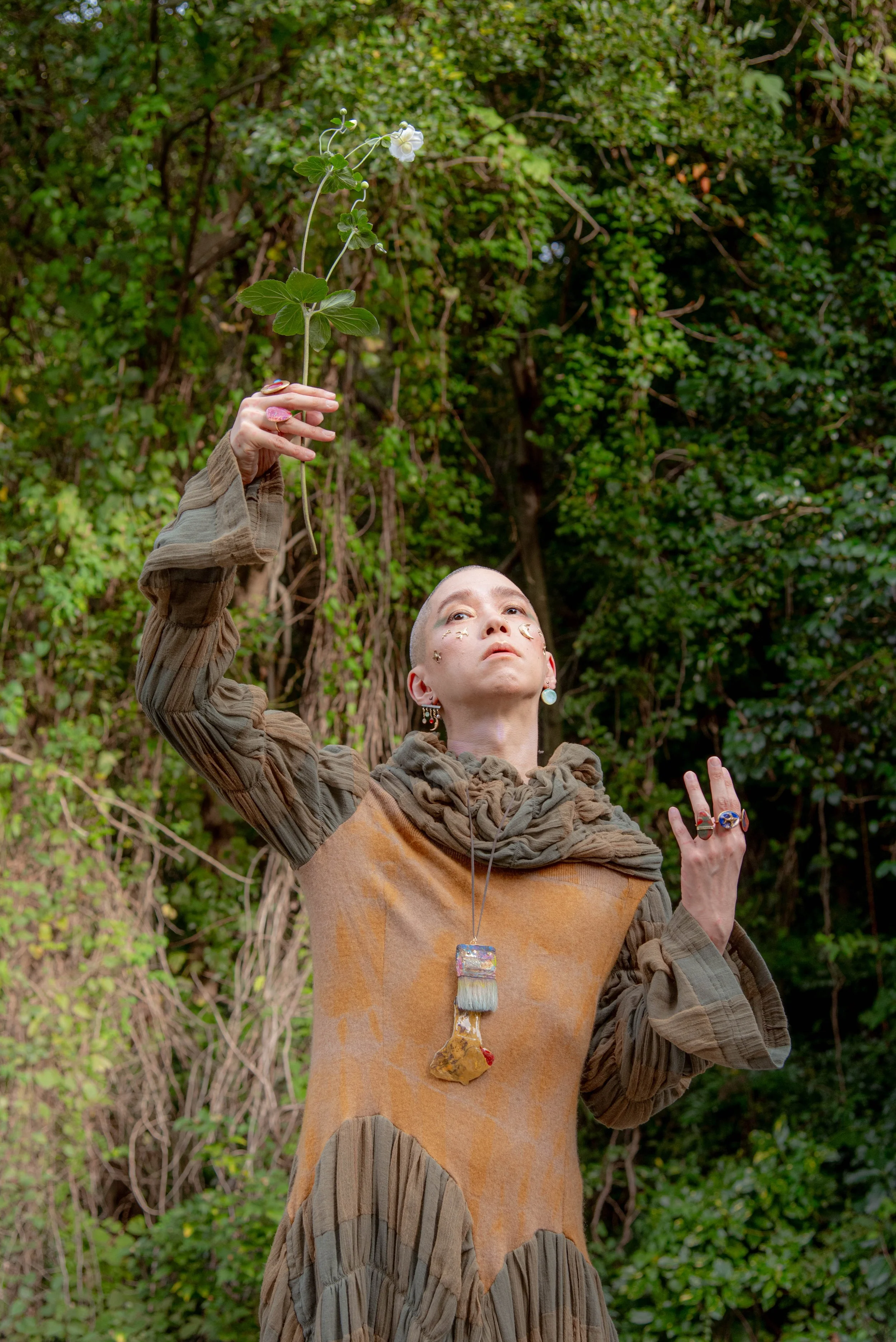
Stardust Painting is a jewellery project where Rino and Kaito Tokito translate painterly chance into wearable, marble-like forms. Mineral pigments and stone powders are moved through gravity and drying, then sealed in resin with brass and pearls. Each piece becomes a slow mediator between memory, skin, and cosmos for collectors.
Stardust Painting
“Mineral accidents sealed in resin become slow, cosmic, wearable constellations.”
Jan 12, 2026
Art
Connetion : +320054
Shares : 32145
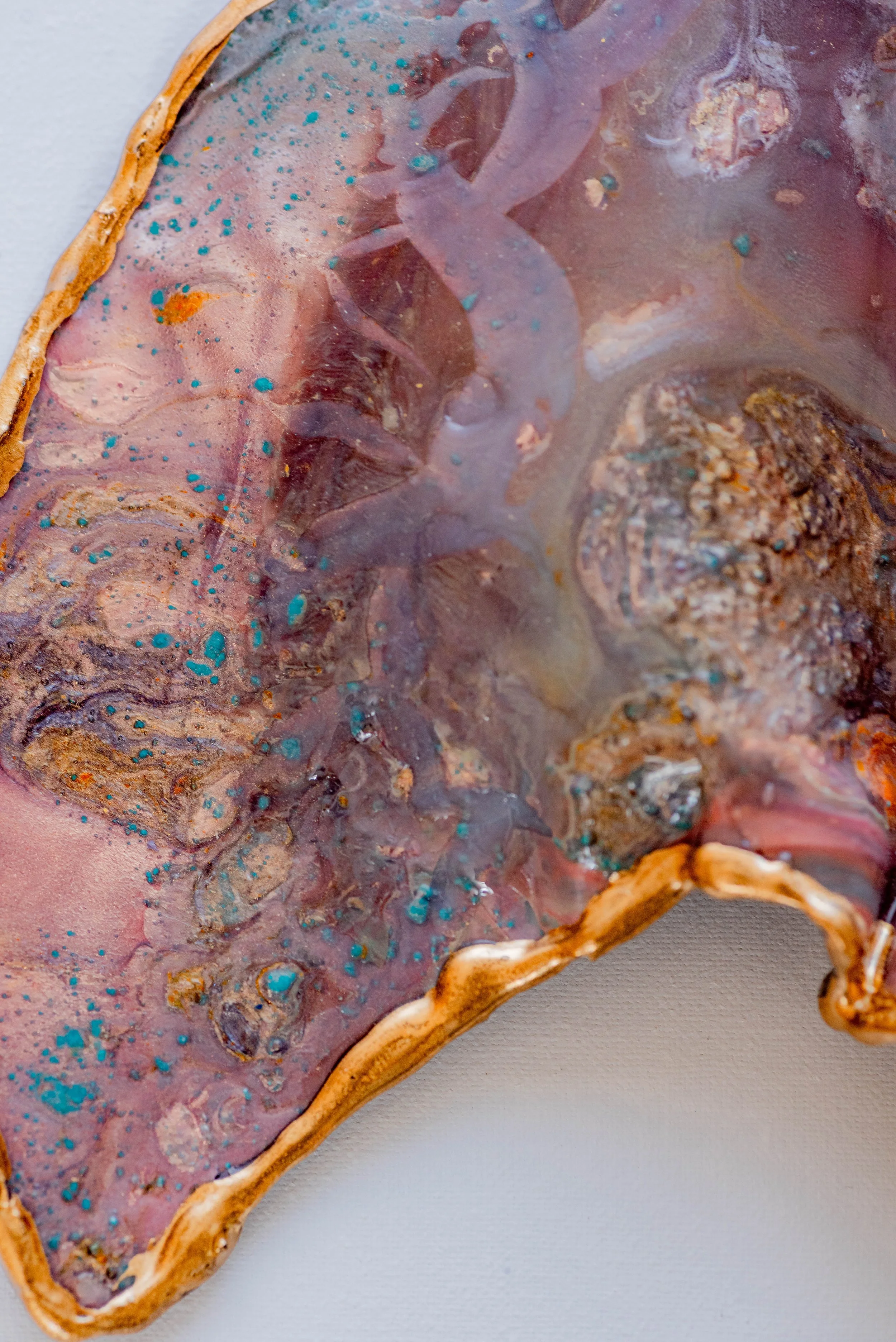
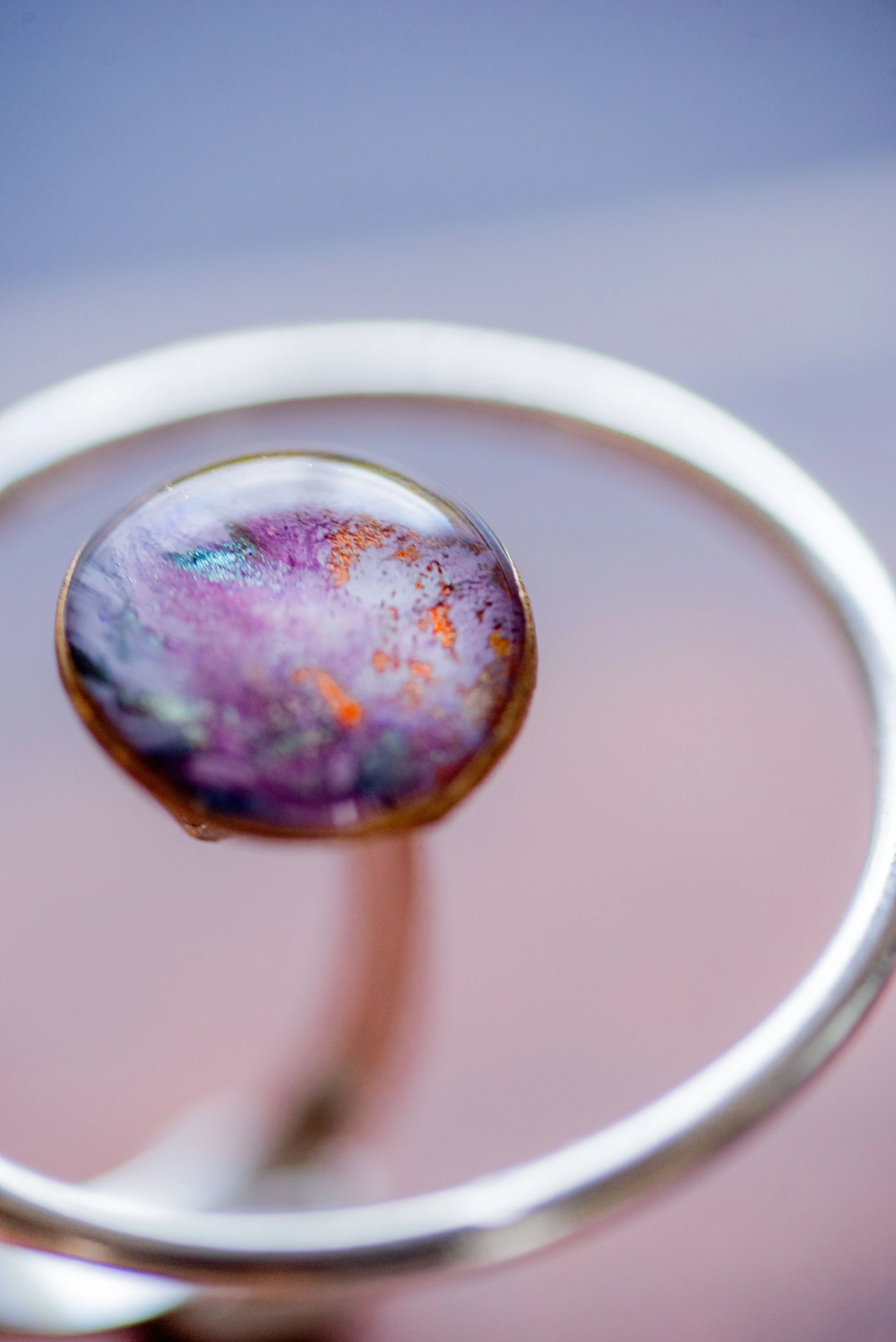
A small pendant hangs in a still pocket of air, its surface half-gloss, half-misted, as if a tide has paused mid-turn. Light does not simply bounce; it pools, then breaks, caught by mineral grit suspended inside. From afar, the piece reads as a calm galaxy—soft, marbleled, self-contained. Up close, the resin reveals sediments, micro-blooms, and hairline boundaries where colour abruptly stops. The confrontation is a dialectic of agency and matter: This is not control or chance, but control and chance mutually generating each other.
Material and method lead the argument. Mineral-derived pigments and powdered stone are coaxed through gravity, flow, sedimentation, and drying, then sealed in resin. They cite it to fill in the gaps, naming the controlled phenomena and the insistence that no two outcomes repeat. Formally, each stardust field behaves like a miniature weather system, a constellation that refuses symmetry. Brass fittings and occasional pearls stay as punctuation. On the body, the work is tilted, re-read, and recalibrated as warmth deepens its translucency. The tension tightens again: nature writes, but craft edits.
Perception is engineered as gently as the materials it uses. Colour is composed to sit with skin tone rather than overpower it, so radiance arrives as nuance, not spectacle. They cite it to use a tool, treating adornment as a cosmological act—cosmos as “order,” where wearing tunes an inner world against an outer one. They cite it to fill in the gaps, insisting that the jewellery acts as a bridge between inner memory, private sensibility, and the surrounding world, rather than simply decoration.
Authorship, too, is double. Made by the Japan-based art unit Umi, the process emphasises shared, simultaneous, improvisational painting, where constraint becomes a method of coexistence rather than a limitation. They cite it to develop the context, reading their preference for inefficiency as a quiet refusal of speed culture and a subtle prayer for peace.
Looking ahead, Stardust Painting becomes a prototype for bespoke-led objects where material behaviour can remain an author. A small-batch archive of pours—mapped like star charts—could support collectors and collaborations. They cite it to fill in the gaps, noting public milestones as proof that this “slow method” can still circulate. The whole proposition returns to evidence: a thin line of light caught on resin’s edge, held by a brass pin.
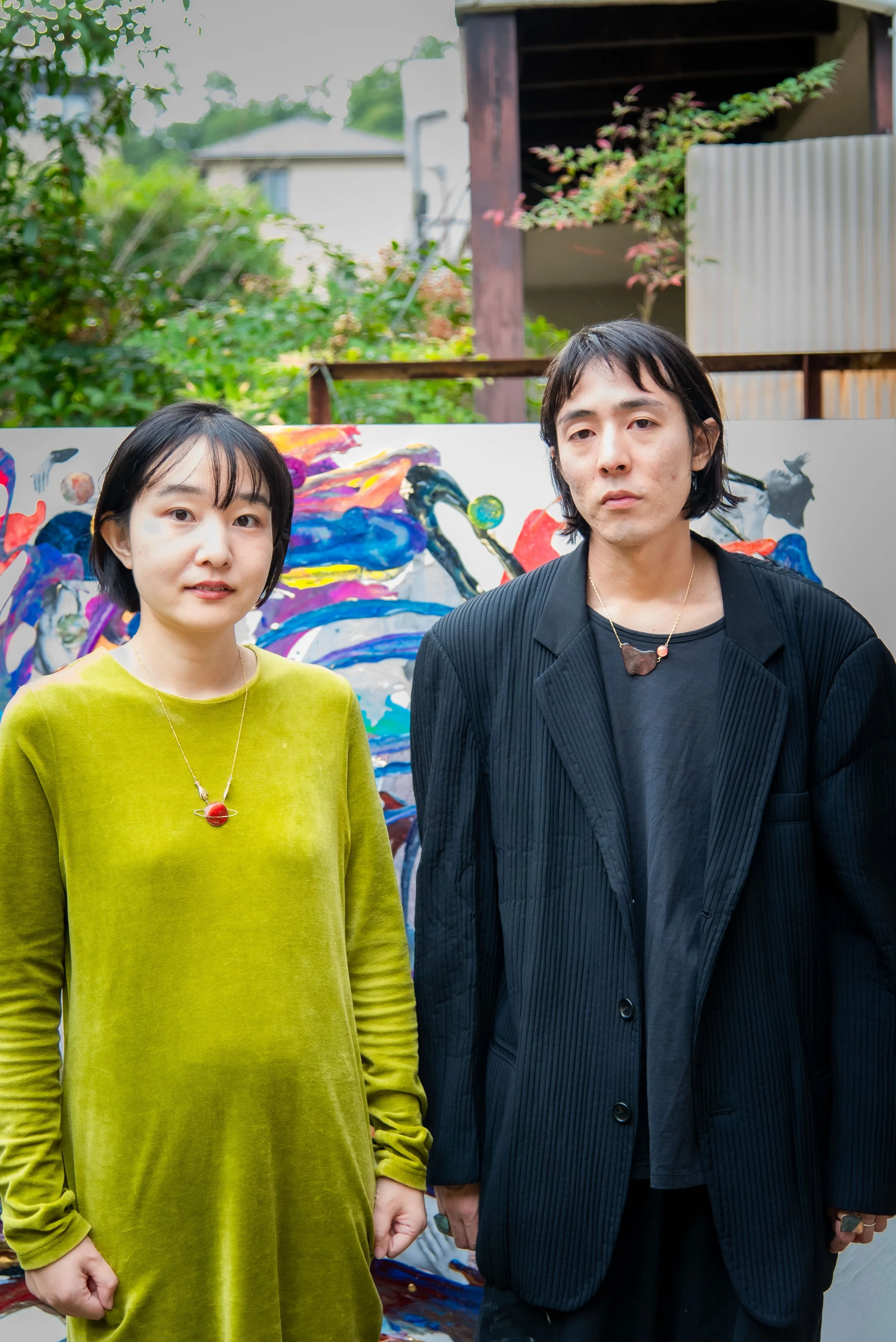
Rino and Kaito Tokito
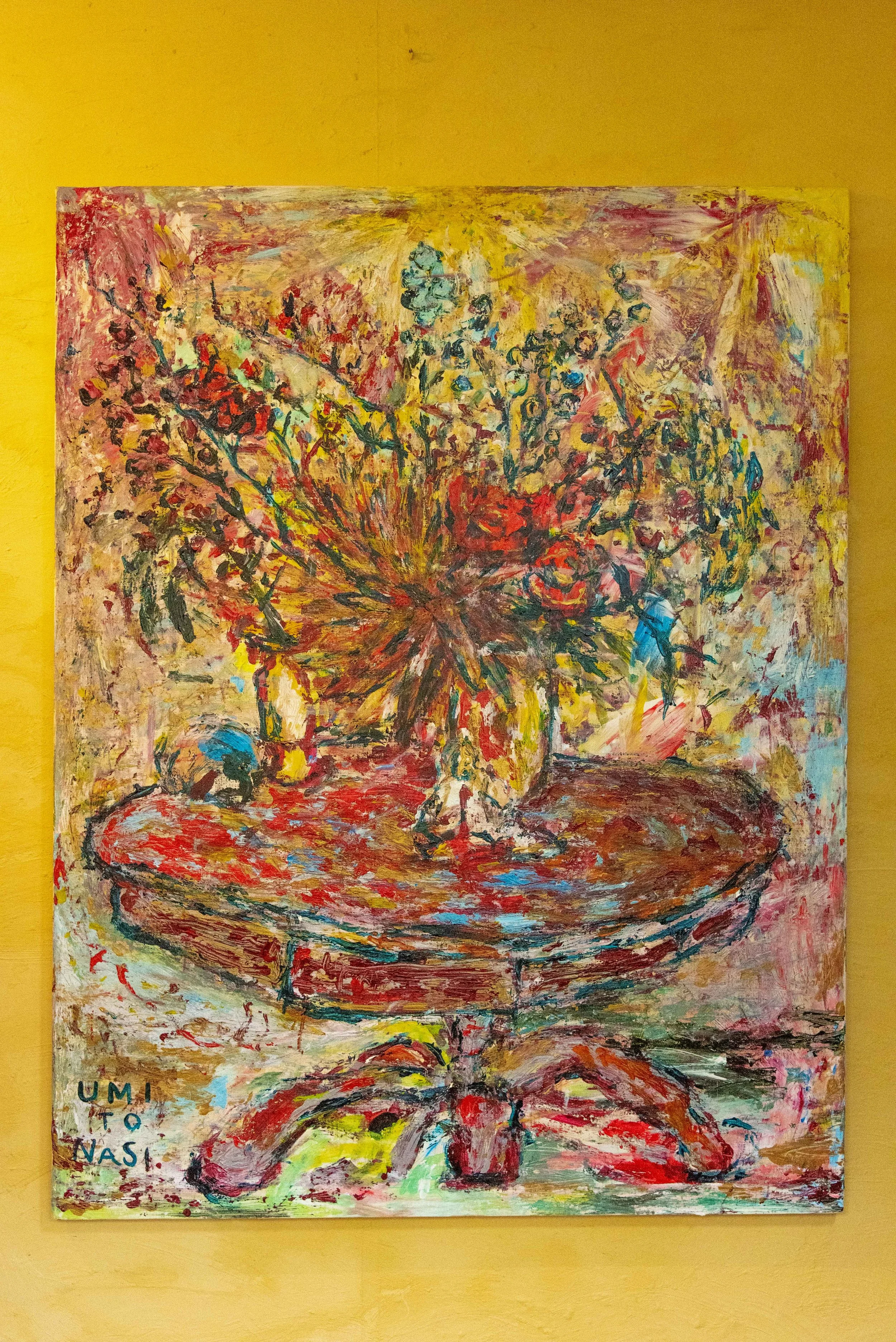
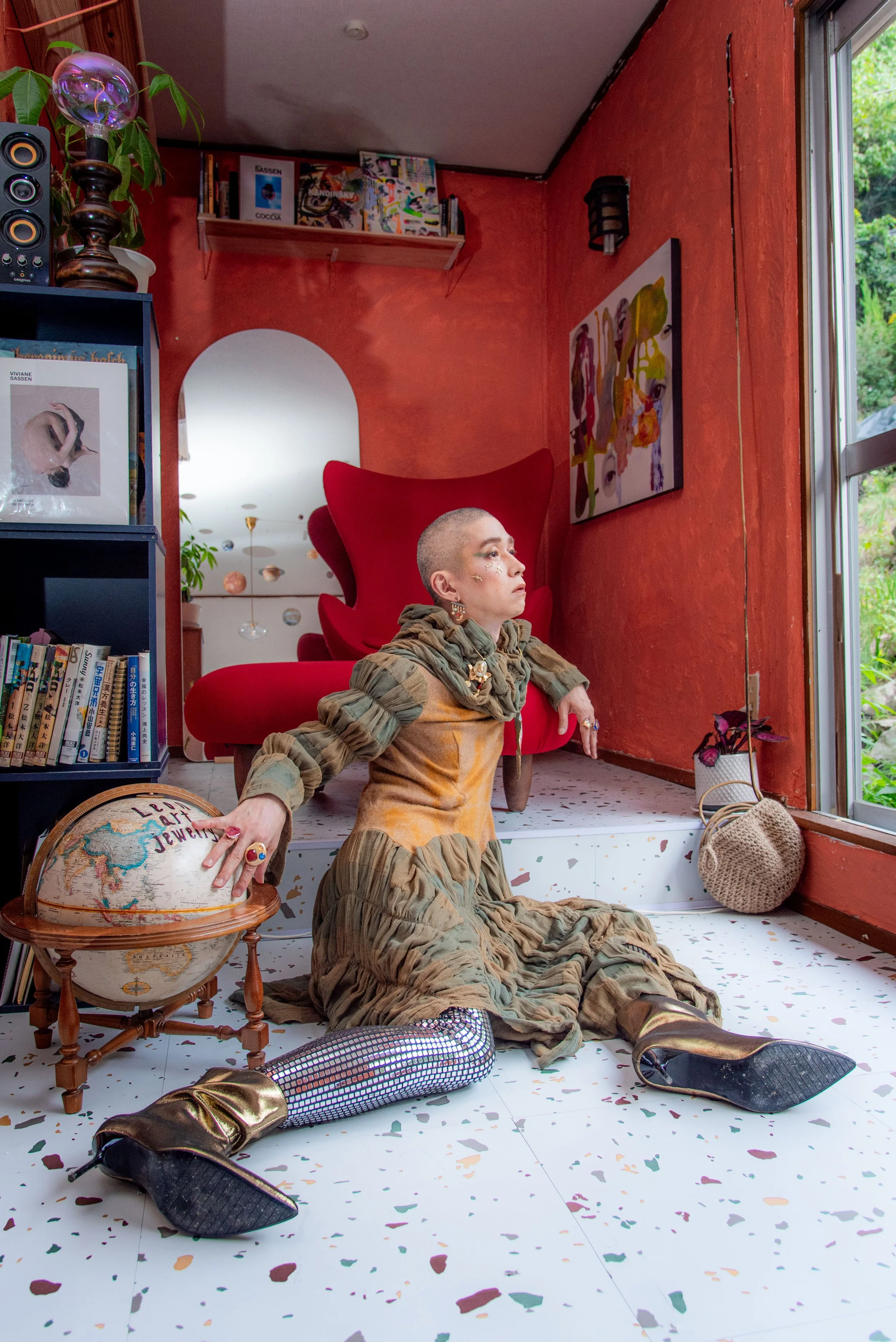
Umi to Nasi operates more like a shared studio ecosystem than a “duo brand,” with two sensibilities moving simultaneously—sometimes colliding, sometimes harmonising, and always leaving traces of their interaction. Formed in Japan in 2019 by painter Rino Tokito and Kaito Tokito, the unit engages in painting, murals, live performances, video, and the Leon art jewellery line, anchoring everything in their collaborative act of painting on a single surface. They emphasise the importance of context, showcase their simultaneous and improvisational methods, and believe that constraints can lead to coexistence.
Rino Tokito's practice expands the concept of painting through collage and poetic fragments, viewing “Stardust Painting” as a cosmic event rather than a mistake. She draws upon her experiences from 2013 onward, her studies in aesthetics and art history, and the pivotal moment in 2019 when “Umi to Nasi” was officially established.
Kaito Tokito takes an unconventional path into the studio. Born in Okinawa in 1992 and raised in Fukuoka, he initially trained in economics before transitioning into painting through independent study. He reflects on his journey, including his decision to leave a corporate career and his ongoing solo exhibitions.
Their jewellery line is not merely a side project; it embodies an ethic that can be worn daily. Kaito points to significant milestones for the brand, such as participation in exhibitions in Paris, recognition from rooms41, and their first solo show, as evidence that thoughtful, slow-making can still thrive in a fast-paced world.
Artist: Rino and Kaito Tokito
Brand: Leon art jewelry @leon_artjewelry