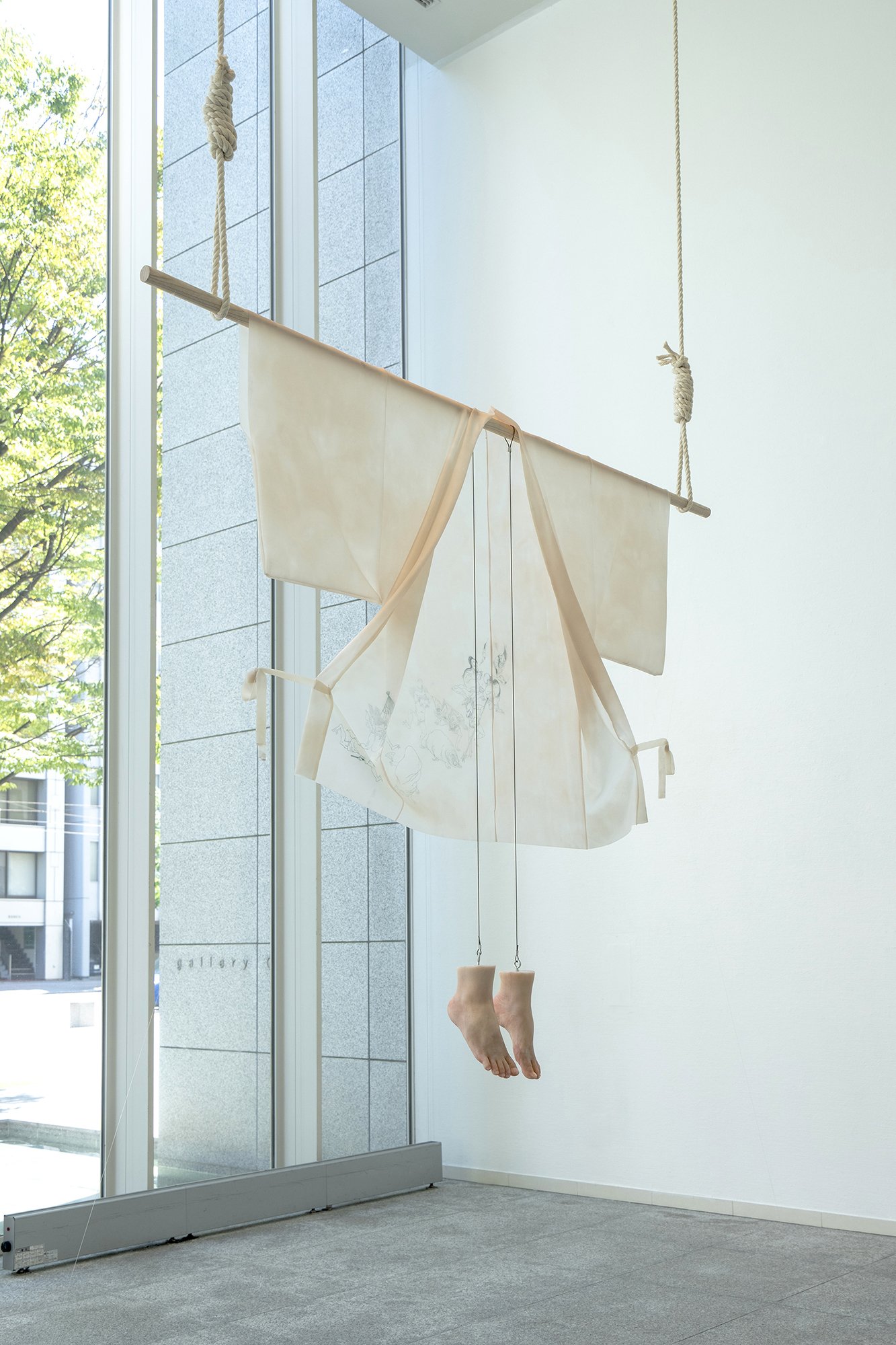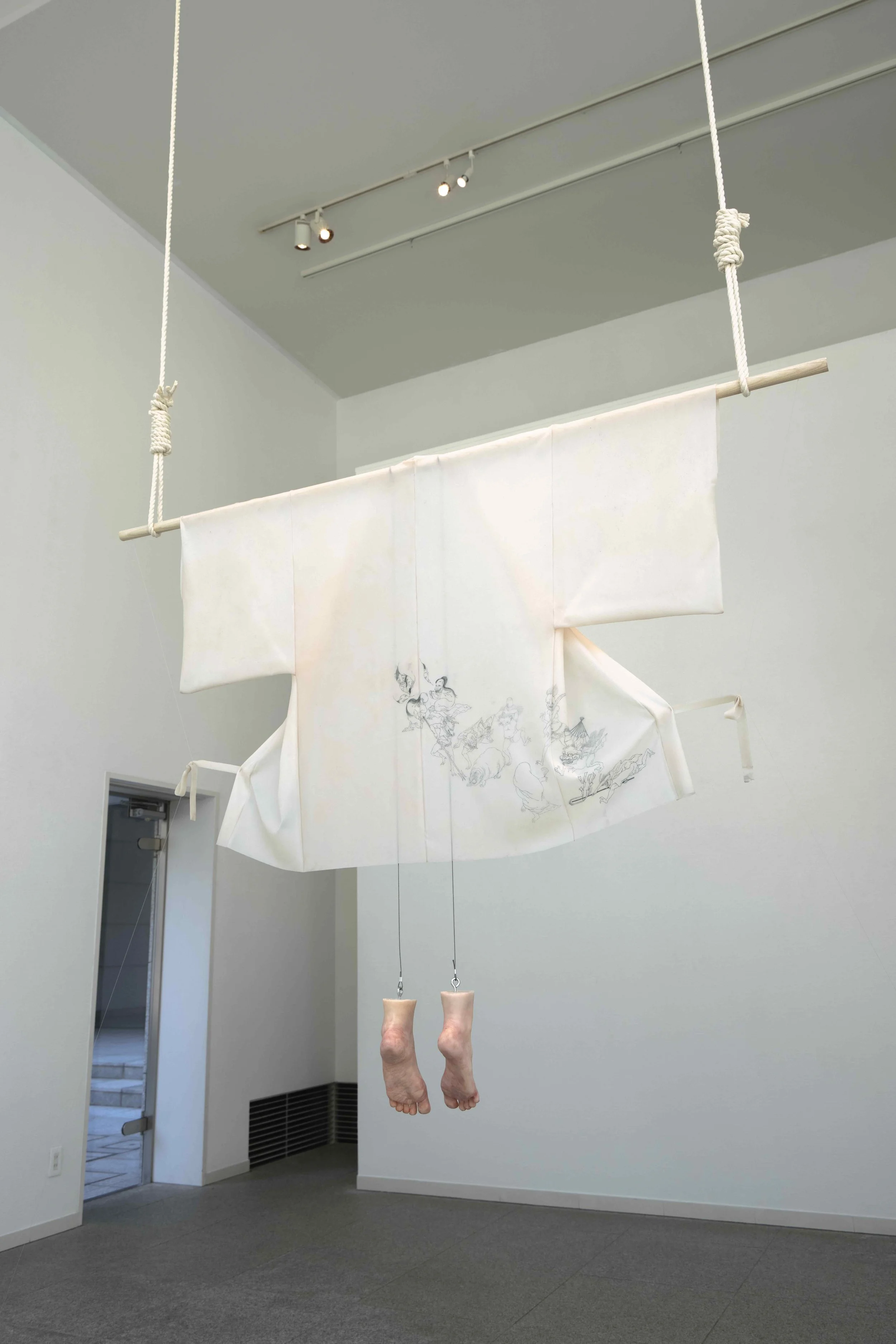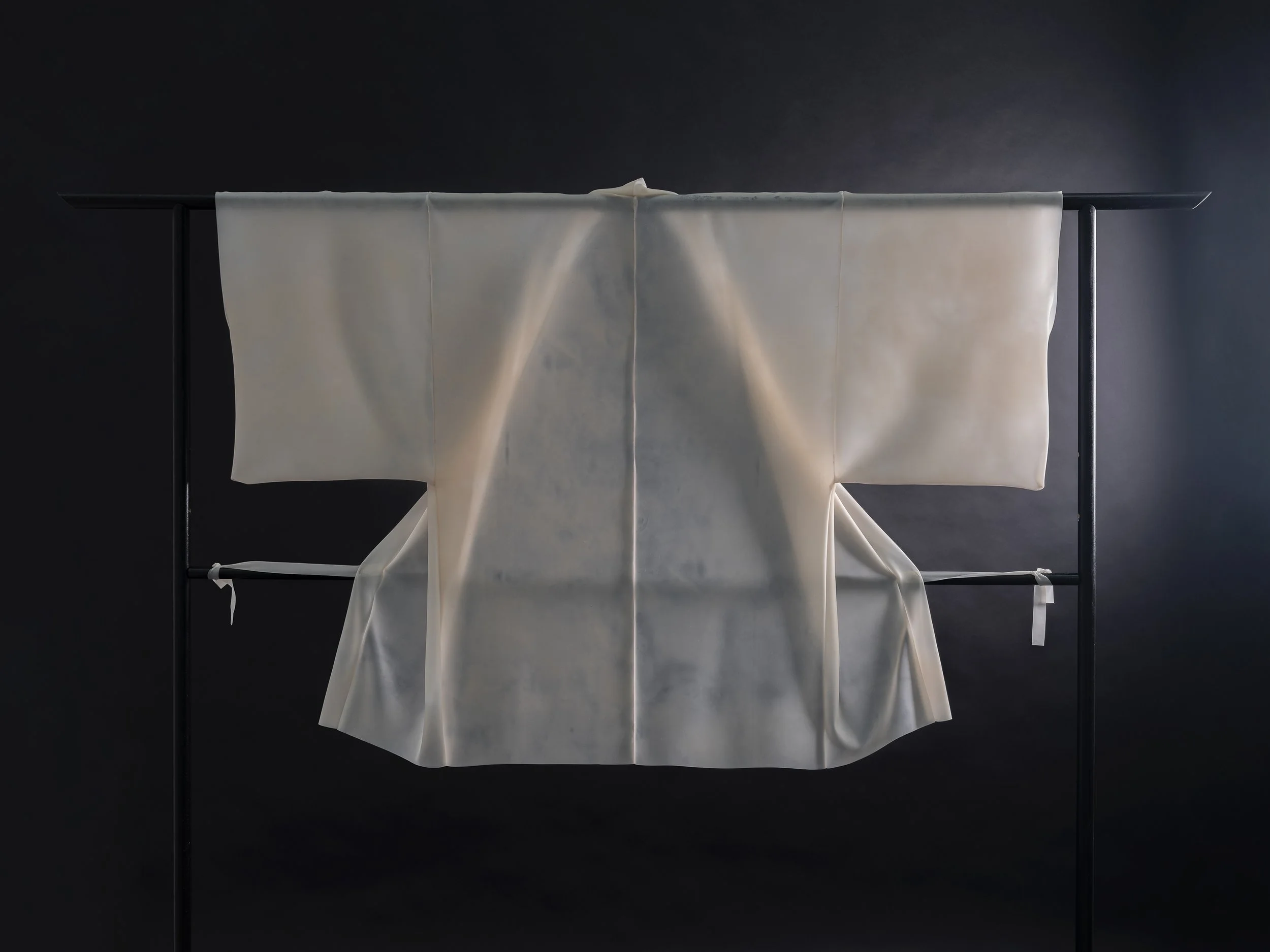
Haori is Megumi Ohata’s wearable sculpture: a kimono jacket cast from silicone “skin” imprinted with the artist’s own texture. Inspired by Hyakkiyakou Emaki, it suspends folklore against lived trauma, letting touch, weight, and seamwork carry memory. Armour becomes intimacy, staging empathy as a practised, porous boundary in the gallery’s air.
Haori
“Silicone skin kimono suspends folklore, trauma, and care in the air.”
Jan 23, 2026
Art
Connetion : +321254
Shares : 41236
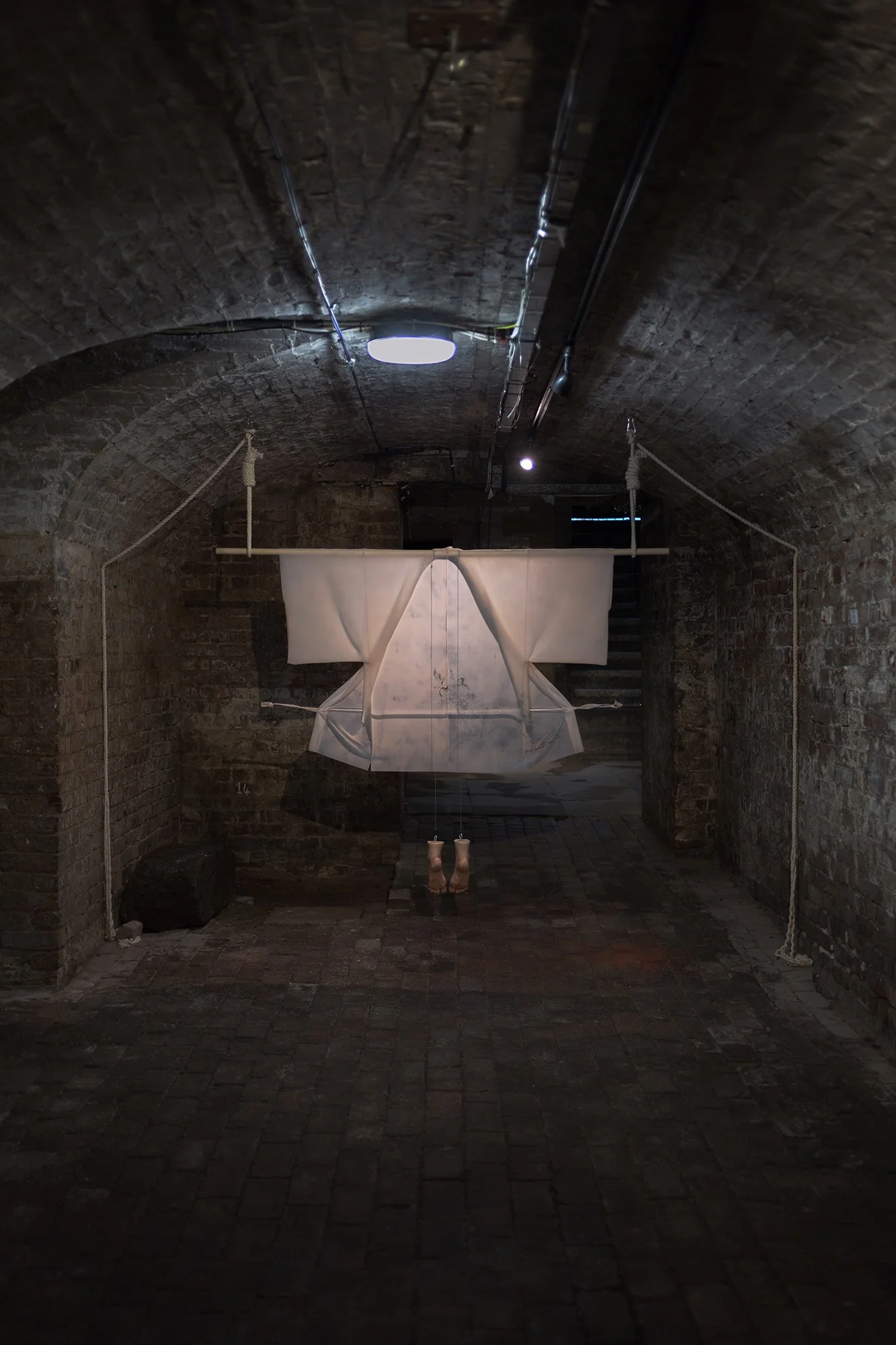
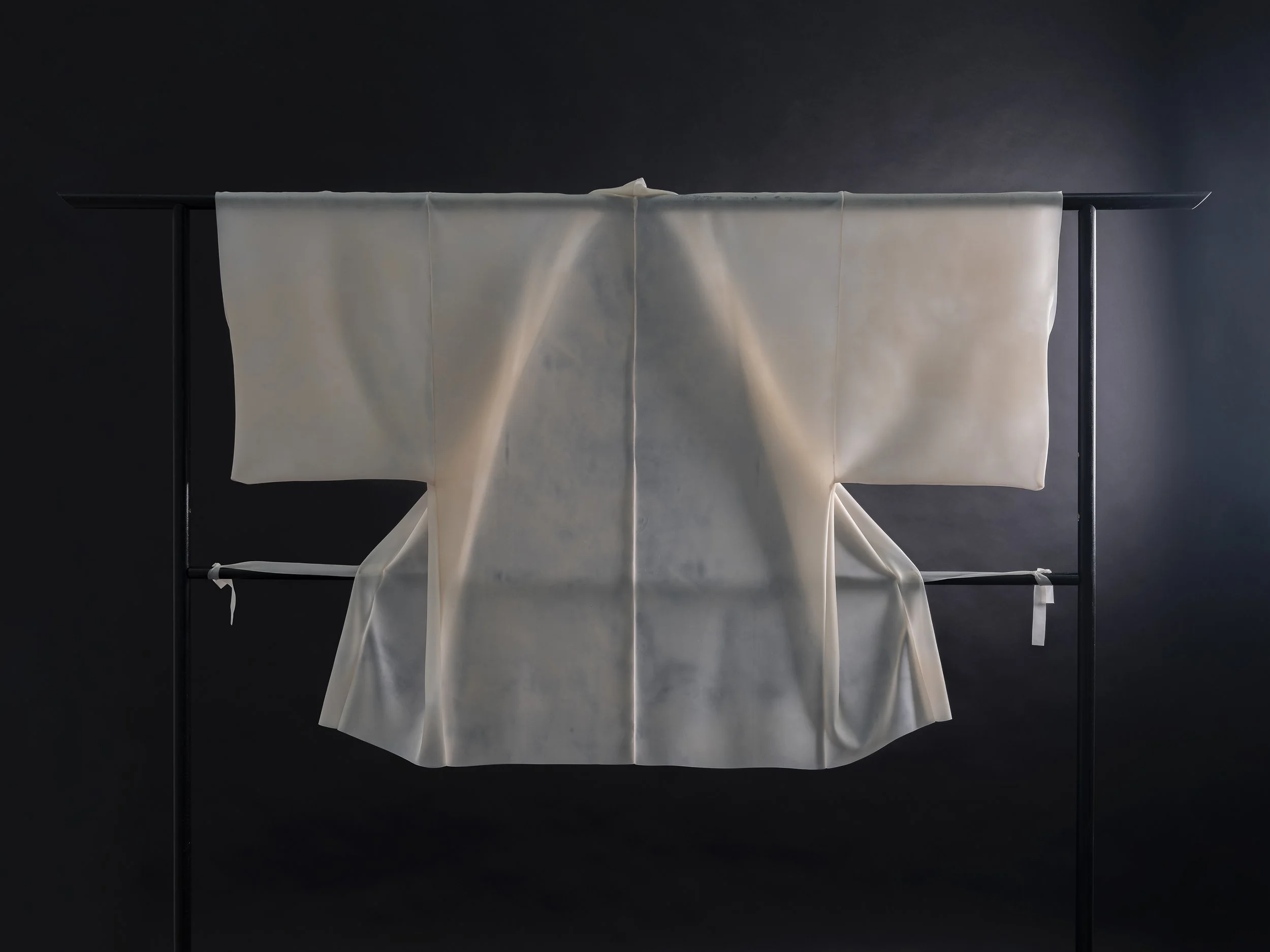
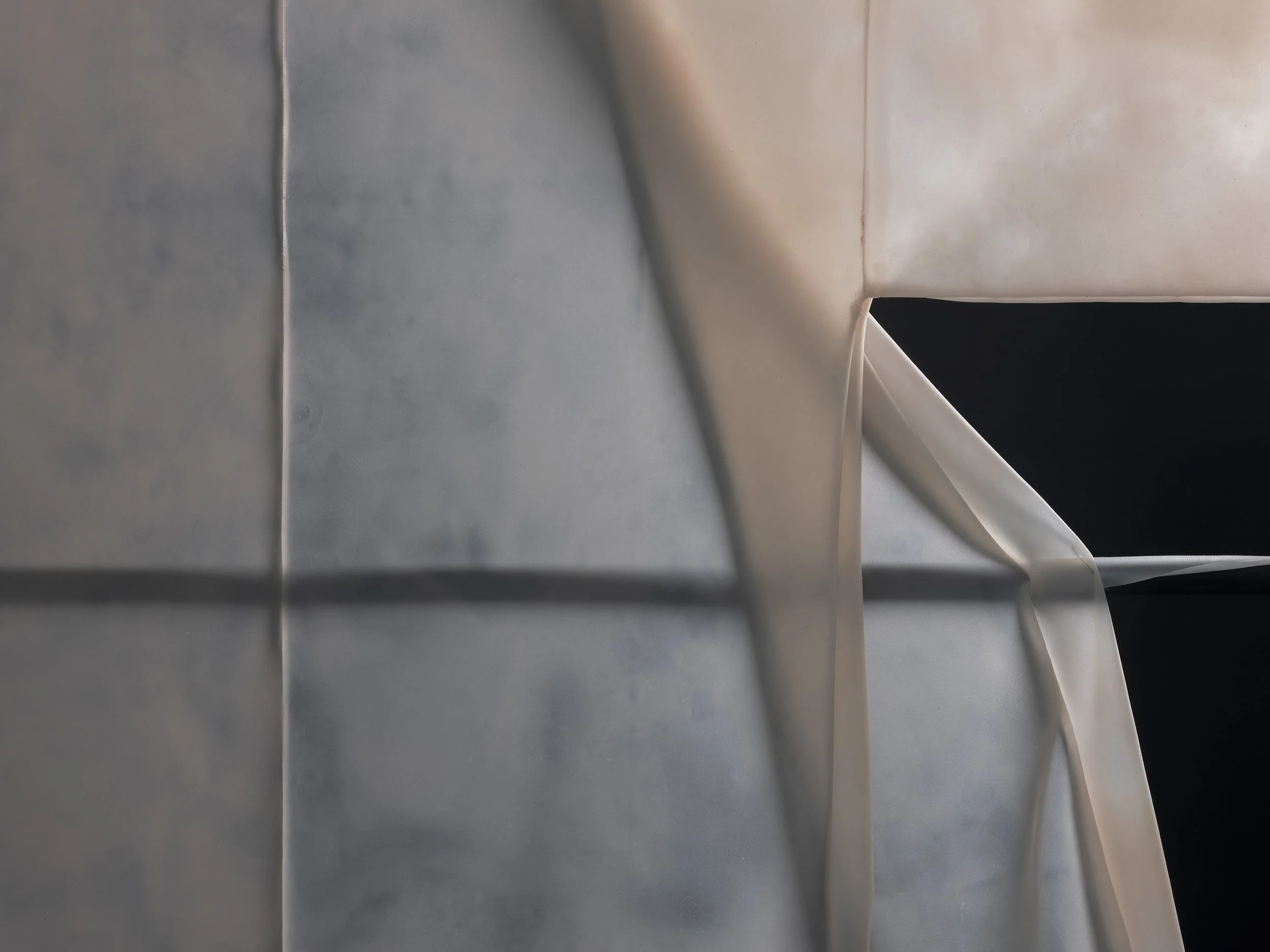
From afar, Haori reads as a pale jacket shape hovering quietly on ropes, its sleeves held open like a diagram. Light skims the surface and slips through it, so the garment appears more like atmosphere than cloth. The outline is recognisably a kimono, yet its skin feels clinical—neither fashion display nor museum specimen. Looking from afar, the viewer trusts the silhouette. Looking up close, the surface breaks into pores, folds, and faint pigmentation, as if touch has been pressed flat and archived. The work names this confrontation as a posthuman intimacy. This is not armour or skin, but armour and skin mutually generating each other. Haori frames Megumi Ohata’s fabrication as an ethics of contact; it argues that material can hold memory without fixing identity.
Silicone, pigment, and thread form the work’s baseline grammar, with the “textile” produced by imprinting the artist’s own skin texture into silicone, then stitching it into a haori structure. It cites it to fill in the gaps: RCA records that in 2021, Ohata developed this artificial skin textile technique, realised in Haori. It cites it to fill in the gaps: Ohata lists Haori within the Wearable Skin Series (2021–24), made from silicone, pigment, and thread. The method folds special-effects craft into slow textile labour, turning a prosthetic material into something sewn, hung, and lived with. Suspended rather than worn, the haori behaves like a shell that refuses closure: it occupies air, casts a soft shadow, and makes the viewer circle it, returning to the pressure-point—protection versus exposure.
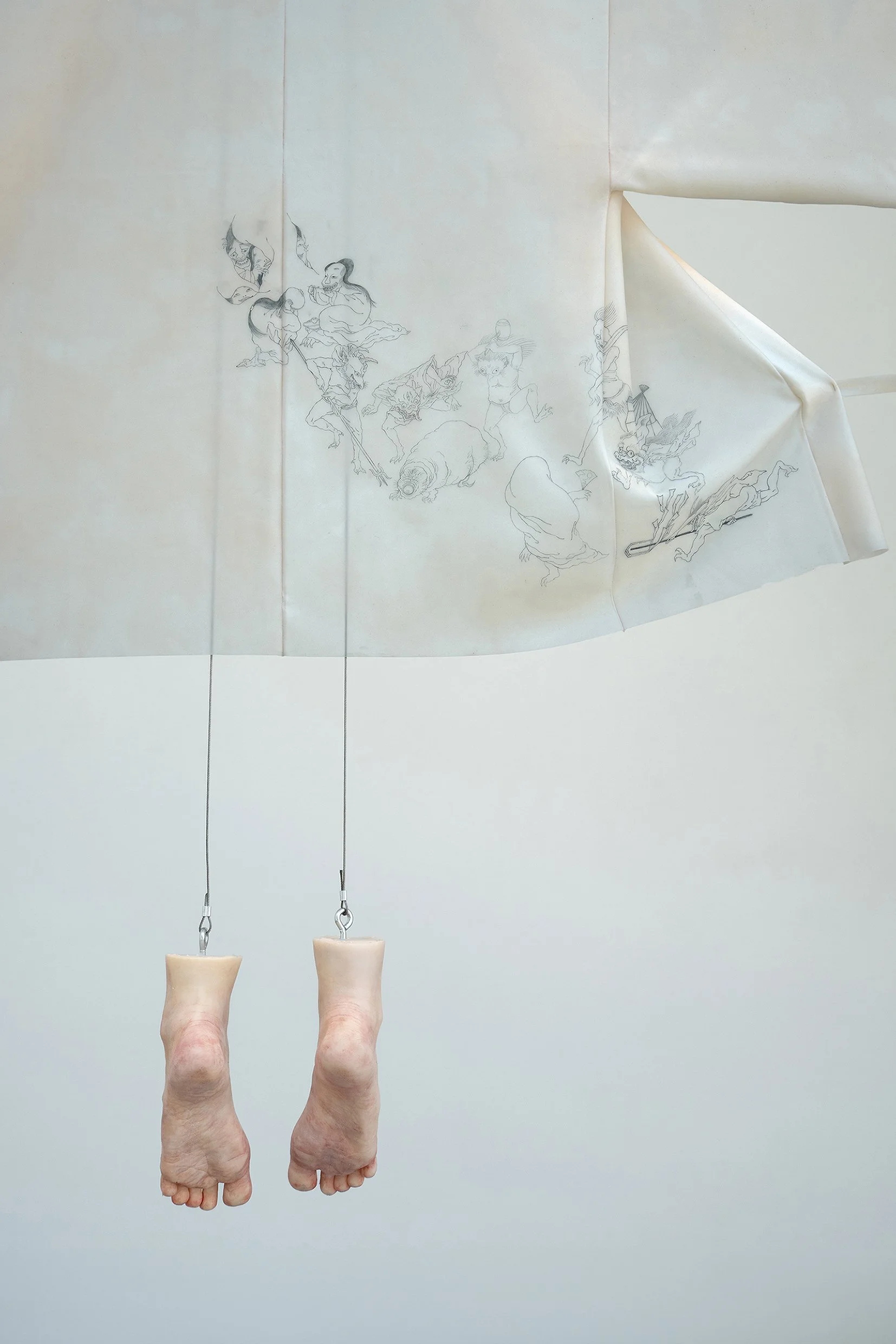
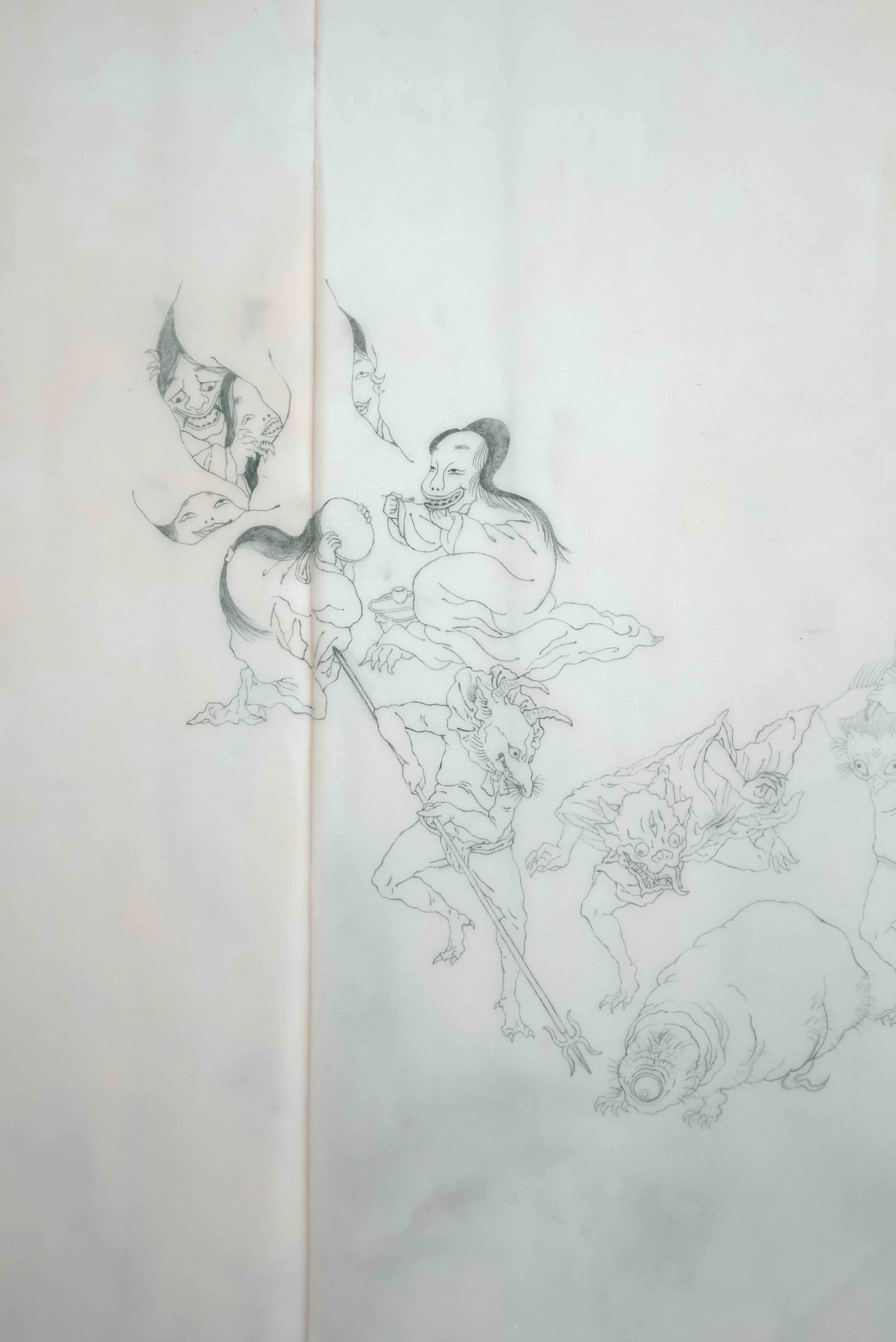
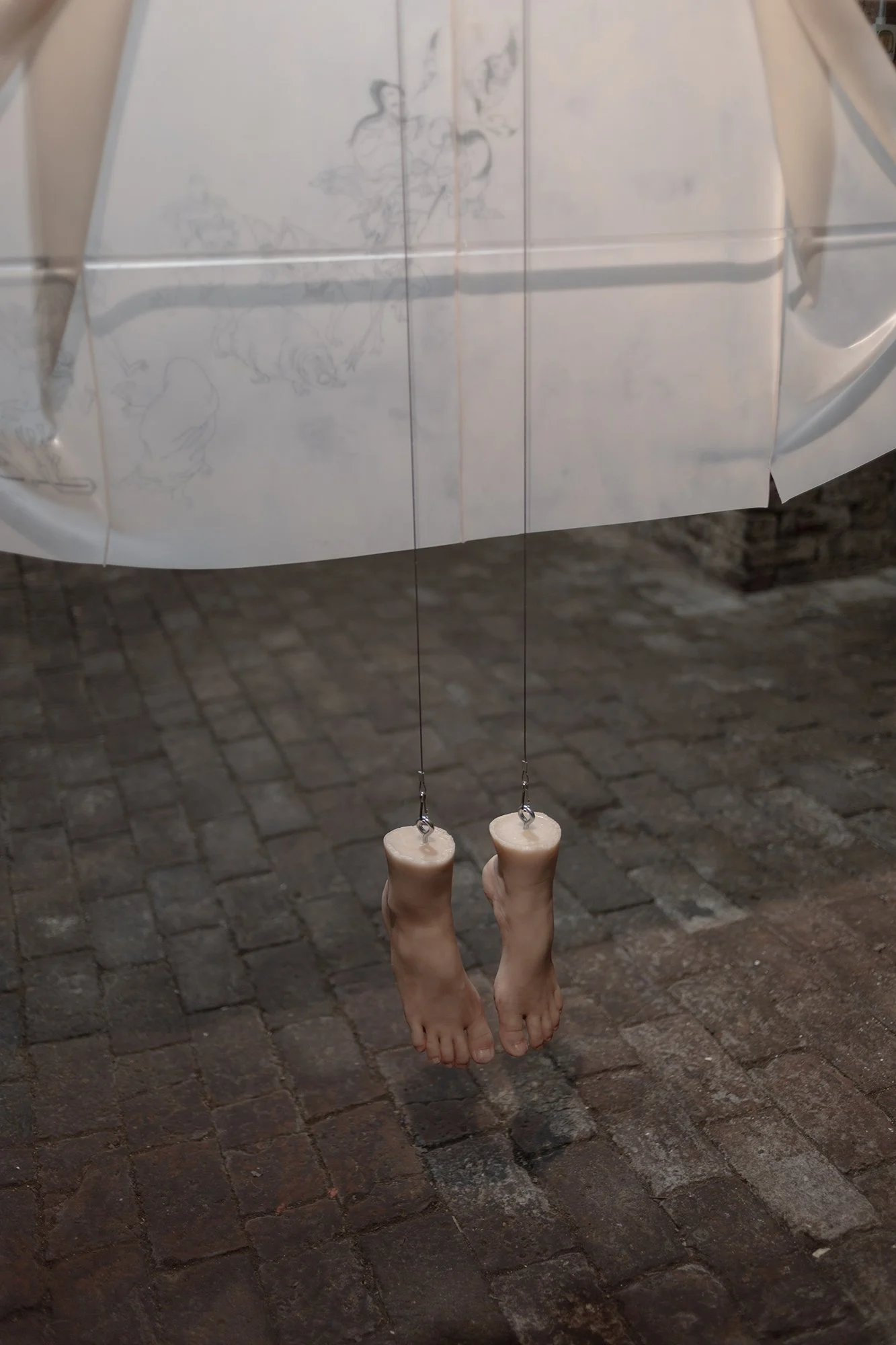
The surface also carries a story. It cites it to develop the context: Blackdot Gallery frames Haori as a contemporary interpretation of Hyakkiyakou Emaki, the picture scroll of Yōkai processions. Folklore is not illustrated here; it is embedded as a behavioural logic—layers that look calm from a distance and become uncanny at close range. The viewer’s empathy is tested through thresholds: what appears comforting as clothing becomes strange as epidermis, re-stitching the claim that armour is only believable when it admits softness.
Installation details sharpen the stakes. It cites it to point out what existing arguments have missed: the work is shown with casts of Ohata’s feet, suspended like ghosts, linking “floating” to displacement and childhood trauma. Weight is held by rope, seams bear strain, and repair reads as a visible action. What remains is a hovering boundary that never settles, a thin seam-line catching light.
Megumi Ohata
Megumi Ohata is a London-based interdisciplinary artist and special-effects practitioner who works where wearable sculpture, prosthetics, and performance overlap. It cites it to fill in the gaps: on the artist’s website, Ohata is presented as an interdisciplinary and SFX artist with Japanese and Korean roots, working with wearable artificial skin textiles imprinted with their own skin. Their practice treats the body as both source and archive, translating lived experience into surfaces that look familiar yet remain unsettling.
Ohata’s material signature is silicone handled like cloth: skin textures are imprinted, pigmented, and then stitched into garments or installed as hovering shells. It cites it to develop the context: the RCA graduate profile notes their background as a special effects makeup artist and describes Haori as emerging from a 2021 technique for producing unique artificial skin textiles. This fusion of SFX method and textile logic lets the work speak in two registers at once—craft intimacy and clinical distance—so viewers are pulled between care and unease.
Institutionally, Ohata’s work has moved quickly through contemporary craft, design, and sculpture platforms. It cites it to fill in the gaps: an MA with Distinction from the Royal College of Art (2023), exhibitions at Tate Modern and Cromwell Place, and inclusion in the Adamovskiy Foundation collection. Across these contexts, Ohata’s garments operate less as fashion objects than as relational interfaces, inviting spectators to consider what empathy looks like when it must pass through a membrane. Touch becomes testimony, not mere sensation.
Artist: Megumi Ohata @megumiohata
Website: https://www.megumiohata.com/