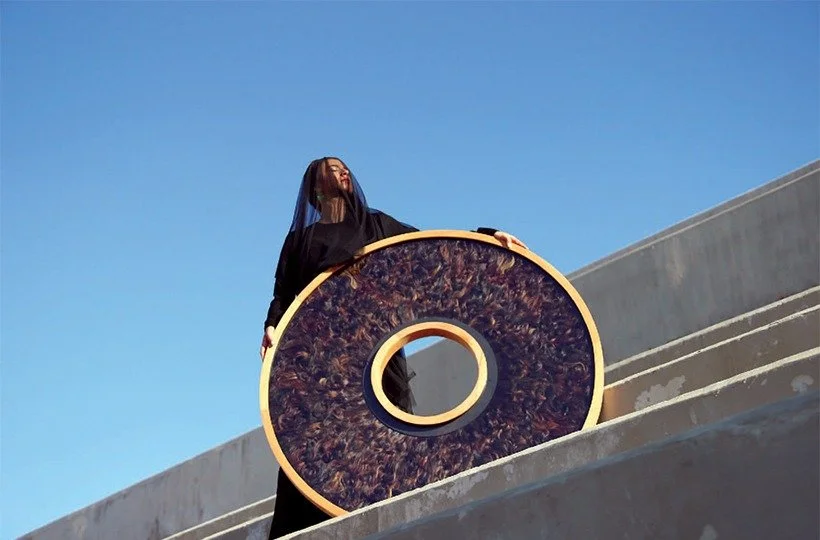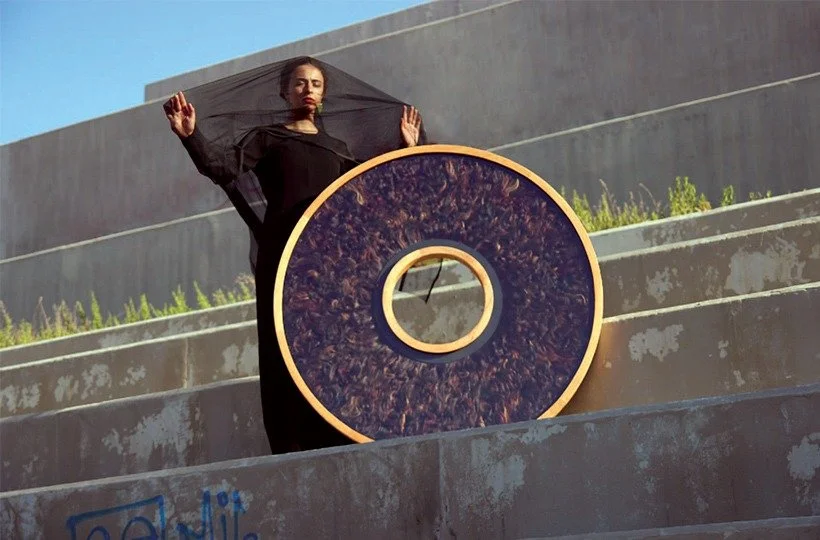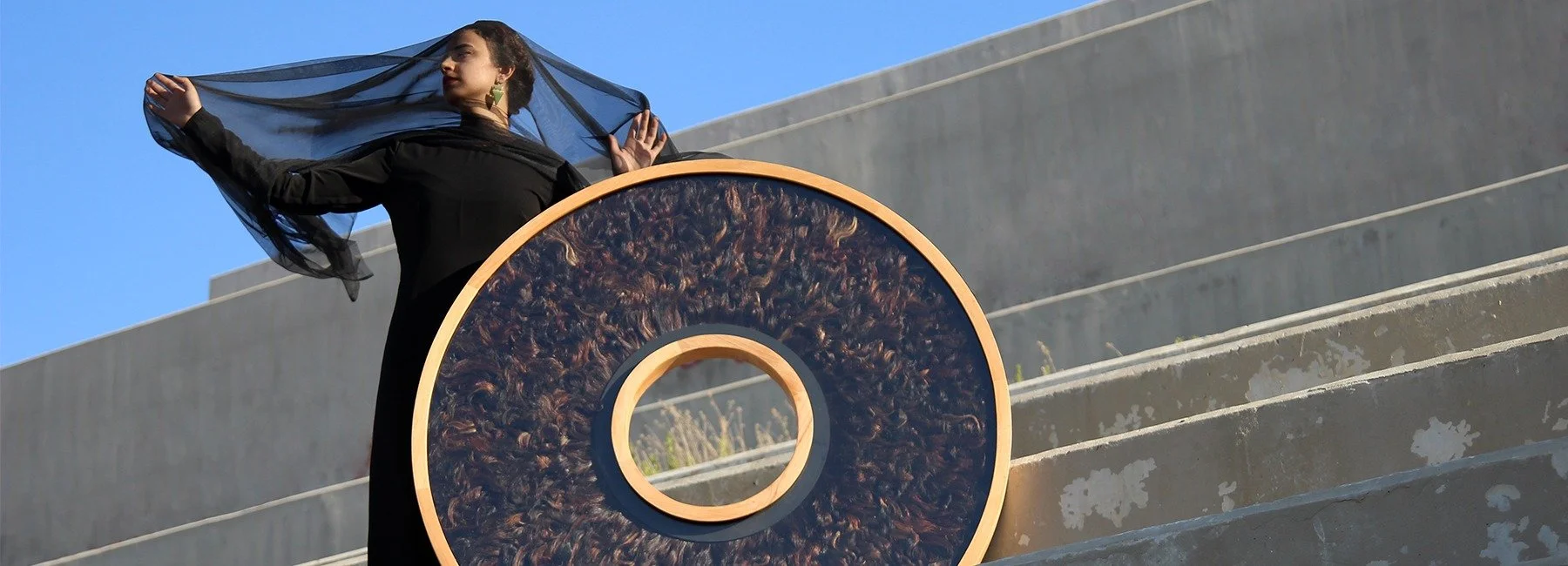
Inevitable is a sculptural memento mori by Jordanian artist-architect Wasim Zaid Habashneh. An eye-shaped timber-and-glass body releases radiating strands of donated human hair, turning a private remnant into a communal signal. By staging growth, cutting, and forgetting as form, the installation asks how certainty can be held gently together here.
Inevitable
“An eye of timber and hair mapping death’s shared horizon”
Jan 17, 2026
Art
Connetion : +20054
Shares : 10145
From afar, the object reads as a pale lens hovering in quiet air, a boundary of timber where light catches and slips off glass. Its weight is implied rather than announced: an eye-shape holding stillness like a held breath. Up close, the seam between wood and transparency becomes a confrontation—a dialectic between enclosure and exposure. This is not private grief or public statement, but private grief and public statement mutually generating each other. He argues that mortality is the one common material condition.
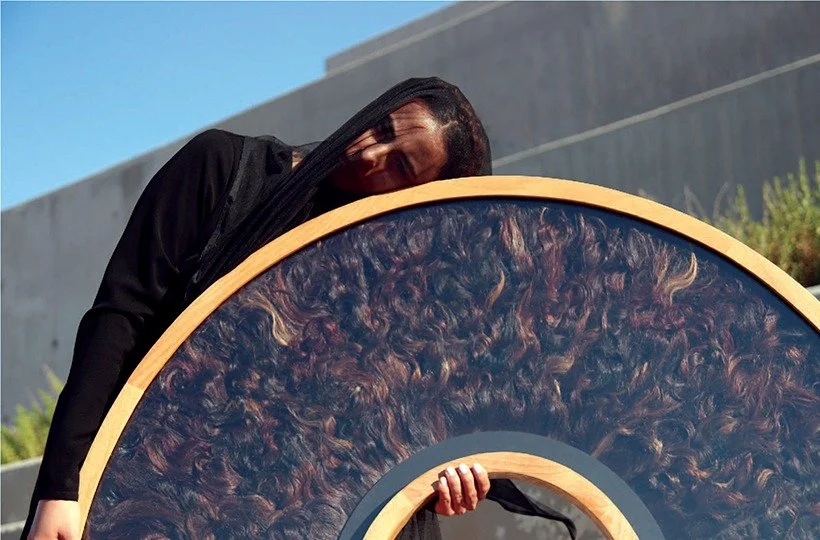
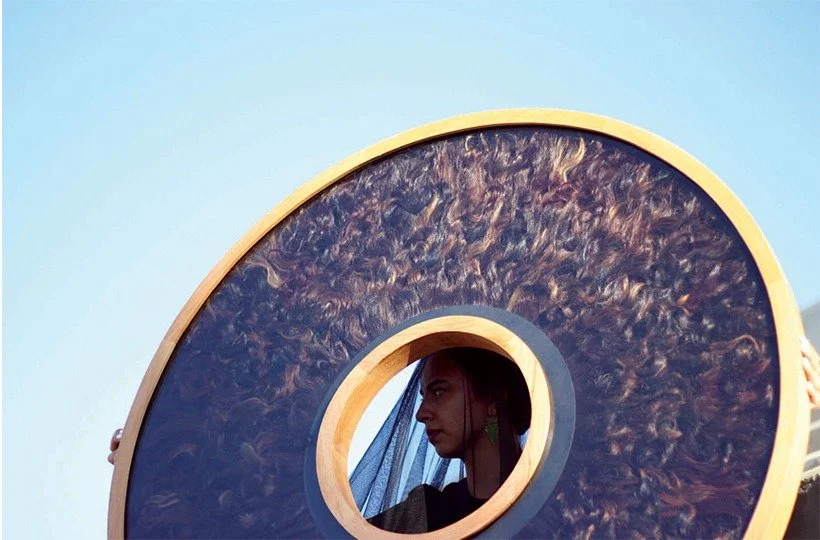
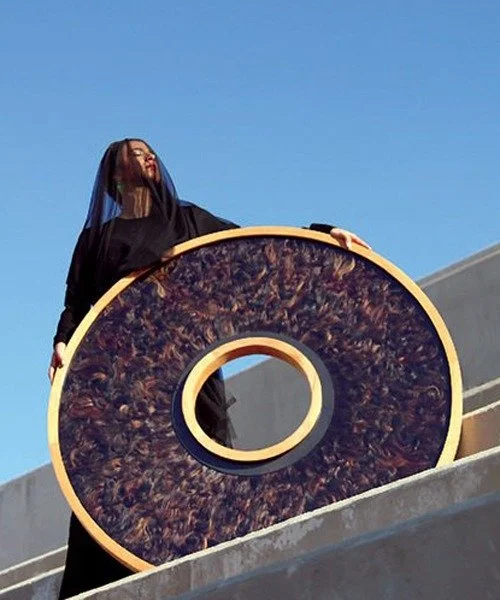
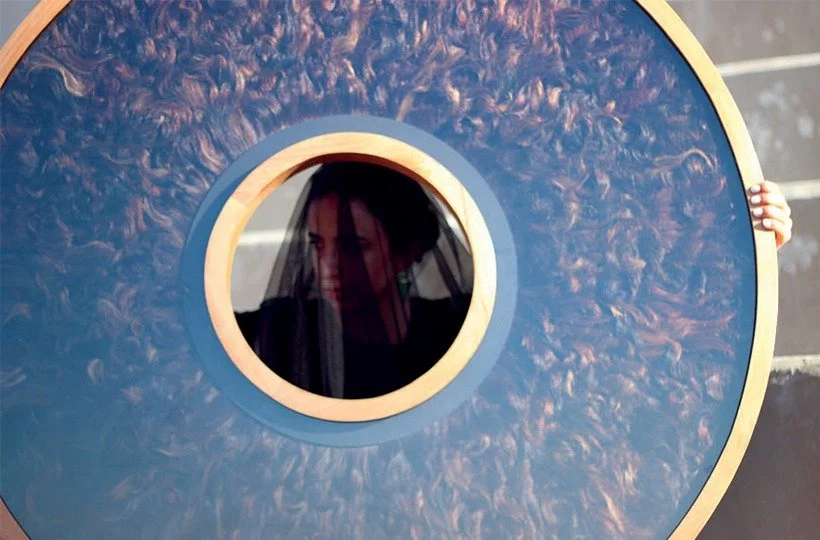
The installation’s material premise is blunt: a 120-centimetre eye built from timber and glass, threaded with real human hair donated by young people. The method is unsentimental—collecting, fixing, and radiating strands until a body-fragment becomes architecture. As form, the hair behaves like sunrays and nerves, extending the work’s edge into the room. The viewer’s pace slows; approaching feels like crossing an intimate threshold. The work turns a disposable residue into a shared fact, tightening tenderness against inevitability. Designboom frames the project as a reminder of death's inevitability.
The circle refuses a narrative “end”; it loops. From a distance, the hair can read as a halo; at close range, each strand declares itself as time measured in keratin. Timber frames the eye like a cabinet and a coffin lid, while glass holds a reflective skin that returns the onlooker’s face to the onlooker. The form occupies space by radiating rather than blocking, making the room feel temporarily “spoked.” The viewer oscillates between stepping back for an overview and leaning in to meet the fibres’ insistence, where delicacy becomes the work’s hardest claim. The eye makes mortality visible without turning it into spectacle.
Habashneh’s architectural training surfaces in measured proportion and in the demand that concept must have structure. He cites it to develop the context: on his website, he describes a practice that uses local materials to carry relatable stories, aiming for artworks that are tangible yet conceptual. He cites it to fill in the gaps: Darat al Funun notes his shift from architectural work into exhibiting as an artist, placing him within Amman’s contemporary-art ecology.
In Inevitable, hair is neither souvenir nor shock: it is a calibrated line of life, cut loose, then made legible again. When the glass catches a small flare and the timber edge holds the circle steady, the work returns to a single surface of light.
Wasim Zaid Habashneh
Wasim Zaid Habashneh is a Jordanian architect and artist whose practice treats materials as arguments. He cites it to fill in the gaps: Darat al Funun lists him as born in 1987, living and working in Amman, and notes that he trained and worked as an architect before exhibiting as an artist through the institution’s 30th-anniversary open call.
His self-positioning is unusually direct. He cites it to develop the context: on his website, he describes an approach shaped by architectural thinking—perceiving, analysing, and structuring “little things” into tangible yet conceptual works, often selecting locally resonant materials so viewers can attach stories to them. That emphasis on legibility helps explain why hair, sand, teapots, yoghurt, or fluorescent tubes recur as carriers of social memory rather than as mere texture.
In the interview, Habashneh frames making as an act of translation: ideas become outcomes through the arrangement of material, and the concept dictates both medium and site. He cites it as a tool: ST.ART Magazine records his insistence on looking at materials “with a fresh eye” so that the message arrives through substance first.
Across projects, his architectural discipline keeps scale calibrated, while his art practice keeps meaning unsettled. Inevitable sits in that overlap, where design’s measured edges meet the messy evidence of living bodies.
Beyond gallery contexts, his work reads as a designer’s ethics lesson: if every material comes with a regional history, then choosing it becomes a public decision. His installations, therefore, operate like models—trials for collective feeling.
Designer / Architect: Wasim Zaid Habashneh
Photography: Diana Habashneh