


The Latest Feature
The Latest Feature
Slow reports on art, materials, and the systems behind them.
We publish monthly or bi-monthly long-form features and research notes.
We prioritise verification, context, and material evidence over speed.
Every story is built to be cited: sources, credits, and disclosures included.
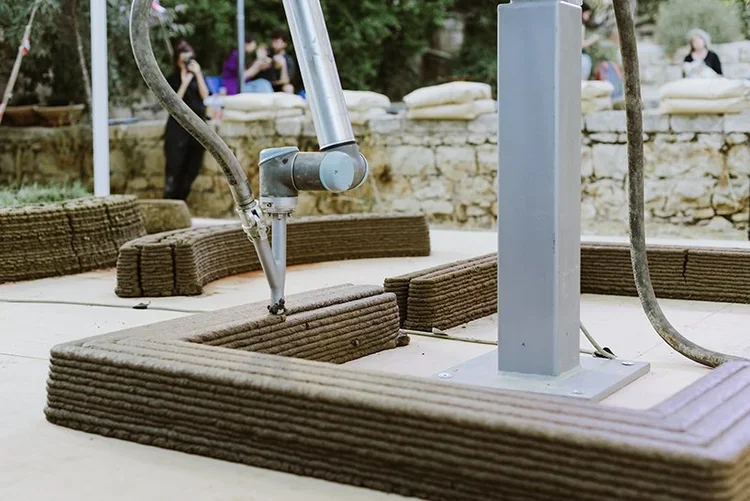
The Living Habitat: From Static Construction to Organic Evolution
This is not a conflict between the industrial machine and the natural world, but a metabolic synthesis in which the “built” environment and the “grown” organism mutually generate each other. When viewed from a distance, the structure appears as a silent, monolithic outcropping of packed earth, a geological presence weathered by centuries of erosion. Closer inspection, however, reveals a frantic and microscopic vitality: tiny green shoots pierce through the brown, desiccated crust, and a network of roots begins to weave a living fabric within the soil’s stratified layers. This moment of observation—moving from the perceived stillness of the mass to the active vibration of the sprout—reveals a state of structural germination, where the boundary between the architectural and the botanical is no longer a line, but a porous zone of exchange.
The author argues that the future of the habitat lies in blending technology and biology so seamlessly that the material itself takes an attitude—an ethical stance against the static permanence of traditional construction. This is not a conflict between the industrial machine and the natural world, but a metabolic synthesis in which the “built” environment and the “grown” organism mutually generate each other. When viewed from a distance, the structure appears as a silent, monolithic outcropping of packed earth, a geological presence weathered by centuries of erosion. Closer inspection, however, reveals a frantic and microscopic vitality: tiny green shoots pierce through the brown, desiccated crust, and a network of roots begins to weave a living fabric within the soil’s stratified layers. This moment of observation—moving from the perceived stillness of the mass to the active vibration of the sprout—reveals a state of structural germination, where the boundary between the architectural and the botanical is no longer a line, but a porous zone of exchange. She argues that the future of the habitat lies in blending technology and biology so seamlessly that the material itself takes an attitude—an ethical stance against the static permanence of traditional construction.