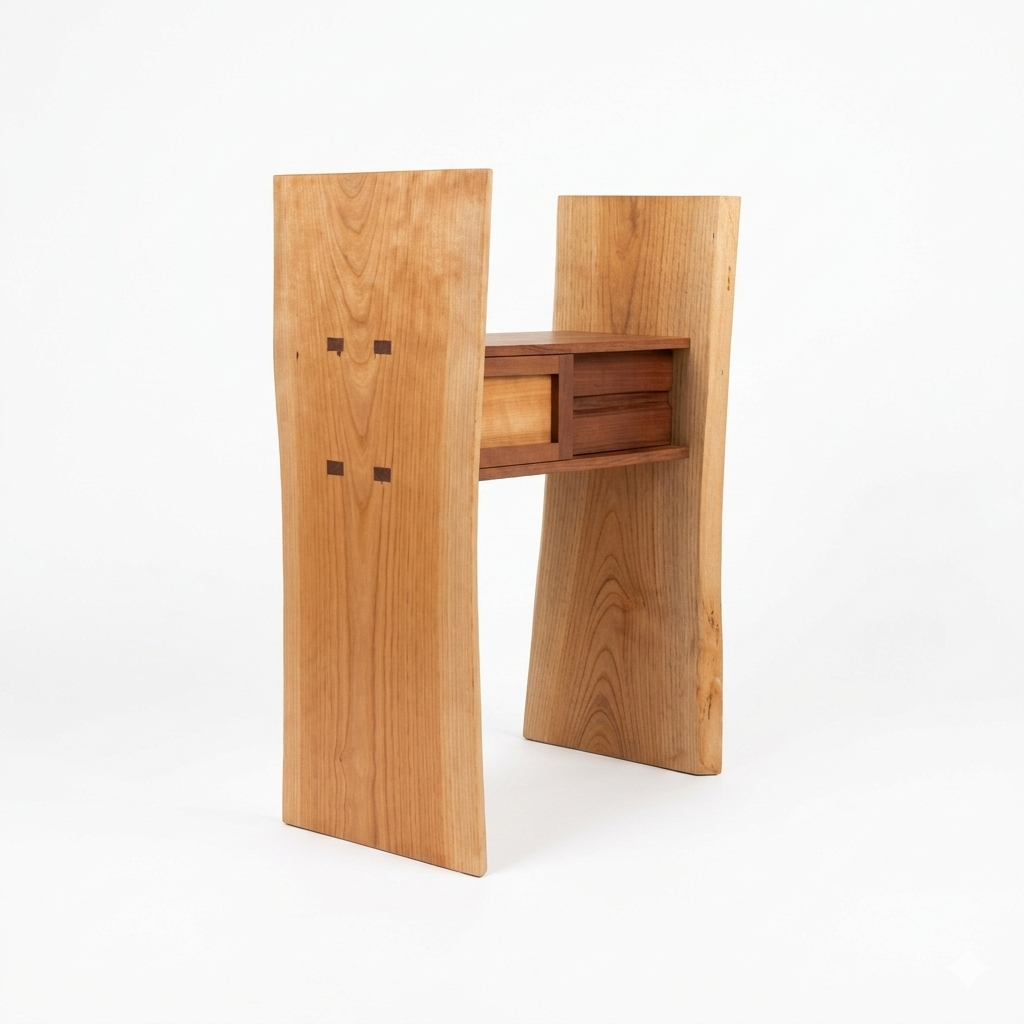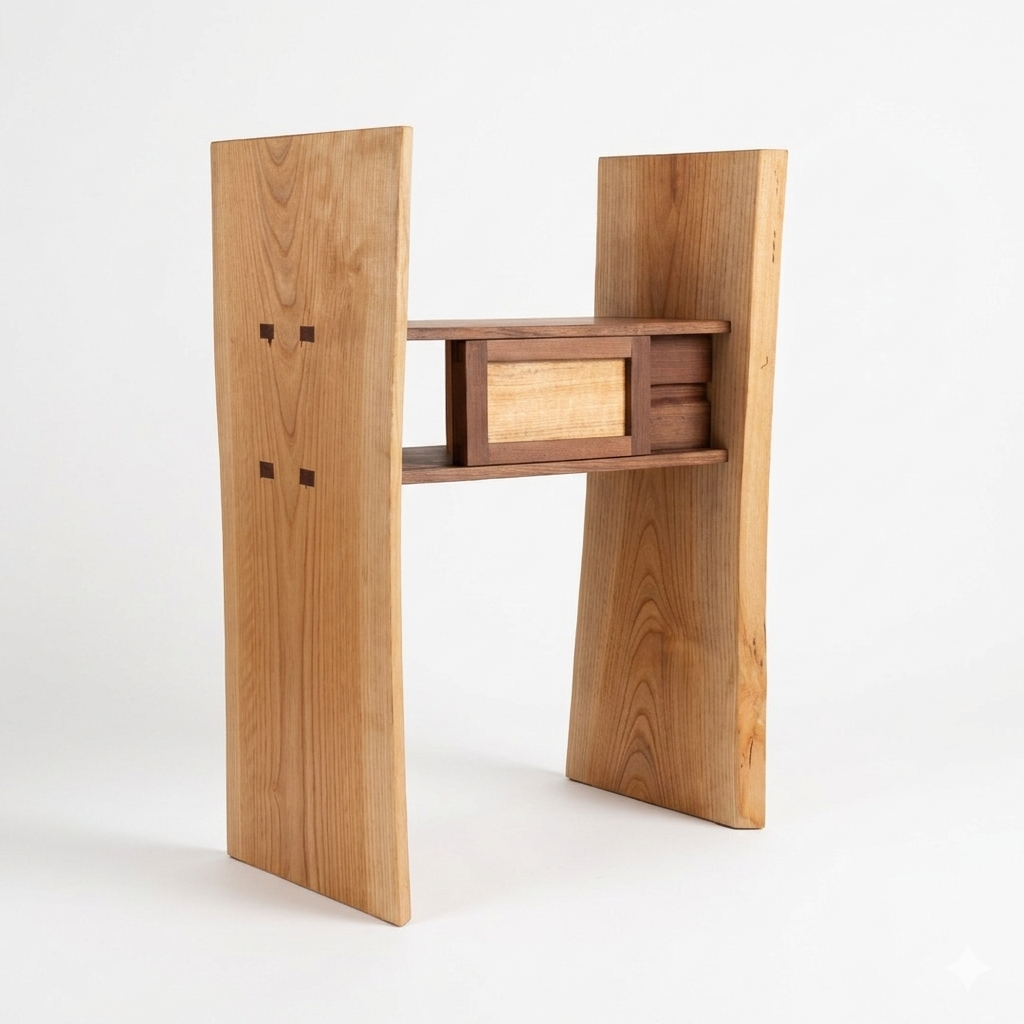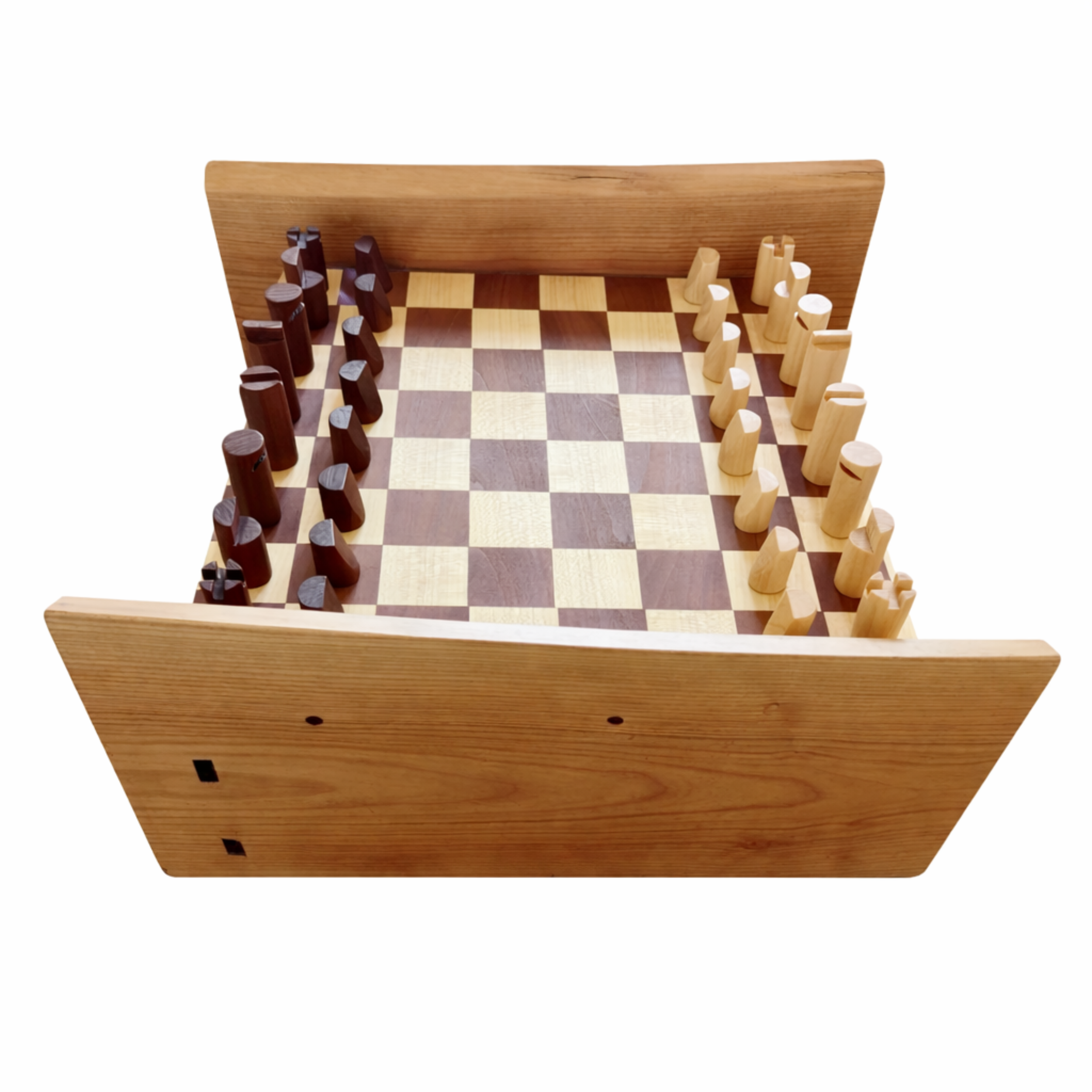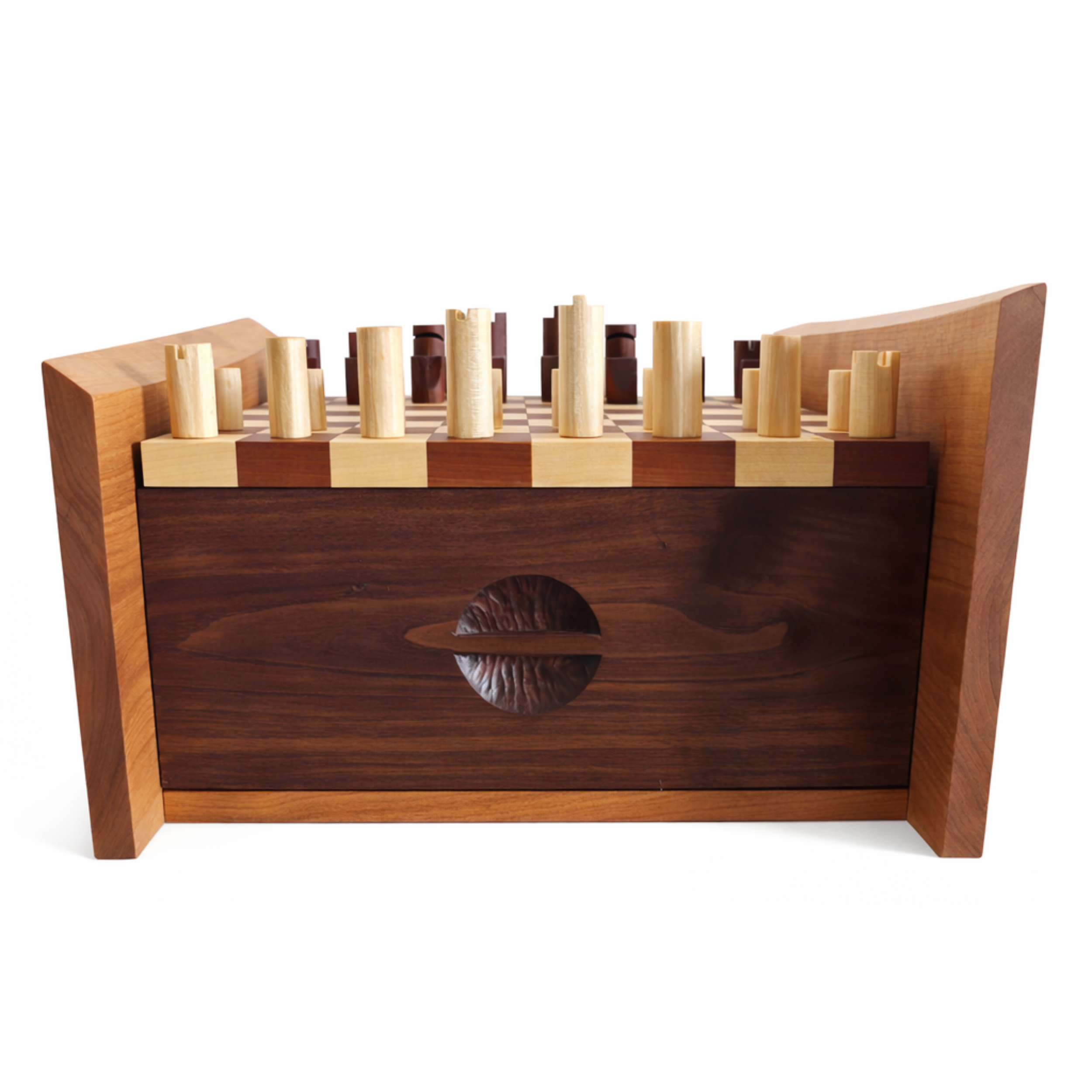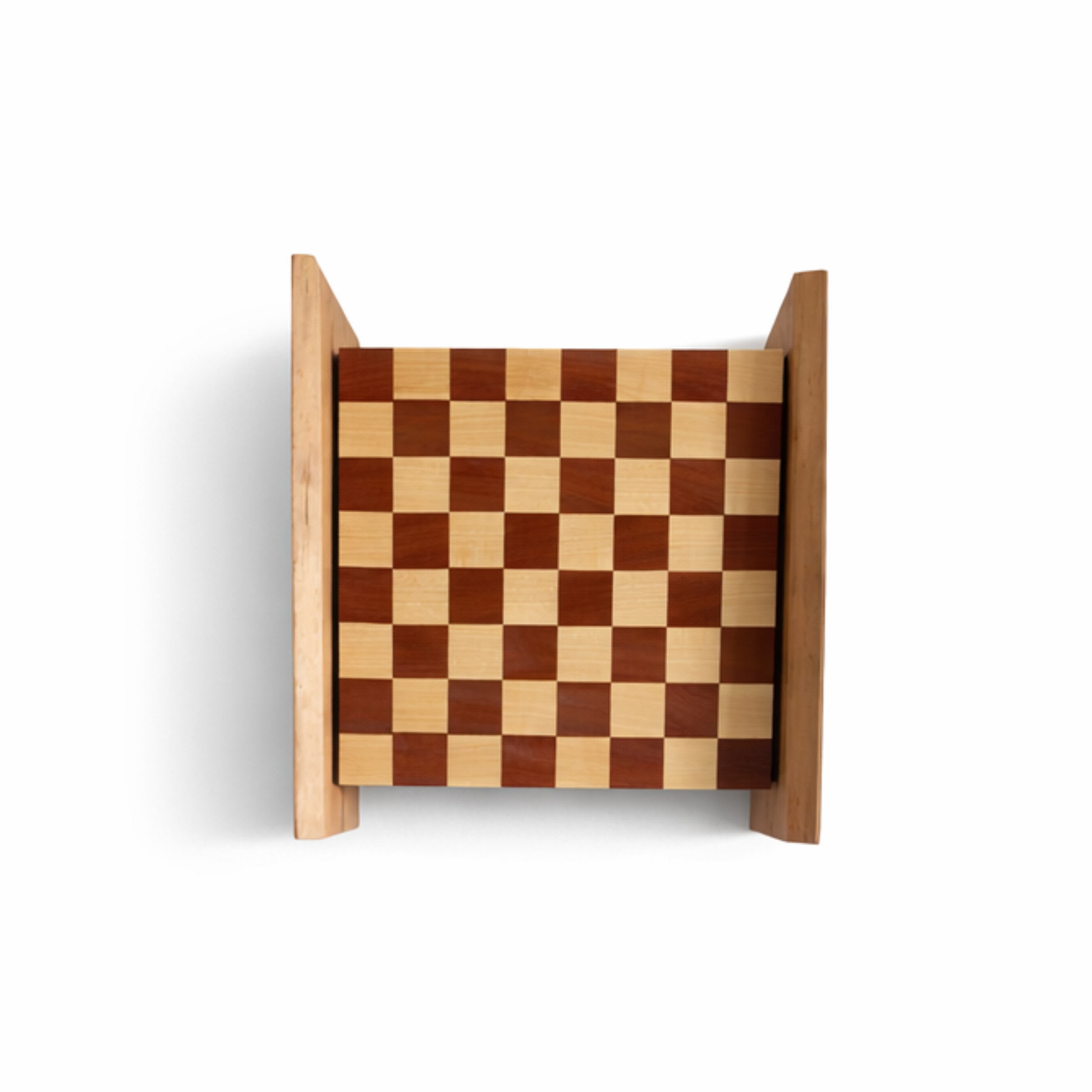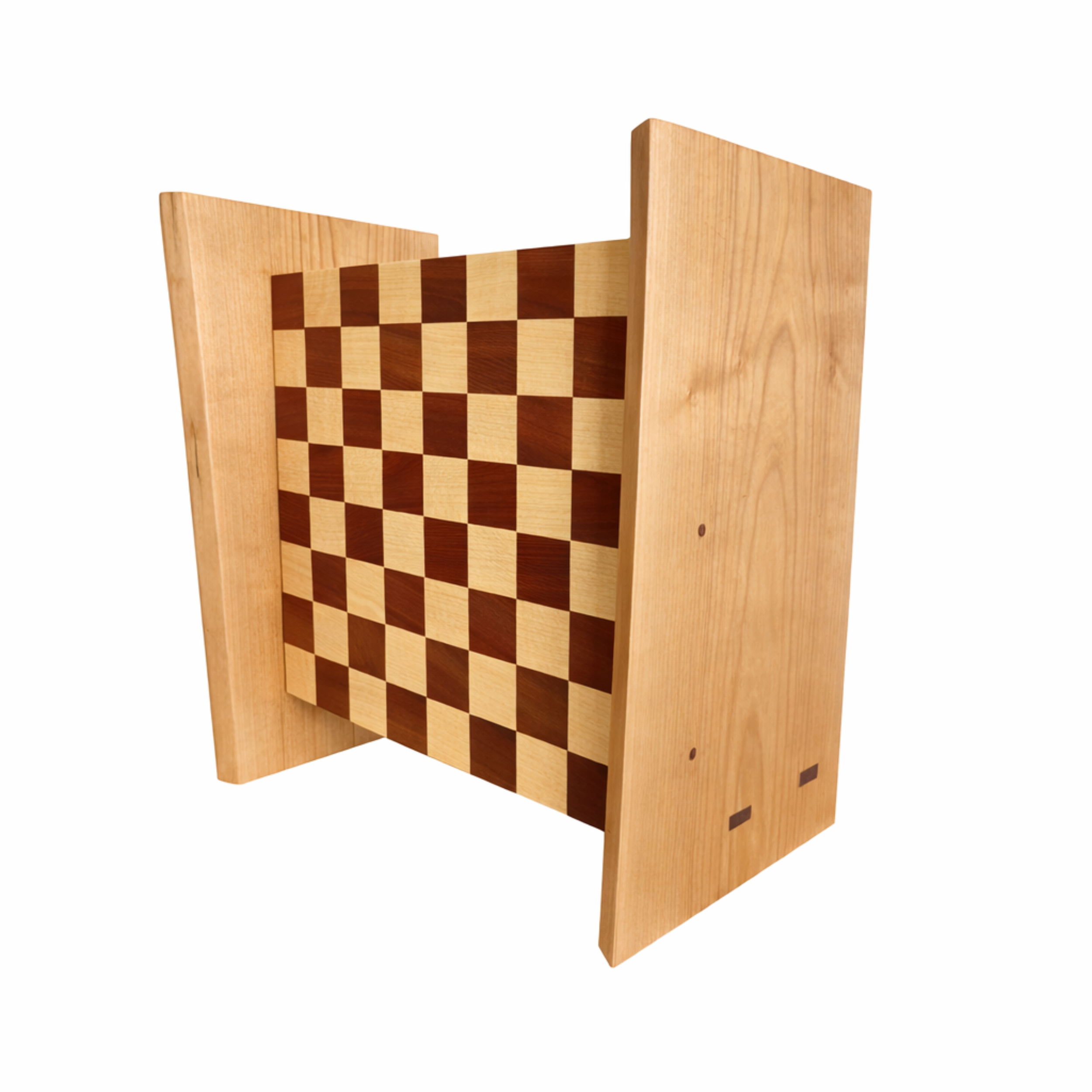
Giuseppe Deepak Benti transforms a chessboard into functional art poised between play and display. Shaped entirely with hand tools, contrasting hardwoods and exposed joints register time, pressure, and repair. The project argues that luxury need not erase labour: its precision becomes meaningful because the hand remains materially and visibly present.
One, Two, Three, En Garde
“Handmade joinery turns strategic play into slow, sculptural functional art”
June 12, 2026
Art
Connetion : +24771
Shares : 12041
From afar, One, Two, Three, En Garde appears as a measured field of dark and pale timber, its chequered plane held within a deeper architectural frame. Light shifts across walnut, maple, pear, and cherry, separating the squares without flattening their grain. Up close, hand-cut edges, carved pieces, and exposed joints disturb the grid’s apparent perfection. The encounter becomes a confrontation between strategic order and embodied labour. This is not a game or a sculpture, but a game and a sculpture mutually generating each other. Giuseppe Deepak Benti frames the chessboard as functional art whose use intensifies, rather than diminishes, its visual authority; he argues that luxury becomes credible when the time of making remains visible.
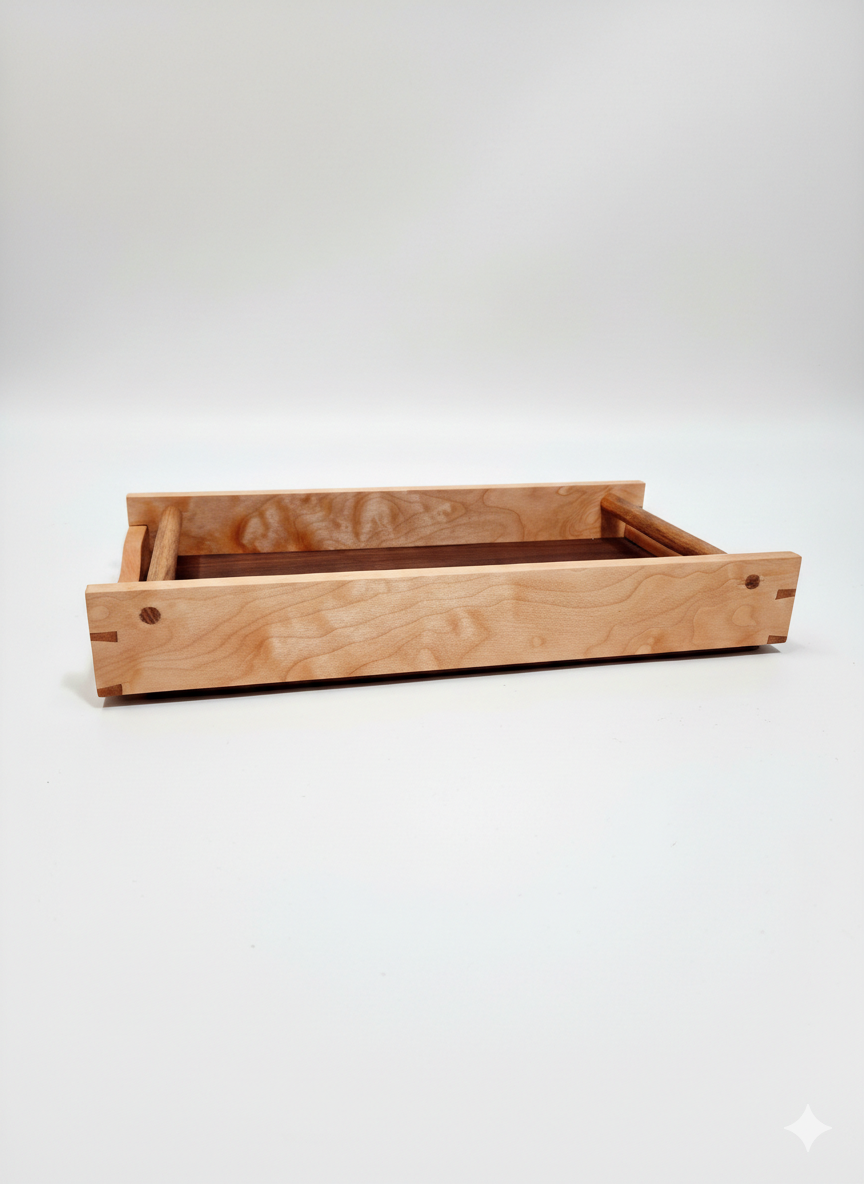
The hardwood is not treated as neutral cladding. Its density, colour, grain, and resistance determine how the object is cut, fitted, held, and touched. Benti dimensions the stock and constructs the work without power tools, employing square and round mortise-and-tenon joints, half-blind dovetails, grooves, and dadoes. These methods produce a board that can hang on a wall, stand vertically as a conceptual sculpture, or lie flat for play. The object therefore changes behaviour without changing identity. It occupies the wall as an image, interrupts the room as a body, and draws two players toward its surface. Each shift returns the work to its central tension: contemplation activates play, while play exposes construction.
Natural oil finishing preserves tonal variation and keeps the wood sensorially available. Rather than burying the surface beneath industrial uniformity, the finish allows grain, pores, and minute tool traces to mediate contact. The hand-carved chess pieces extend this logic. When lifted, advanced, or captured, they make touch part of the work’s evidence. The player must lean inward, judge distance, and move carefully across a field whose disciplined geometry records the irregular pressure of humans. Precision here is not the elimination of difference; it is the sustained negotiation of difference.
Benti positions slowness as an active design method, not a nostalgic aesthetic. The approximately 100 hours of unplugged labour invested in the work oppose a culture in which speed often hides production. Yet the chessboard does not reject contemporary life. It proposes another form of contemporaneity: collectable, repair-conscious, transformable, and capable of teaching through use. Its three configurations allow art, furniture, and game to coexist without hierarchy. Returned to the wall, the board appears silent again, but light still catches every joint, edge, tool mark, and visible material boundary.
Giuseppe Deepak Benti
Giuseppe Deepak Benti is a designer and hand-tool woodworker whose practice treats cabinetmaking as a form of collectable art. His Maison&Objet and More profile describes one-of-a-kind cabinets made only with hand tools, hardwoods, and natural oil finishes. His YouTube channel similarly foregrounds the complete process, from stock preparation and dimensioning to hand-cut joinery and finishing, positioning labour as visible content rather than hidden production.
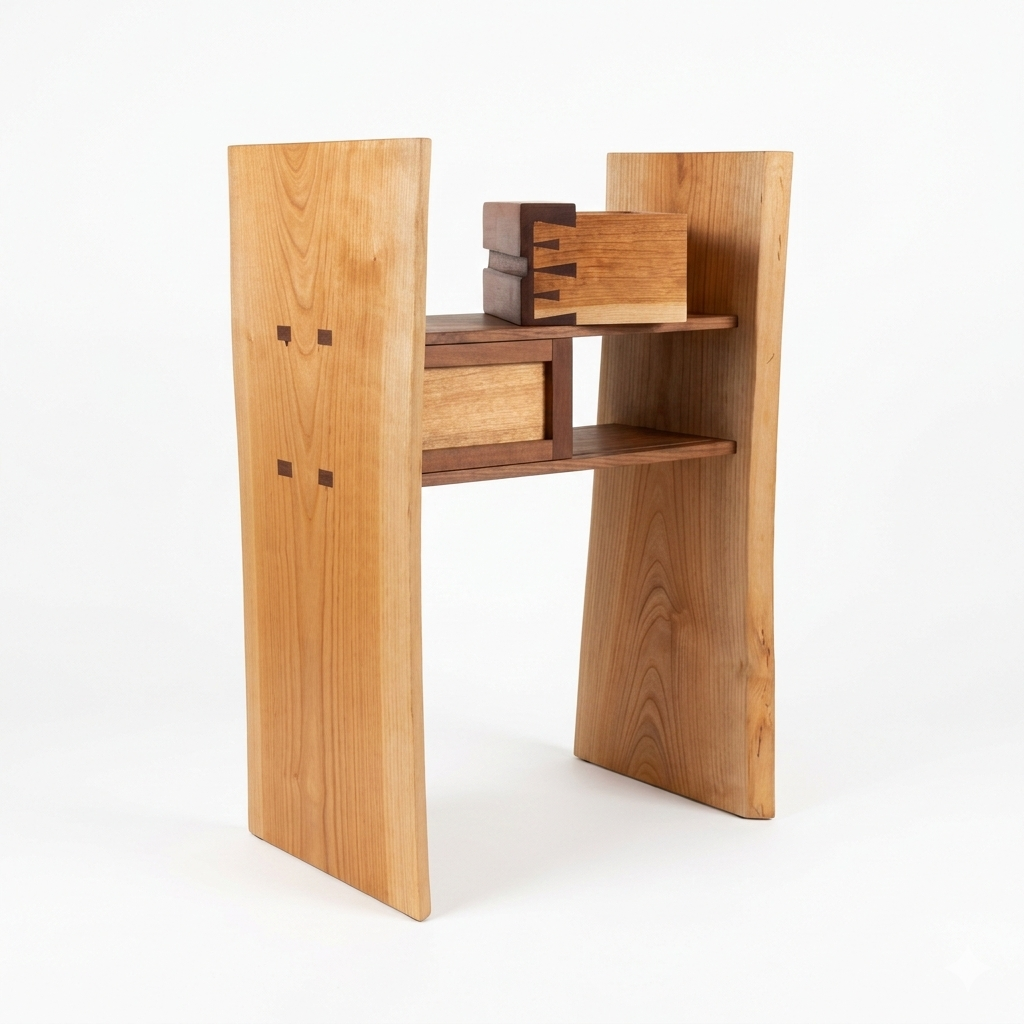
Benti’s work is distinguished by an “unplugged” method. Rough boards are transformed without power tools or machines, requiring the maker to respond directly to the grain, density, resistance, and variations in each piece of timber. Dovetails, mortise-and-tenon joints, grooves, and dadoes consequently operate in two registers: they secure the object structurally and articulate its construction visually. This language extends across cabinets, boxes, tables, shelving, sculptural vessels, and One, Two, Three, En Garde.
The chessboard clarifies his wider position. Maison&Objet uses pear, maple, and walnut for the board, with oak and iroko for the frame, and the pieces are carved by hand. Arte Laguna World describes the work as the result of approximately 100 hours of purely unplugged labour and records its three uses: wall-hung artwork, vertical sculpture, and playable board.
Benti therefore approaches luxury through duration rather than flawless anonymity. Natural oils and waxes preserve tactile contact, while visible joinery records sequence, judgment, and correction. His practice does not present handcraft as a retreat from contemporary design. Instead, it uses slowness to question disposability, recover repair as an aesthetic value, and make the maker’s time legible.
His practice focuses on “unplugged” woodworking and hand-tool collectable design, using visible joinery and natural finishes as part of the artistic language.
@gdbhandtoolwoodworking
LinkedIn: Giuseppe Deepak Benti